
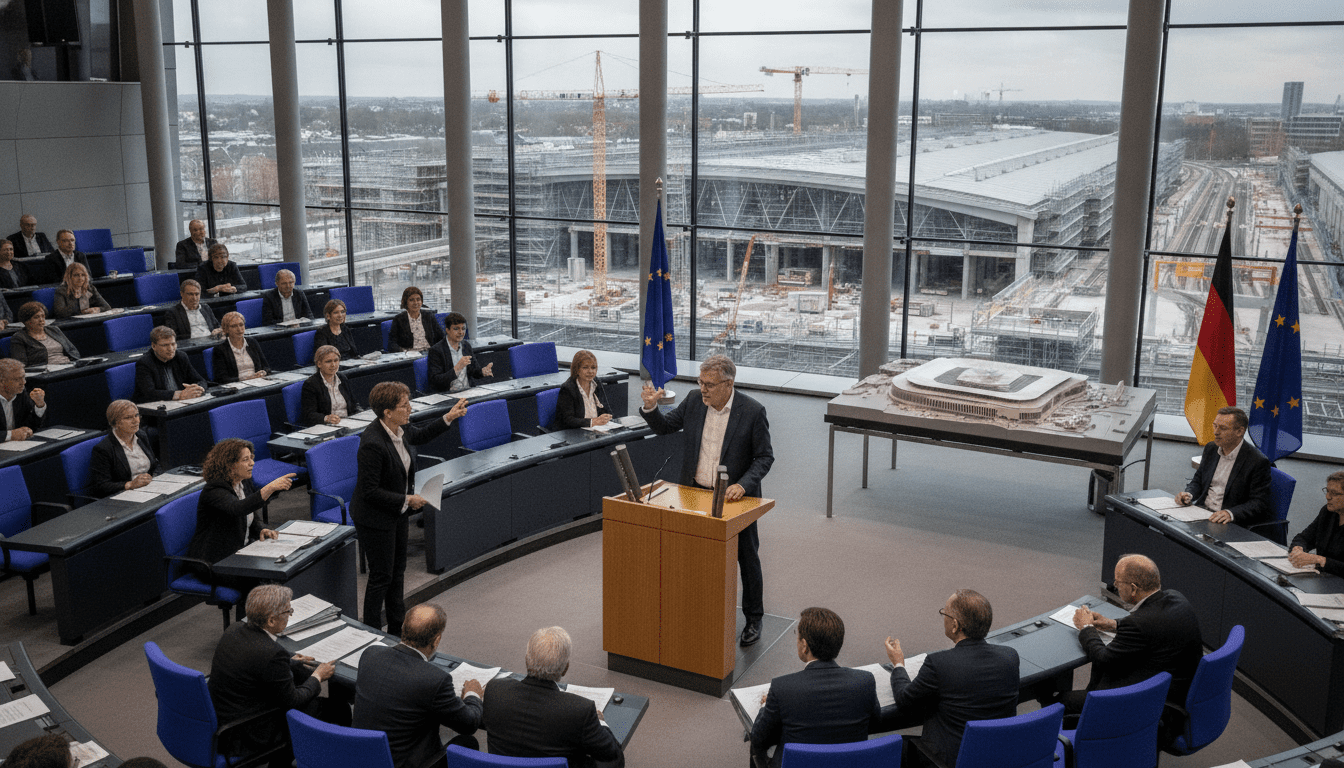
Stuttgart 21 delayed to end of 2031 as politicians demand explanations
Stuttgart 21 delayed to end of 2031, drawing sharp political criticism and raising questions over costs, technical faults and stalled urban redevelopment plans.
The landmark Stuttgart 21 rail project faces a further postponement of its through-station opening to the end of 2031, according to recent reports, prompting a wave of political criticism and fresh scrutiny of costs and construction quality. The delay — roughly five years from the latest planned opening at the end of 2026 — has immediately become a focal point for state and municipal leaders pressing the Deutsche Bahn for clear timelines and remedial action. Officials warn the setback will ripple through passenger experience, digital rail control plans and long‑awaited urban redevelopment on the former track fields.
State premier calls for accountability
Cem Özdemir, Minister‑President of Baden‑Württemberg, publicly signalled strong dissatisfaction with the new timetable and demanded concrete commitments from the state‑owned rail operator. He said the regional government expects completion and reliable deadline guarantees, and insisted that project quality must not be compromised while further delays are avoided. Özdemir also indicated he would discuss the situation directly with the Bahn leadership alongside Transport Minister Nicole Razavi to assess next steps.
Razavi has pressed Deutsche Bahn to minimise disruption to passengers during the remaining works and to find an interim fix for the lengthy access route that currently forces travellers into a protracted walk to platforms. The transport minister set a deadline for a new passenger access solution by the end of 2027 and urged the operator to demonstrate it can still deliver major infrastructure projects without recurring errors.
Revised opening date and programme consequences
Project documents and statements circulated in recent days point to a revised in‑service date of late 2031 for the new through station, representing a delay of about five years from the timeline that had been held until recently. The Stuttgart 21 programme originally targeted operational readiness in 2019; later schedules had set a new milestone at the end of 2026 before the latest shift. Councils and project partners are now recalibrating short‑ and medium‑term plans to reflect the extended construction horizon.
For rail passengers, the practical effect will be prolonged works and temporary arrangements that were expected to be phased out earlier. For the operator, the delay compounds operational planning and raises fresh questions about integration of the Digitales Knotens Stuttgart (DKS), the ambitious digital signalling and control element added to the programme roughly eight years ago.
City development and financial implications
The prolonged timetable affects more than rail operations: urban redevelopment tied to the project will be postponed by several years. The city of Stuttgart acquired most of the freed track land in 2001 for about €460 million and planned new residential and mixed‑use quarters across roughly 109 hectares, including the Rosenstein quarter. Those construction starts hinge on vacating the old terminus and completing soil remediation, which can only proceed once train operations transfer to the new station.
Financially, the programme has already seen major cost growth and legal battles over responsibility for overruns. Current total project costs have risen to nearly €12 billion, and a ruling from the Administrative Court of Baden‑Württemberg in August 2025 affirmed that Deutsche Bahn must shoulder the excess expenses. The new postponement is likely to sustain penalty and interest liabilities tied to missed milestones and could amplify fiscal pressure on the operator.
Technical troubles and the Digital Node under review
Investigators are examining a range of technical and construction issues that may explain the multi‑year delay, though a definitive account has not yet been released by the operator or its supervisory board. The Digitales Knotens Stuttgart, conceived to fully digitalise one of Europe’s largest rail junctions, is a particularly complex addition and has been cited as a major risk factor since its incorporation into the programme.
Reports indicate problems ranging from the need to re‑route critical cabling for digital signalling to remediation of floor screed in the new station that may require removal and replacement. Engineers and project auditors are also revisiting assumptions made in integration testing and phased implementation of automated control systems to determine if design or execution flaws have compounded schedule risk.
Leadership changes and ministerial interventions
Since taking office in November 2025, Deutsche Bahn CEO Evelyn Palla has ordered an internal review of Stuttgart 21 and its management after inheriting the troubled project. Her review followed the departure of the project company’s managing director, Olaf Drescher, in February 2026, a leadership change that reflected growing concerns over programme delivery. The supervisory board has yet to convene publicly on the latest developments, and the rail company has not issued a detailed explanatory statement on the revised dates.
State authorities have signalled immediate engagement: ministers plan a conference call with the Bahn chief to press for clarity on remaining works, including commitments on the Pfaffensteig tunnel, additional approach tracks (the so‑called P‑option) and the promised digital upgrades. Municipal leaders, including Stuttgart’s mayor, have also voiced frustration at the cumulative effect of repeated schedule slips on civic planning and public confidence.
The postponement of the through station to late 2031 crystallises long‑standing tensions between ambitious technical aims and the realities of large infrastructure delivery. As political and corporate oversight tightens, attention will centre on whether Deutsche Bahn can produce a firm, verifiable roadmap that addresses technical faults, limits further cost escalation and restores momentum to Stuttgart’s intertwined transport and urban development ambitions.
