
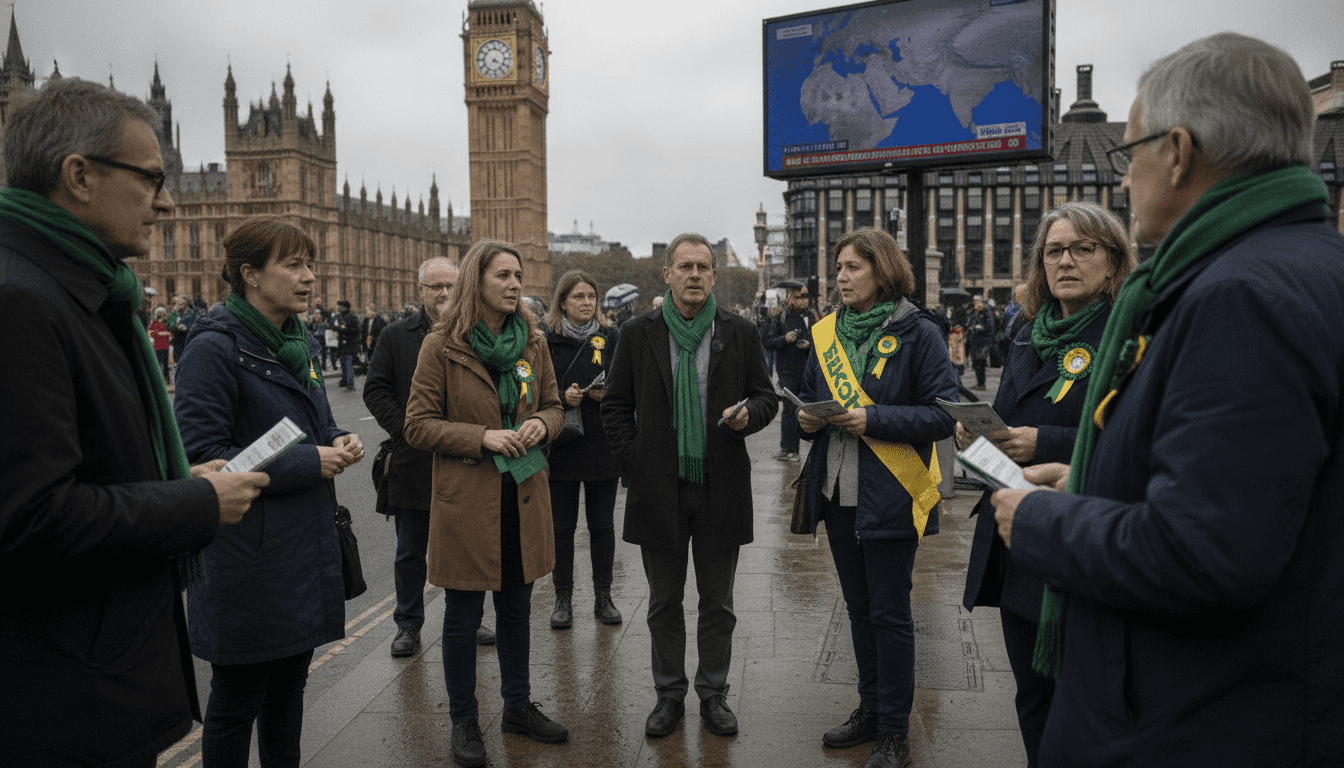
Major poll finds Gaza concerns drove over half of former Labour voters to Greens and Lib Dems
New Opinium poll finds Gaza concern and UK government support for Israel prompted over half of ex‑Labour voters to switch to Greens, Lib Dems and others.
The latest Opinium survey shows that Gaza issues influenced more than half of former Labour voters who now back centre or left parties, signalling a notable shift in British political alignment around the Gaza conflict. The poll, commissioned by the Palestine Solidarity Campaign and Friends of the Earth, also ties those voting changes to perceptions of the UK government’s support for Israel. Political strategists say the results could reshape party priorities ahead of the next general election.
Key poll results on voter movement
Opinium found that 40.7 percent of people who voted Labour in the 2024 general election moved their support to the Green Party in last month’s local elections. A further 29.6 percent said they switched to the Liberal Democrats, while smaller shares backed Reform UK and the Conservatives at 11.1 percent and 9.3 percent respectively.
Among former Labour voters who now say they intend to support centre or left-wing parties, 53 percent reported that the government’s support for Israel influenced their decision to switch. The survey breaks that down into 21 percent who said it influenced them “a great deal” and 31 percent who said it influenced them “somewhat.”
Age divides underline Gaza’s influence
Concern about Gaza was strongest among younger voters, the poll shows, with 66 percent of 18-to-34-year-olds naming it as a factor in their decision to move away from Labour. The intensity decreases with age: 54 percent of 35-to-49-year-olds, 49 percent of 50-to-64-year-olds and 43 percent of those 65 and older also cited Gaza as influencing their choice.
These demographic patterns suggest a generational element to the issue, with younger cohorts more likely to let foreign policy and human rights concerns shape their party allegiance. Campaigners and party officials will likely pay close attention to those age brackets when framing messages on international affairs.
Greens benefit most from Gaza-related switching
The Greens emerged as the primary beneficiary of voter dissatisfaction on Gaza, with two-thirds of respondents who moved to the party saying Gaza influenced their switch. The party, led by Zack Polanski, recorded significant local election gains that the poll links directly to its stance on Palestinian rights.
Political observers, including pollster Sir John Curtice, have argued that the Greens inflicted more damage on Labour than Reform UK did in the local contests. That analysis is reinforced by the distribution of former Labour support revealed in the Opinium data.
Variation among other parties and pledges
The poll finds that 32 percent of those who moved to the Liberal Democrats cited Gaza as a factor, while 44 percent of those now backing the Scottish National Party, Plaid Cymru or independents said it influenced their decision. These figures indicate the issue has cross-party resonance beyond strictly left-wing audiences.
Candidates who endorsed the Palestine Solidarity Campaign’s “Pledge for Palestine” won 27 percent of the seats they contested, according to the survey material, compared with 30 percent for Reform candidates. Labour candidates won 22 percent of contested seats and the Liberal Democrats 21 percent, highlighting the varied electoral payoffs from different campaign platforms.
Implications for Labour and the broader centre-left
For Labour, the findings present a strategic challenge: retaining voters who prioritise foreign policy and human rights while holding a broad electoral coalition. The data suggests that perceptions of the party’s stance on Gaza and the UK’s relationship with Israel have become politically consequential for previously loyal supporters.
Party strategists will need to weigh how to respond publicly and in policy terms, balancing international diplomacy with domestic voter concerns. How Labour articulates its foreign-policy position in the coming months could influence whether the pattern seen in local contests persists into national voting intentions.
The Opinium poll underscores that Gaza-related concerns are neither niche nor confined to a single community, but are influencing electoral decisions across age groups and political affiliations. Political leaders and campaign teams will be closely watching whether the shifts observed in local elections broaden or recede as parties prepare for the next general election.
