
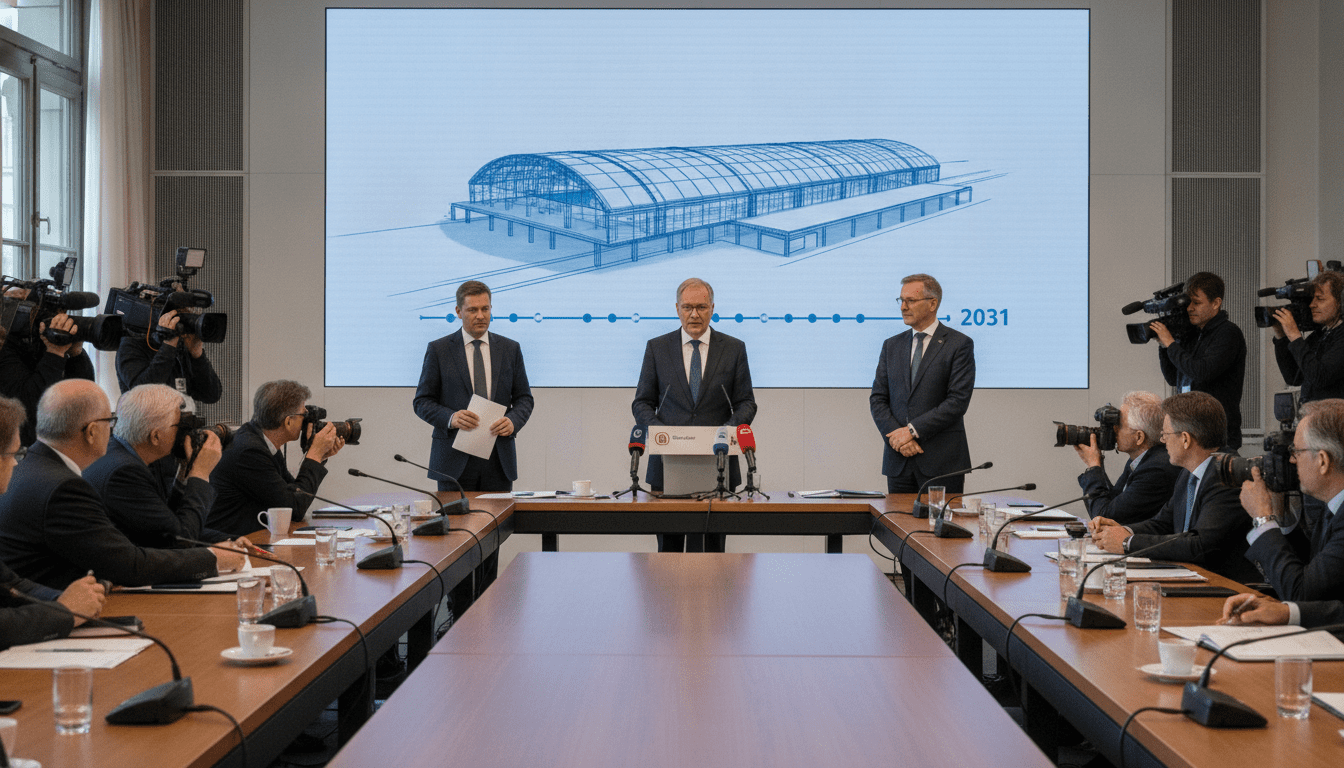
Stuttgart 21 Opening Delayed to End of 2031 After Deutsche Bahn Flags “Drastic Failings”
Stuttgart 21 delayed to 2031 as Deutsche Bahn cites significant project-management failures; phased openings beginning in 2027 aim to ease passenger impact and restore timelines.
Stuttgart 21, the long-running rail overhaul in Germany, will not open as planned this year and is now expected to be completed at the end of 2031, according to people familiar with the project. Deutsche Bahn initiated a wide-ranging review under CEO Evelyn Palla that identified major shortcomings in project steering by the company responsible, prompting planners to push the full opening well beyond previous estimates. The decision ushers in a staged commissioning approach intended to deliver partial relief to passengers from late 2027 onward.
Revised timetable moves full opening to late 2031
Sources close to Deutsche Bahn say the new plan shifts the final inauguration of the central through-station — the core of Stuttgart 21 — to the end of 2031. Earlier projections had moved the date from 2025 to 2026, and later to 2030; the most recent revision exceeds even the pessimistic scenarios that circulated late last year. Deutsche Bahn declined an immediate public comment as the internal review and updated schedule are finalized.
Political leaders in Baden-Württemberg have largely accepted that an opening before 2031 is now unlikely, and some regional officials have called for greater transparency on the causes of the delay. The rail operator’s leadership ordered the revision after concluding that the original late-2026 target could no longer be met for technical and organizational reasons.
Phased openings to provide relief from 2027
Deutsche Bahn plans a staggered commissioning that will bring practical benefits to travelers before the full station is completed. The phased approach foresees the first operational improvements by the end of 2027, when access routes through the restored Bonatz building are expected to shorten current detours for many passengers. The Bonatz structure itself is scheduled for partial use by the end of 2028 and will house retail and dining facilities as a gateway to the new below-ground platform complex.
Further milestones include a planned airport connection by the close of 2030, with the final opening of the through-station in late 2031. Project managers say the staged sequence is intended to reduce passenger disruption while work continues on the most complex technical and digital elements.
Digital knot and technical shortcomings at center of delay
A central factor behind the postponement is the troubled Digital Knot Stuttgart (DKS), the project’s digital control system intended to incorporate the European Train Control System (ETCS). The DKS was conceived as a digital pilot for Germany, but commissioning and integration problems have left key functions incomplete. Internal assessments reportedly point to failures by DB Projekt Stuttgart-Ulm GmbH (PSU) in adequately managing planning, risk assessment and supplier coordination.
Earlier public attention focused on issues with external suppliers, including a Japanese contractor, but the recent review places more emphasis on internal project governance and the need for better technical oversight. Estimates circulated within the company suggest a one-year delay could add roughly €300 million in costs, with additional sums possible as remaining technical risks are clarified.
Leadership changes and calls for accountability
The project has already seen high-level personnel shifts amid the setbacks. The long-standing project planner Olaf Drescher left his role unexpectedly in February and was succeeded by Klaus Müller, a senior manager with a background in digital projects at DB InfraGO. The leadership changes follow criticism that planning processes and risk evaluations were inadequate.
Former Baden-Württemberg transport minister Winfried Hermann and Stuttgart’s mayor Frank Nopper have publicly urged clear explanations from Deutsche Bahn. Hermann said officials had awaited the review’s outcome rather than speculating, while Nopper described the prospect of further delay as a severe blow to the city and demanded a candid account of what went wrong and how the operator will ensure reliable services on opening.
Security requirements and urban development consequences
New federal security guidelines and higher resilience requirements for critical infrastructure have added complexity to the project’s technical specifications. Planners say the revised standards, prompted by broader geopolitical tensions, require an improved emergency power concept and other measures that extend timelines and fortify the station against a wider range of risks.
The postponement also affects Stuttgart’s urban redevelopment plans. Construction of the Rosenstein quarter on the former head-station rail yard is likely to be deferred until the mid-2030s because existing tracks must remain in place as long as the old terminal is in use. At the same time, some travelers could see short-term benefits: completion of the Pfaffensteigtunnel in southern Stuttgart, expected in 2031 or 2032, may eliminate certain forced transfers at Böblingen or Vaihingen for passengers traveling to and from Switzerland.
The updated schedule leaves the project at a critical juncture, balancing technical corrections and elevated safety standards with mounting public and political pressure to control costs and deliver tangible improvements to rail users. Stakeholders say the coming months will be decisive for clarifying responsibilities, finalizing realistic milestone dates and rebuilding confidence in the completion of Stuttgart 21.
