
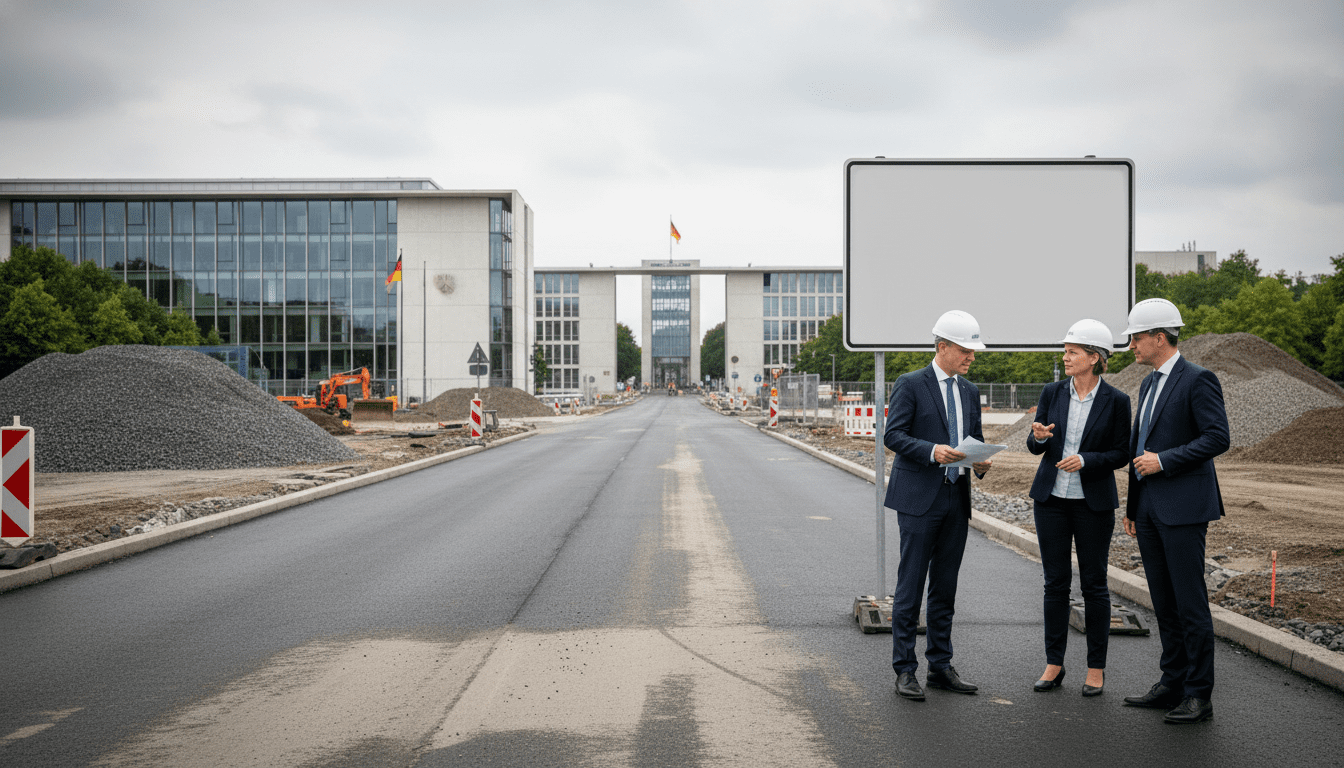
Germany’s infrastructure special fund shows progress but needs faster execution, Finance Ministry monitoring report finds
Germany’s infrastructure special fund is disbursing billions, but a new Finance Ministry monitoring report shows execution lags in key sectors and calls for swifter project delivery.
Monitoring report outlines how the special fund has been used
The Federal Ministry of Finance has produced a monitoring report that maps out, for the first time in detail, how the infrastructure special fund has been deployed across federal programs. The report, prepared for the Bundestag Finance Committee, provides line‑by‑line data on budget commitments, transfers and spending through 2025.
This document intends to give lawmakers and the public a clearer view of where the roughly half‑trillion euro Sondervermögen has been allocated and how quickly those allocations are converting into tangible projects.
Federal uptake reached approximately 74 percent in 2025
At the federal level, the report records that about 74 percent of the funds earmarked for investment were drawn down during 2025. That rate indicates substantial cash flow to programs, but also leaves a significant portion of planned resources unspent or tied up in preparatory stages.
Officials interpret the figure as evidence that financing channels are working, while warning that the pace of turning plans into construction and procurement must accelerate to meet policy goals.
Digital infrastructure and housing show measurable early effects
According to the report, measures tied to digitalization and housing construction have produced the clearest early results from the special fund. Investments in broadband expansion, public‑sector IT upgrades and incentives for new residential construction recorded initial implementation milestones during the review period.
Ministry analysts describe these outcomes as “first progress and effects,” noting that these sectors benefited from clearer project pipelines and faster administrative approvals compared with more complex infrastructure areas.
Energy systems, research and transport lag behind planning stages
By contrast, the monitoring data flags energy infrastructure, research and development, and transport projects as still largely in planning or preparatory phases. The report emphasizes the need to move “faster from planning to implementation” in these areas to avoid delays in achieving climate, competitiveness and mobility objectives.
Bottlenecks cited include lengthy permit processes, constrained contractor capacity and coordination challenges between federal, state and municipal authorities, which slow the conversion of allocated funds into contracts and physical works.
Parliamentary scrutiny tightened through detailed tracking
The Finance Ministry report was produced to deepen parliamentary oversight and improve transparency over the special fund’s lifecycle from allocation to expenditure. It provides the Bundestag’s Finance Committee with a standardized monitoring tool intended to track progress by program, region and project status.
Lawmakers will be able to use the data to press ministries and implementing agencies for explanations where spending flattens or timelines slip, creating a more active legislative role in ensuring that the special fund’s objectives are met.
Officials and stakeholders call for administrative and procedural reforms
Reaction among officials and sector representatives focuses on administrative reforms and capacity building as the next step to raise execution speed. Suggestions include streamlining permitting procedures, increasing procurement capacity at subordinate levels of government and better sequencing of grant approvals to align with construction timelines.
Some ministries are reported to be piloting accelerated procedures and targeted support for complex programs, while contractors and local governments are seeking clearer project pipelines and predictable funding disbursements to mobilize private and regional resources more effectively.
The monitoring report’s central message is that the infrastructure special fund is delivering substantial resources to priority programs but that faster implementation is essential to translate spending into visible improvements in energy systems, research capability and transport networks.
As authorities move from accounting for allocations to focusing on execution, the effectiveness of procedural changes and intergovernmental coordination will determine whether the Sondervermögen achieves its modernization goals within the intended timeframes.
