
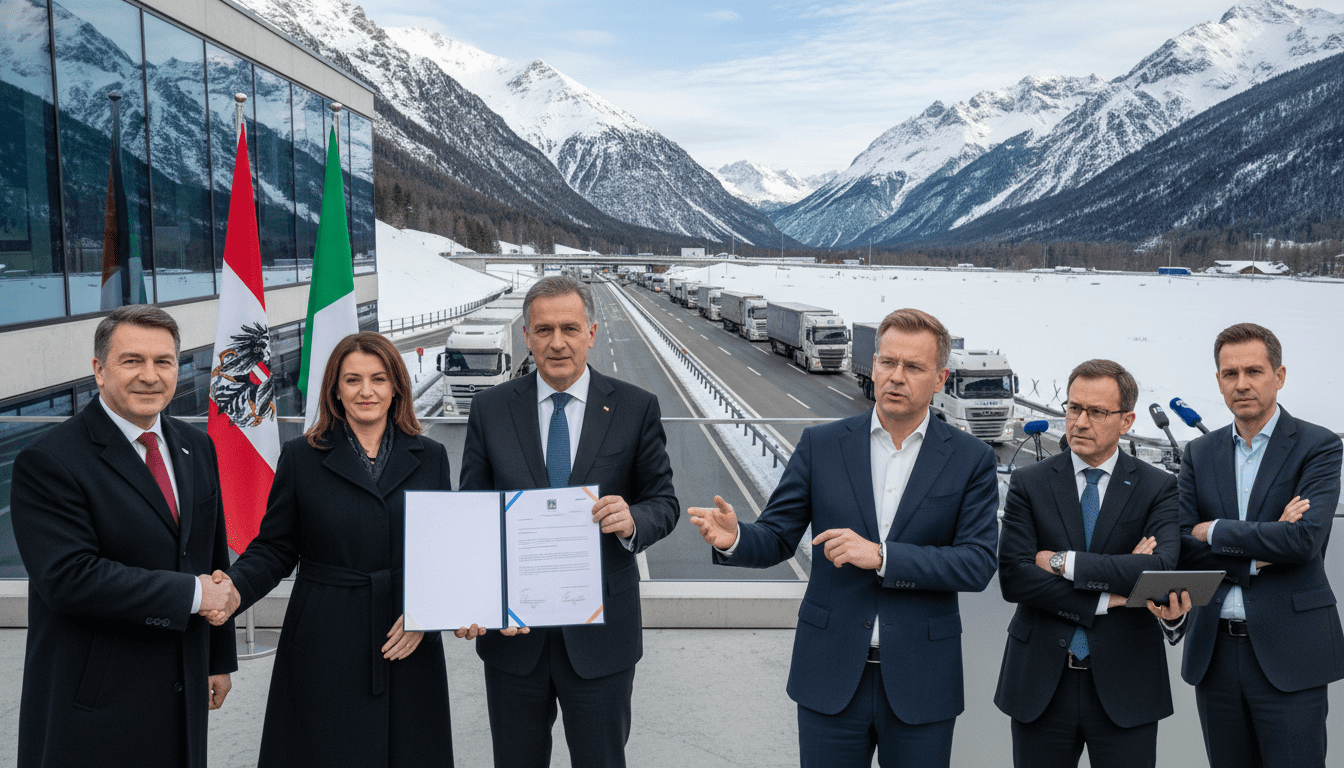
Brenner Pass Blockade Draws Spotlight as FDP Claims Weekend Attention
Brenner Pass blockade and weekend focus on Germany’s FDP highlight debates over Alpine transit, second homes and the party’s political relevance now.
The Brenner Pass saw renewed attention this weekend as local actions intersected with national political debate, underscoring tensions over Alpine transit and regional identity. Protest activity at the Brenner, combined with a surge of media focus on the Free Democratic Party (FDP), framed a wider conversation about infrastructure, tourism and political relevance. The juxtaposition of a strategic mountain crossing and a party struggling for a fresh identity crystallized competing public priorities.
Tensions at Brenner Pass Draw Local Protests
Local demonstrators at the Brenner have voiced concerns about traffic, environmental strain and the cultural impact of seasonal visitors. The actions briefly disrupted cross-border movement and drew attention from national outlets, placing the Pass back into the public eye. Organizers framed their demonstrations as a defense of local livability rather than an opposition to cross-border ties, while authorities urged calm and proportional responses.
The blockade revived long-standing debates about whether existing transit arrangements adequately balance economic needs and community concerns. Residents cited everyday pressures from congestion and second-home ownership that intensify during peak travel seasons. Municipal officials called for dialogue, noting that the Brenner remains a vital artery for commerce and tourism between Austria and Italy.
Travel Impacts and Alpine Transit Realities
The Brenner Pass continues to be a primary route for motorists and freight moving between northern Europe and Italy, making any disruption more than a local issue. Logistic operators warned that sustained blockades would have knock-on effects for supply chains and regional businesses dependent on predictable transit. Transport planners emphasized that the Pass cannot simply be replaced without significant investment and long-term planning.
Calls for expanded infrastructure or alternative routes emerged in public discussion but face practical and environmental constraints. Alpine geography, cross-border coordination and funding realities limit rapid changes to transit capacity. Experts recommend that improvements focus on smarter traffic management, rail freight investment and targeted local measures to ease pressure on communities near the Pass.
Second Homes and Local Friction Near the Pass
The weekend rhetoric returned repeatedly to the topic of second homes, with residents blaming part-time property ownership for rising prices and localized strain on services. Communities along routes to popular destinations such as the Garda region feel the cultural and economic effects of seasonal population shifts. Critics argue that a pattern of outsider ownership can erode long-term housing availability and alter local economies, while proponents point to tourism income as essential for regional livelihoods.
Policy responses to second-home pressure are complex and politically sensitive, involving taxation, zoning and incentives for permanent residency. Some local officials advocate for measures that prioritize affordable housing and sustainable tourism management. Others caution that heavy-handed policy risks undermining the economic benefits that visitors bring to mountain and lakeside communities.
FDP’s Weekend Spotlight and Shifting Party Image
While the Brenner Pass drama unfolded, the Free Democratic Party experienced an unusual burst of attention, prompting debate about its role in contemporary German politics. Historically associated with liberal economic positions and private insurance interests, the FDP now faces questions about whether it represents a distinct liberal alternative. Commentators noted an ironic contrast: the Pass remains indispensable, while the party’s distinctiveness is increasingly in doubt.
Party strategists acknowledged the need to sharpen messaging and reconnect with voters on concrete policy proposals, particularly on infrastructure, housing and regional development. Polling and public reaction over the weekend suggested that voters seek clarity on how parties will address everyday pressures, from transport corridors like the Brenner to housing pressures tied to second homes. The FDP’s ability to present a compelling, differentiated platform will influence its standing ahead of future contests.
Political Resonance Beyond the Pass
Events at the Brenner touched on broader questions about national priorities and regional autonomy, showing how local protests can resonate far from their origin. The weekend highlighted the interplay between infrastructure needs and social cohesion, creating a lens through which political actors and voters evaluate policy competence. Officials from multiple levels of government signaled willingness to explore practical solutions while avoiding polarizing rhetoric.
Observers stressed that short-term disruptions are unlikely to alter the strategic importance of the Brenner or the essential movement of people and goods across the Alps. At the same time, the episode reinforced a demand for policies that reconcile mobility with community protection and environmental stewardship. Political parties, including the FDP, will be judged on whether they can translate these concerns into credible, actionable proposals.
As debate continues, stakeholders on both sides called for constructive engagement rather than symbolic gestures, arguing that sustainable answers require cooperation across borders and political lines. The Brenner Pass remains an indispensable transit route even as nearby communities press for safeguards, and the weekend’s attention on the FDP underscored the wider search for political relevance and practical policy solutions.
