
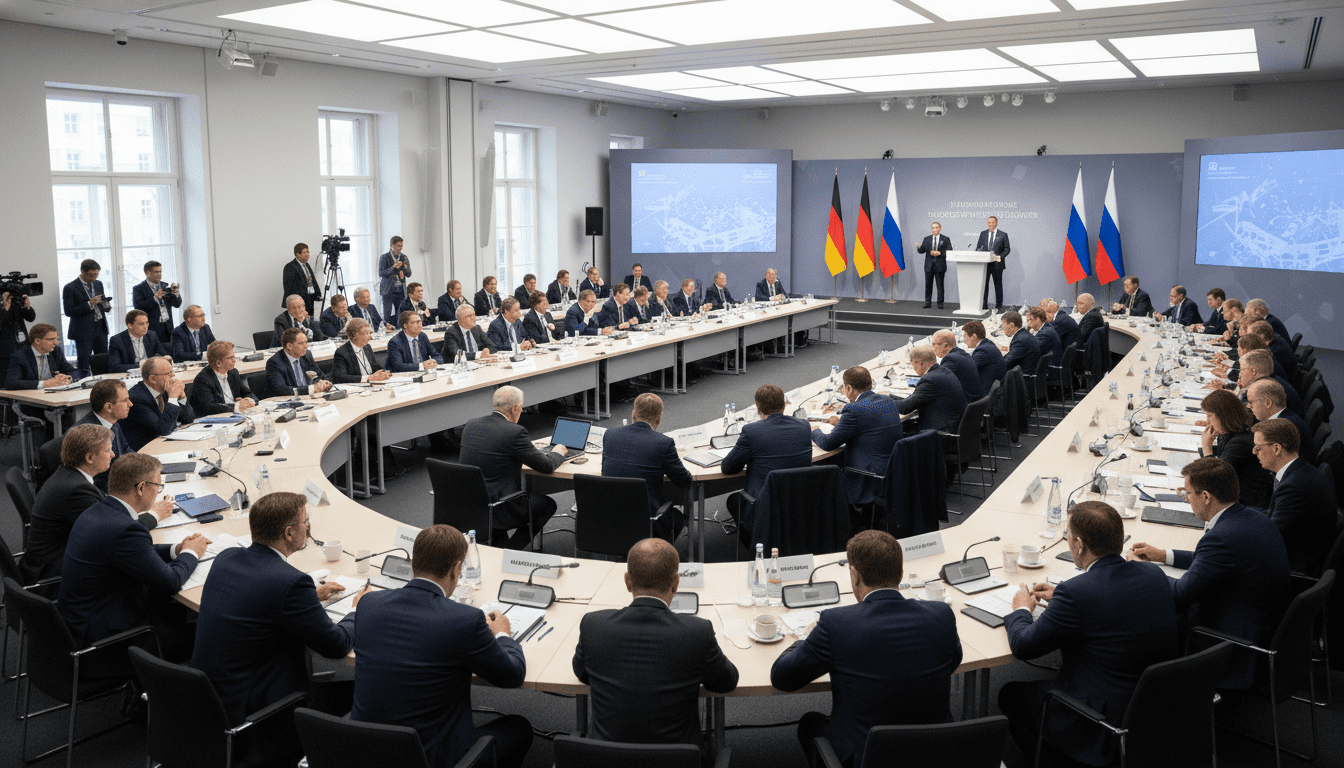
German companies return to the St. Petersburg International Economic Forum to protect assets and rebuild ties
German companies return to the St. Petersburg Economic Forum to protect assets and rebuild ties amid sanctions, falling trade and rising Chinese competition.
Germany’s business presence at the St. Petersburg International Economic Forum (SPIEF) marks the first officially organized return by German entrepreneurs since the outbreak of the war in Ukraine, with delegates saying they aim to preserve assets and keep lines of communication open. The move, announced ahead of the June 3–6 forum hosted by Russian President Vladimir Putin, comes as firms and the German-Russian Chamber of Commerce emphasize long-term market interests and asset protection. Chamber officials told dpa that the delegation’s participation is motivated in part by preparations for a possible post-hostility economic reset.
German delegation and stated objectives
Matthias Schepp, chairman of the German-Russian Chamber of Commerce, told dpa the delegation intends to “maintain an economic bridge to Russia” and safeguard more than €100 billion in German assets located there. Chamber leaders framed participation as pragmatic: continuing dialogue, they say, will be necessary to manage corporate exposure and preserve post-conflict commercial options. Organizers also noted that U.S. and French representatives have run business dialogues at SPIEF since last year, underscoring a broader Western re-engagement with the event.
Who is attending from Germany
The SPIEF program lists several German business figures among participants, including entrepreneur Stefan Dürr and longtime retail executive Thomas Bruch, both of whom have active interests in Russia. Cultural and civil-society events are likewise drawing German names: conductor Justus Frantz, publisher Holger Friedrich, filmmaker and journalist Hubert Seipel, and Jörg Urban, leader of the AfD in Saxony, are reported to take part in a forum session titled “Culture as a Bridge in Times of Crisis.” The mixed composition of business, cultural and political attendees reflects varied motives for engagement and has prompted debate in Germany about the optics of participation.
Trade figures and the impact of sanctions
Economic ties between Germany and Russia have contracted sharply since the imposition of Western sanctions. The German-Russian Chamber estimates roughly 1,600 German firms remain active in Russia, with combined turnover near €20 billion last year. Bilateral trade, however, fell below €10 billion in 2025, down from €59.7 billion in 2021 and a peak of about €80 billion in 2012. Chamber officials say sanctions have reshaped supply chains and revenue streams, compressing the scale of traditional trade even as some companies continue local operations for contractual or strategic reasons.
Survey: most German firms plan to stay in Russia
A recent chamber survey of its membership produced a striking result: nearly all respondents said they intend to remain in the Russian market. The poll, conducted among 750 member companies with 265 participants, found that 75 percent reported satisfaction with the current state of their Russia business despite sizable pandemic- and sanction-related losses. Two-thirds of respondents judged that Western sanctions have strongly or very strongly affected the Russian economy, while a substantial minority—about one-third—felt the measures inflicted greater harm on Germany than on Russia. More than half viewed the economic impact as roughly equal for both countries.
Energy dependence and attitudes toward gas and oil
Energy policy and supply remain central themes in business assessments. When asked whether Germany should resume imports of Russian gas and oil, 65 percent of survey respondents answered “yes, the sooner the better,” while 31 percent supported resumption only after hostilities in Ukraine cease. The split reflects ongoing tension between economic pragmatism among corporate actors and political considerations tied to sanctions, national security and public opinion. Firms with long-term industrial investments said energy certainty is a commercial priority, even as policymakers weigh geopolitical and ethical trade-offs.
Geopolitical competition and Chinese expansion in Russia
Chamber officials warned of a shifting balance of foreign commercial influence in Russia, noting that Western disengagement could create openings for other actors. According to the chamber’s figures, Chinese entrepreneurs registered roughly 1,400 new companies in Russia during the first quarter of this year, a sign of growing Chinese commercial footprint. German business representatives argue that sustained Western involvement, even if limited, helps preserve negotiating leverage and standards that could matter in any future economic normalization.
The decision by German companies and civil-society figures to attend SPIEF will likely prompt renewed debate in Berlin about the interplay between commercial interests and foreign-policy objectives. As the forum convenes on June 3–6, officials and corporate leaders will face scrutiny over the signals their presence sends, the concrete steps they take to shield assets, and how engagement meshes with broader EU and NATO policy toward Russia.
