
Pope Leo XIV Encyclical on Artificial Intelligence Signals Decade of Quiet Vatican–Tech Dialogue
Pope Leo XIV issues a landmark encyclical on artificial intelligence, from a decade-long Vatican–Silicon Valley exchange, outlining ethics and practical safeguards.
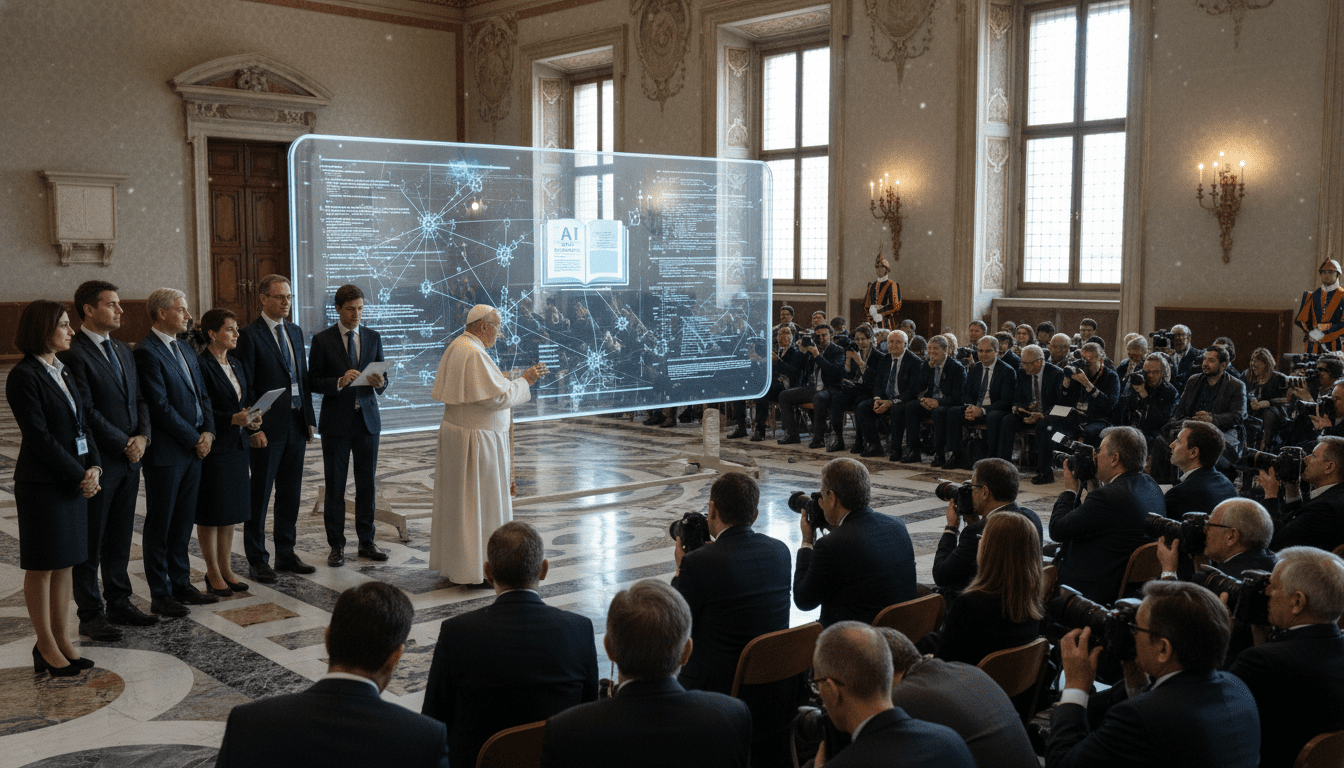
Pope Leo XIV’s encyclical on artificial intelligence was unveiled to a large audience on Pentecost Monday, drawing immediate attention for its depth and specificity. The document frames artificial intelligence as both a technological opportunity and a moral challenge, and it signals new Vatican engagement with tech governance. Vatican officials say the writing reflects sustained conversations with experts in Silicon Valley spanning more than ten years.
Vatican presentation and public reception
The encyclical was presented during a formal liturgical period, catching many observers by surprise with its technical nuance and ethical focus. Early reactions ranged from cautious praise among ethicists to scrutiny from technology firms assessing regulatory implications. Church officials emphasized that the document is intended to guide moral reflection and public policy, not to prescribe technical standards.
Origins in a decade-long Vatican–Silicon Valley exchange
According to Vatican sources, the encyclical draws on a steady, largely private exchange between theologians, ethicists, and technology leaders that stretched over more than a decade. That quiet dialogue allowed the Holy See to study developments in machine learning, automated decision-making, and data governance in detail. Participants reportedly included both industry executives and academic researchers who provided briefings on capabilities, limitations, and emerging risks.
Major themes and ethical analysis
The text identifies several core themes: human dignity, accountability, transparency, and the equitable distribution of AI benefits. It treats artificial intelligence as a tool whose moral status depends on human purposes and institutional frameworks. The encyclical warns against delegating fundamental moral choices entirely to automated systems and calls for safeguards that protect vulnerable populations.
Practical directives and proposed safeguards
Pope Leo XIV’s document outlines concrete principles for developers and policymakers, urging human-centered design, clear lines of responsibility, and protections against misuse. It recommends that AI systems be audited for bias and that meaningful human oversight remain part of decision pipelines. The encyclical also encourages states and international bodies to adopt standards that guard civil liberties while promoting innovation.
Response from technology and religious communities
Initial responses from the technology sector were mixed but measured, with executives acknowledging the value of ethical clarity while warning against overly prescriptive rules that could stifle innovation. Leaders within the Catholic Church and other faith communities welcomed the Vatican’s engagement, noting that a global moral voice can shape international norms. Civil society advocates stressed the need to translate ethical language into enforceable regulations and technical practices.
Global implications and policy prospects
The encyclical’s synthesis of moral principles and technical insight may influence debates in national capitals and multilateral forums where AI regulation is being negotiated. Observers say the Vatican’s longstanding diplomatic reach and moral authority could help mobilize cross-border cooperation on standards for transparency, safety, and equitable access. The document’s emphasis on protecting the marginalized positions the church as a stakeholder in discussions about distributional impacts of automation.
The Vatican plans follow-up events and working groups to convert the encyclical’s principles into actionable guidance for clergy, educators, and policymakers. These initiatives are expected to include symposiums that bring together theologians, computer scientists, legal scholars, and industry representatives. Officials indicated that the goal is to keep the conversation open and iterative as technologies evolve.
The release of Pope Leo XIV’s encyclical on artificial intelligence marks a notable moment in the interface between religion and technology, marrying doctrinal reflection with sustained technical engagement. Its influence will depend on whether its ethical prescriptions are adopted by regulators, technologists, and international bodies in the months ahead.
