
German inflation eases to 2.6% in May, Destatis reports
German inflation slowed to 2.6% year-on-year in May, down from 2.9% in April, according to a first estimate from the Federal Statistical Office. This moderation in German inflation was accompanied by a month-on-month decline of 0.2 percent in consumer prices, while energy and fuel costs remained markedly higher than a year earlier. The shift reflects a combination of temporary fiscal measures and volatile international energy markets that continue to shape price dynamics. Households and businesses are watching whether the slowdown will persist in the face of ongoing geopolitical risk.
Destatis: May estimate and monthly movement
The Federal Statistical Office’s preliminary figure shows German inflation at 2.6 percent compared with May 2025. April’s rate had been 2.9 percent, the highest since January 2024, and the May estimate therefore signals a measurable easing in year-on-year price pressure.
On a monthly basis, consumer prices fell by 0.2 percent from April to May, the statistics office said, indicating that recent price increases have not continued uniformly into the spring. The preliminary nature of the estimate means figures could be revised, but the initial reading points to a cooling of headline inflation.
Energy and fuel remain the main upward pressure
Energy and transport fuel were still the largest contributors to the price increases, with household energy and petrol costing 6.6 percent more in May than a year earlier. The persistent elevation in energy costs reflects disruptions and uncertainty in global oil and gas markets tied to conflicts in the Middle East.
Despite the elevated year-on-year rate for energy, price growth in the sector eased sharply from April, when energy prices had exceeded ten percent above their year-earlier level. Policy measures and temporary subsidies have blunted immediate pass-through to consumers, but the underlying volatility of global energy markets maintains upside risk for inflation.
Tank rebate curbed recent price spikes
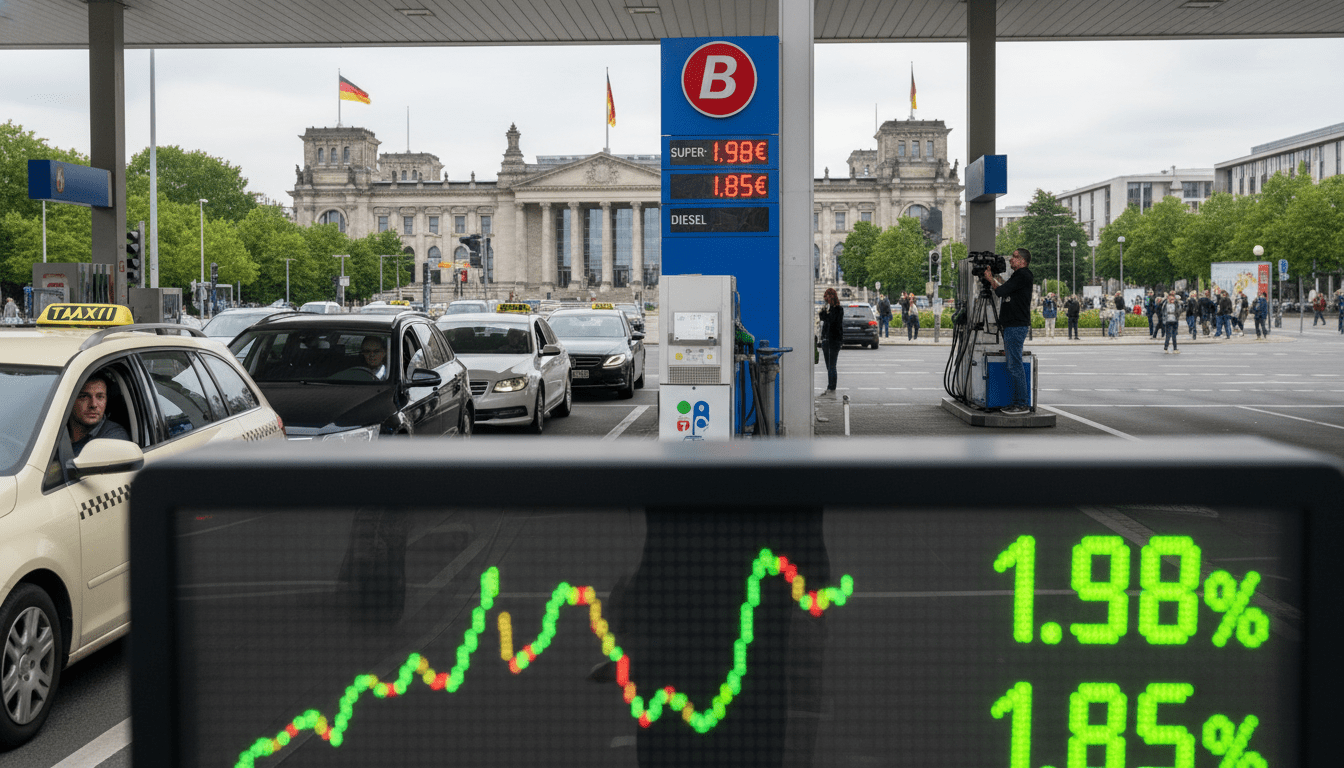
A government fuel subsidy that took effect on May 1 helped moderate pump prices and contributed to the slower month-on-month increase in headline inflation. The rebate reduced the immediate burden on motorists and limited how quickly energy price movements translated into consumer inflation.
Analysts warn, however, that such measures provide temporary relief and do not remove the structural drivers of higher energy costs. Once subsidies expire or if global prices spike again, households could see a renewed acceleration in inflation, particularly at the petrol pump and for heating costs.
Food and services diverge in May
Grocery inflation moderated in May: food prices rose by just 0.4 percent year-on-year, down from a 1.2 percent increase in April. The slowdown in food price growth gave households some relief at the supermarket checkout, although core cost pressures remain for specific categories.
By contrast, services—covering hospitality, travel and other domestic services—were 3.1 percent more expensive than a year earlier, a slight increase from the previous month. Rising labour costs, higher input costs for firms and stronger demand in some service sectors are keeping services inflation stickier than goods prices.
Companies still plan price increases, ifo survey shows
Business sentiment surveys indicate many firms continue to plan price adjustments to offset higher energy, production and transport costs. The Munich-based ifo Institute reports a still high share of companies intending to raise prices, although the proportion has eased somewhat recently.
Economists say that active price-setting by firms could sustain inflation even as headline measures temporarily dip, because businesses often pass through cost increases in waves rather than continuously. The pace at which firms adjust prices will be a crucial determinant of whether German inflation continues to decelerate.
Outlook amid geopolitical risk and economic forecasts
Advisory bodies and forecasters warn that the broader trajectory of inflation depends heavily on external factors, particularly developments in the Middle East that affect global energy supply. The German Council of Economic Experts expects modest economic growth this year and has pencilled in an annual average inflation rate that could be at or above three percent.
Slower growth projections—around half a percent for the year—coupled with persistent energy volatility present a mixed outlook: inflation may ease further if energy prices stabilise, but downside growth risks and renewed price shocks could keep consumer price inflation elevated. Policymakers will therefore monitor incoming data closely as they weigh the balance between supporting growth and containing inflationary pressures.
Overall, the May estimate offers temporary relief for households as headline German inflation softens, but the persistence of elevated energy and services prices leaves the pathway to sustained disinflation uncertain. The coming months will be decisive in determining whether the slowdown becomes a trend or a fleeting pause in price pressures.
