
Raul Hilberg at 100: New Archives and Centenary Events Reopen Debate on “The Destruction of the European Jews”
Raul Hilberg’s 100th anniversary sparks Berlin and Vienna events on May 28, 2026 and June 2, 2026, plus archival revelations that revisit his 1961 study and its contested legacy.
Centenary events in Berlin and Vienna
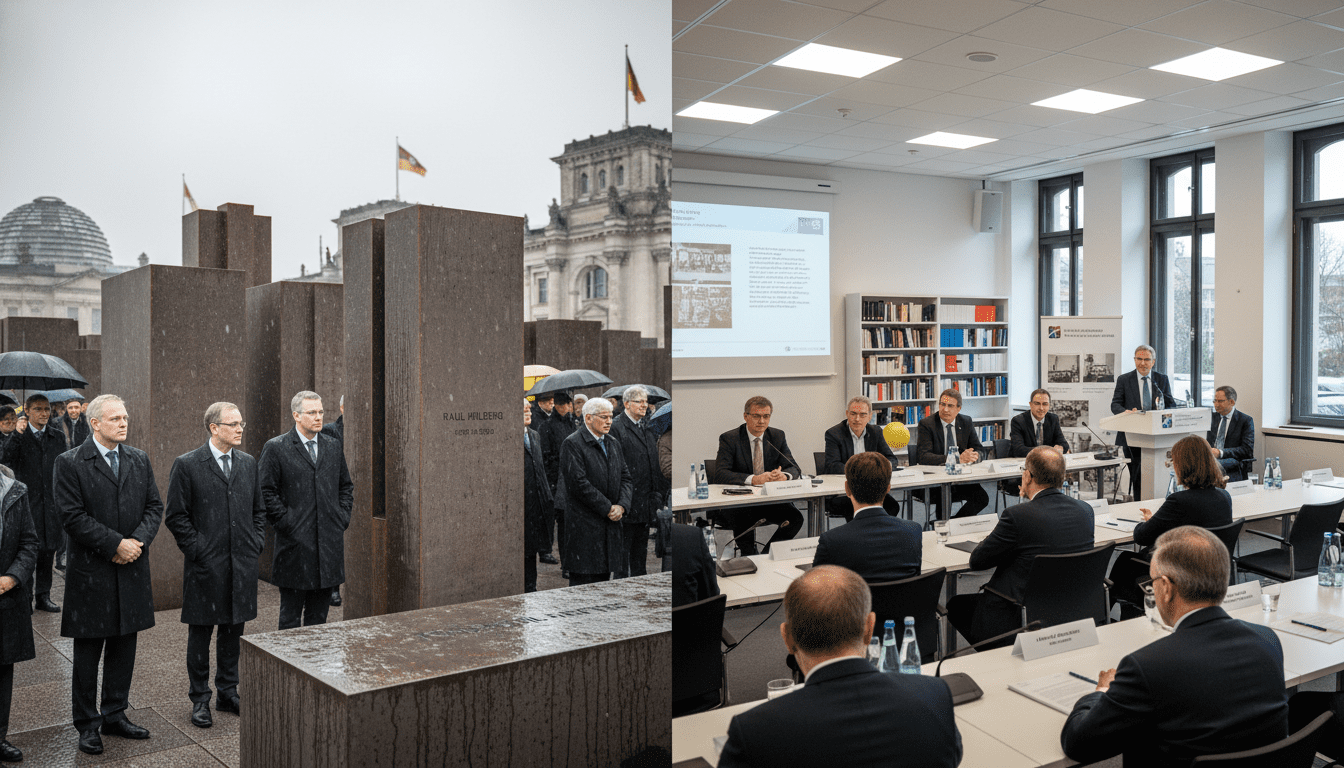
Raul Hilberg’s centenary is being marked with public and scholarly events that bring renewed attention to his work. On May 28, 2026 a memorial event at the Deutsches Theater Berlin convenes historians, witnesses, and public figures to reflect on Hilberg’s contribution to Holocaust research.
A city walk in Vienna and a scientific symposium at the Wiesenthal Institute are scheduled for June 2, 2026, the 100th anniversary of his birth, tracing Hilberg’s early life and exile. Organizers have framed the program to connect Hilberg’s biography with ongoing questions about perpetrators, institutions, and memory in Europe.
The 1961 study that reshaped Holocaust research
Hilberg’s 1961 book, The Destruction of the European Jews, was an early, systematic attempt to document the mechanics of Nazi genocide across Europe. In that work Hilberg argued that the Holocaust was not merely the result of a small cabal of fanatics but a vast process in which institutions, bureaucrats and ordinary functionaries played essential roles.
His painstaking use of German administrative files, tables and appendices produced a model of a technocratic destruction process that traced stages from victim identification and expropriation to concentration and murder. The book’s focus on perpetrators and administrative structures reoriented scholarship toward the agency of institutions and the operational logic of mass murder.
New archival findings on German reception
Recent research has unearthed documents that clarify why Hilberg’s book reached German readers only slowly and unevenly. Correspondence discovered in the Nachlass of Helmut Krausnick shows that, in July 1962, German institutions were already being asked for assessments about a German translation and whether public funds should support it.
The files indicate reservations within parts of the German historical establishment and in funding bodies, which contributed to delays and aborted publishing agreements in the 1960s. These revelations illuminate institutional gatekeeping and the complicated postwar politics that shaped how Holocaust historiography circulated in Germany.
Publishing struggles and translation history
Despite receiving scholarly awards in the United States, Hilberg encountered repeated obstacles to a German-language release of his full study. Contracts were signed and then dissolved; at least one major Munich publisher canceled a planned edition in the mid-1960s, citing objections to Hilberg’s theses.
Smaller, topic-specific German translations and later paperback editions eventually introduced Hilberg to broader German audiences, with a paperback release by a major German house consolidating his presence in the German-speaking public sphere. Those staggered publication events influenced both public debate and academic reception for decades.
Arguments about Jewish councils and scholarly controversy
A central and controversial element of Hilberg’s analysis concerned the role of Jewish councils (Judenräte) and the limited options available to Jewish leaders under Nazi rule. Hilberg contended that some Jewish institutions, under extreme duress, were incorporated into the mechanisms of persecution, a formulation that provoked sharp criticism from Jewish organizations and many contemporaries.
Over time, the debate evolved as additional sources and interpretations emerged; Hilberg’s later editorial work on primary documents, including the Warsaw Judenrat diaries, complicated earlier readings and showed his continued engagement with contested material. The controversy over culpability, agency and victimization remains a touchstone of Holocaust scholarship.
Legacy, recognition and persistent questions
Raul Hilberg’s influence on Holocaust studies is widely acknowledged: his research methods, archival emphasis and perpetrator-focused narrative set new standards for the field. He received major honors and became a frequent commentator in German and international forums, but his career also reflects the slow, fraught process by which societies confront institutional responsibility.
Hilberg was born on June 2, 1926 in Vienna and died on August 4, 2007 in Burlington, Vermont. His life—marked by exile, U.S. military service and decades of solitary archival labor—shaped a scholarship that remains central to debates about memory, responsibility and the architecture of mass violence.
New archival documents and the centenary events on May 28, 2026 and June 2, 2026 invite renewed reflection on how Hilberg’s arguments traveled, were resisted, and were eventually integrated into public and academic understanding. They also underscore continuing tensions about interpretation, commemoration and the responsibilities of institutions in the history of the Holocaust.
