
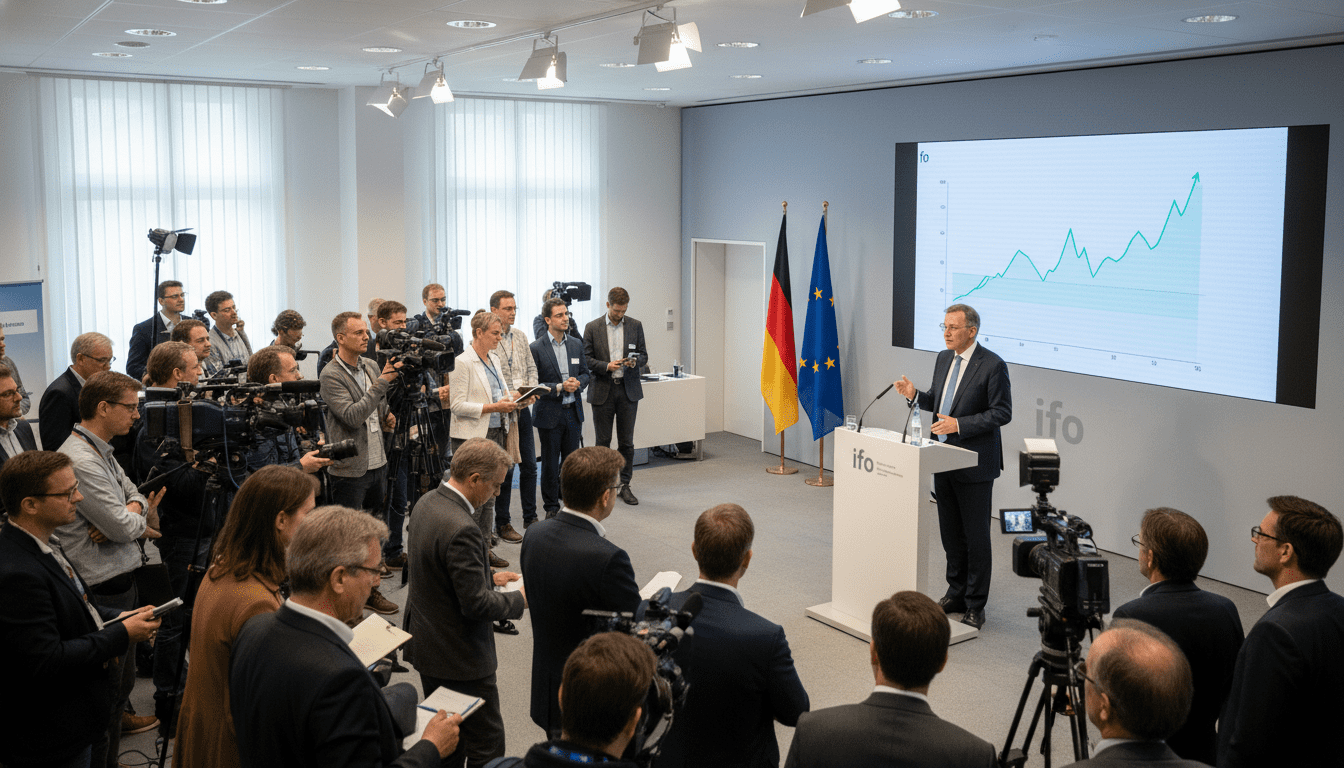
ifo employment barometer rises to 93.9 in May 2026 as planned job cuts slow
ifo employment barometer rises to 93.9 in May 2026 as German companies plan fewer job cuts; industry, logistics and retail still report layoffs amid weak demand.
The ifo employment barometer rose to 93.9 points in May 2026, signaling a moderation in planned job cuts by German companies, according to a manager survey by the Munich-based ifo Institute. The improvement from April’s 91.4 point reading indicates fewer firms intend to reduce staff, though overall plans still point to more layoffs than hirings. Policymakers and market watchers are assessing whether the shift marks the start of stabilization in the labour market or a temporary pause amid uneven demand.
ifo employment barometer rises to 93.9 in May 2026
The ifo Institute’s managers’ survey showed the employment indicator climbed to 93.9 in May 2026, lifted by a rebound in service-sector expectations after a sharp fall in April. The institute attributed the uptick to slightly improved sentiment among some service providers, while other sectors remain under pressure.
Despite the month-on-month gain, ifo chief economist commentary stressed that the level still reflects contractionary intentions overall, with more firms reporting plans to cut headcount than to expand it. The barometer’s rise is modest and leaves the labour market vulnerable to renewed weakness if demand does not recover.
Companies still plan net job cuts despite improvement
ifo employment data underline that companies remain cautious in personnel planning as economic momentum is fragile. Managers cited weak order books and uncertain prospects when explaining continued restraint on hiring.
The institute noted a clear divergence between sectors: some service companies report stabilization and modest hiring intentions, while manufacturing and other trade-related industries continue to trim payrolls. This mixed picture suggests the headline improvement masks persistent pockets of weakness in employment.
Industries hit: manufacturing, logistics, tourism and retail
The ifo survey identified manufacturing, logistics and tourism among the areas where the labour market remains difficult, with wholesale and retail also reporting job reductions. Construction firms, by contrast, indicated a broadly unchanged workforce, planning to maintain current staffing levels for the near term.
Logistics and tourism providers pointed to seasonal volatility and weaker demand as drivers of staffing cuts, while retailers face pressure from subdued consumer spending. These sector-specific trends have left overall employment intentions tilted toward reductions even as the aggregate barometer edges higher.
EY study shows industrial employment down 127,300 at end of Q1 2026
A separate study by auditing and consulting firm EY found that industrial employment in Germany remained well below year-ago levels despite a recent rise in revenues. EY reported that the number of people employed by industrial companies fell by about 127,300, or 2.3 percent, compared with the same point a year earlier, at the end of the first quarter of 2026.
EY analysts highlighted the sector’s heavy export dependence and intensifying competition from China as structural headwinds prompting firms to cut staff. The combination of cyclical weakness and longer-term competitive pressures has continued to reshape industrial employment even as some firms report higher sales.
Business sentiment, GDP and geopolitical risks weigh on hiring
The ifo business climate index also registered a modest improvement in May 2026, rising to 84.9 points, roughly 0.4 points above the revised April level. Gross domestic product had expanded by 0.3 percent in the first quarter of 2026, but the Bundesbank warned of a likely stall in the second quarter, citing weaker momentum in domestic demand.
Analysts and central bank officials pointed to geopolitical developments and external shocks as potential impediments to a normal spring recovery. In particular, the outbreak of hostilities that began on February 28, 2026, in the Middle East has been flagged by some forecasters as a factor that could disrupt trade flows and dampen confidence, complicating hiring decisions.
German firms also cited structural adjustments such as automation and shifting supply chains when discussing workforce decisions. While some employers are postponing recruitment, others are investing selectively in skilled roles, reflecting a reallocation of labour rather than uniform downsizing across all functions.
The recent movements in the ifo employment barometer and related studies underscore an employment landscape in transition: modest improvement in headline sentiment coexists with continued sectoral pain, particularly in manufacturing and trade-related services, shaping a cautious near-term outlook for hiring.
