
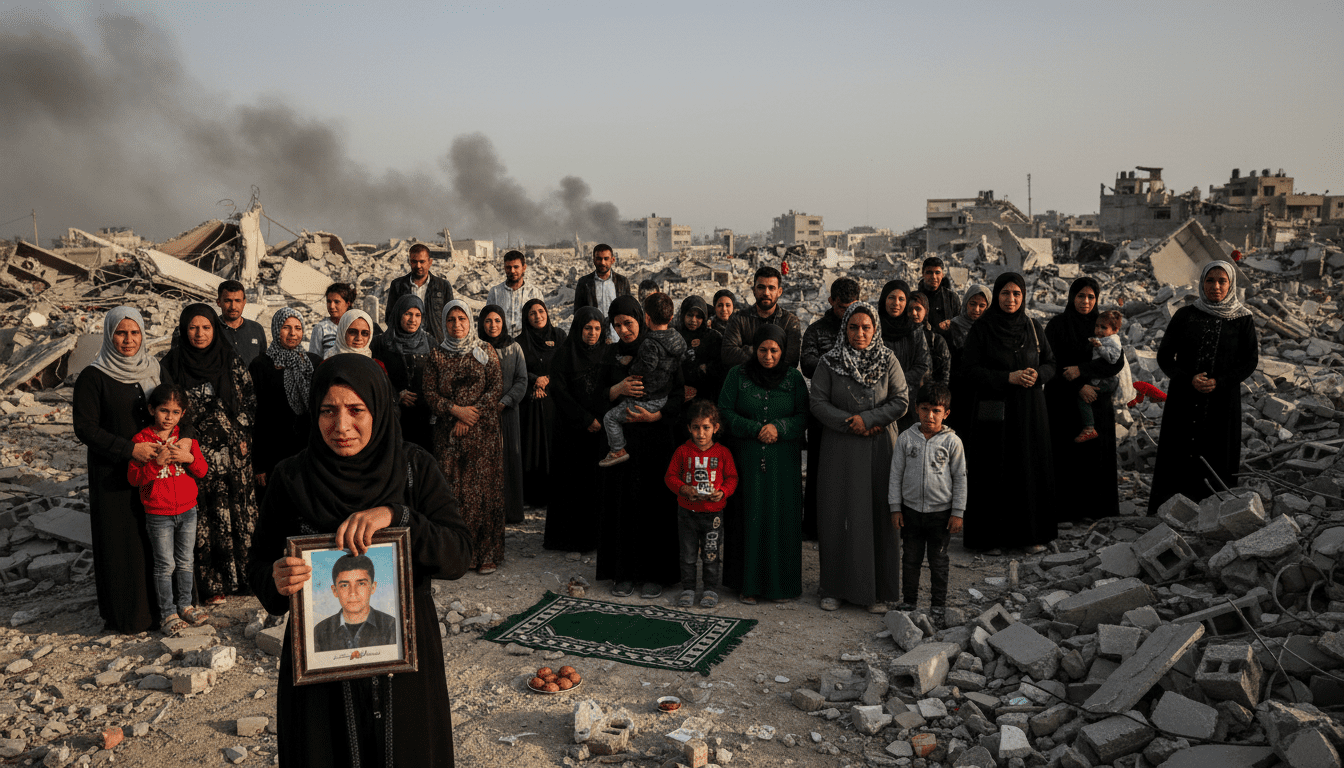
Gaza Eid al-Adha Observed Amid Continuing Strikes and Widespread Destruction
On May 27, 2026 Gaza Eid al-Adha was observed amid ongoing Israeli strikes, with worshippers praying beside rubble and families holding funerals for those killed in the hours before the holiday. Residents said the day combined religious observance with fresh grief as attacks continued across the densely populated enclave. The scene underscored deepening humanitarian needs and limited access to medical and aid services.
Eid al-Adha prayers held amid rubble and ruins
Worshippers gathered in open areas, on street corners and near damaged mosques to perform Eid prayers, according to local witnesses. The makeshift prayer spaces reflected both determination to observe the holiday and the destruction of many customary places of worship. Community leaders said the choice to pray publicly was a way to maintain cultural and religious traditions despite the ongoing violence.
Funerals and mourning took place throughout Gaza
Families conducted funerals at cemeteries across the territory, mourning victims of strikes that continued into the hours before Eid day. Relatives and neighbours attended burials in small groups, often under the watchful presence of emergency responders and volunteers. Sources describing the scenes said processions were somber and marked by frequent interruptions as officials continued to tally casualties.
Hospitals strained as medical teams cope with new arrivals
Medical facilities reported receiving additional patients amid already overwhelming caseloads, hospital staff and aid workers said. Doctors described shortages of beds, surgical supplies and fuel needed to run generators, complicating efforts to treat both the wounded and routine emergency cases. Health officials warned that extended disruptions to supply lines would further degrade care and could increase preventable deaths if not addressed quickly.
Displacement and the shelter crisis worsen on Eid
The ongoing strikes have left large numbers of families displaced, with many spending the holiday in temporary shelters or with relatives in safer parts of Gaza, humanitarian workers reported. Overcrowding in collective centres and informal sites has amplified needs for water, sanitation and food, organisers said. Aid agencies have appealed for safe corridors to reach affected populations, noting that Eid-related movements have been constrained by security conditions.
Access for humanitarian aid remains limited and contested
Humanitarian organisations and local officials emphasized that access constraints continued to hinder the delivery of relief supplies on May 27, 2026. Checkpoints, damaged roads and intermittent fighting have delayed convoys and reduced the volume of assistance reaching the most affected neighbourhoods. Aid coordinators called for predictable access and coordination with authorities to enable distributions during the holiday period.
International responses and calls for protection of civilians
Several diplomatic officials and advocacy groups reiterated calls for protection of civilians and respect for humanitarian law as fighting persisted over the holiday weekend. International actors urged all parties to facilitate aid deliveries and to avoid targeting civilian infrastructure, including hospitals and places of worship. Observers noted that global attention during religious holidays can amplify diplomatic pressure, but emphasised that urgent, tangible measures were needed to translate statements into relief on the ground.
Witnesses, aid workers and hospital staff who spoke about the Gaza Eid al-Adha described a combination of solemn religious observance and visible despair among communities coping with loss and displacement. They said the holiday highlighted both communal resilience and the depth of human suffering created by the clashes.
Relief agencies have stressed the necessity of immediate humanitarian corridors and sustained supplies of medicine, fuel and food to prevent a broader crisis. Local volunteer networks continue to coordinate burial services, distribute limited aid where possible and provide basic psychosocial support for grieving families.
As the enclave marks Eid under fire, residents and relief workers warned that without rapid improvements in access and protection, the coming days could bring further casualties and mounting humanitarian consequences. The holiday, traditionally a time of family gatherings and sacrifice, instead became for many a period of mourning and urgent need.
