
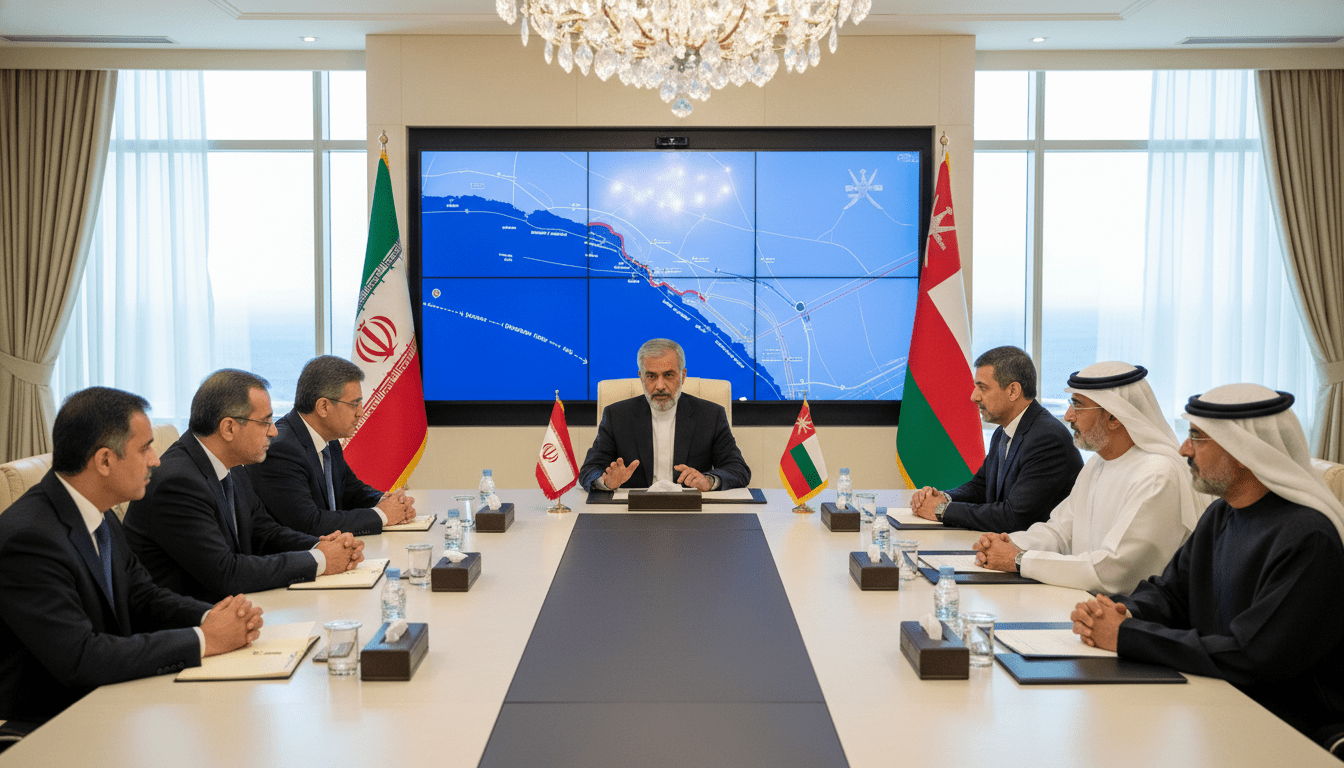
Iran says operation of Strait of Hormuz will be ‘completely different’ to pre-war
Iran’s deputy national security official says transit rules for the Strait of Hormuz will change drastically; Tehran and Oman are negotiating new management procedures.
Iran’s deputy national security official announced on Wednesday that the operation of the Strait of Hormuz will be “completely different” from how it functioned before the conflict over Iran began, signalling a major shift in how ships will transit the strategic waterway. Ali Bagheri Kani, deputy secretary of Iran’s Supreme National Security Council, made the comments in remarks carried by Iran’s Mehr news agency, and said Tehran and Muscat are negotiating the new framework for passage. The statement raises immediate questions for commercial shipping, regional navies and countries reliant on Gulf energy exports.
Iran signals new rules for Strait of Hormuz transit
Ali Bagheri Kani framed the change as a response to the security environment and recent hostilities that Iran says have reshaped regional maritime dynamics. He told Mehr that the “conditions and procedures for passing through the Strait of Hormuz will be completely different from the conditions before the conflict over Iran began.” His office did not provide a timetable or list of specific measures in its initial public remarks.
Bagheri Kani’s title as deputy secretary of the Supreme National Security Council places him among Iran’s senior security policymakers, indicating the comments reflect official Tehran thinking rather than a stray diplomatic remark. The reference to a different operational regime signals Tehran intends to assert more control or impose new protocols that will affect vessels transiting the choke point.
Talks with Oman over management of the waterway
Iran confirmed it is negotiating with Oman on how the passage will be managed, highlighting Muscat’s role as a Gulf state that has historically maintained relations with both Iran and Western capitals. The two governments did not disclose the scope of their discussions or whether the talks cover military escorts, identification procedures, routing lanes, or legal arrangements.
Oman’s involvement carries weight because it shares the Strait’s approaches and has been a diplomatic interlocutor during past maritime crises. Any bilateral agreement between Iran and Oman could reshape practical arrangements for ships and potentially influence how third-party states and commercial operators choose to navigate the area.
Potential effects on commercial shipping and energy flows
The Strait of Hormuz is a critical maritime chokepoint for global energy markets and commercial shipping, and changes to transit procedures could increase costs and logistical complexity. Shippers, cargo owners and tanker operators will likely seek clarity on routing, identification, inspection and escort requirements before committing to Gulf transits under a revised regime.
Insurance underwriters and freight forwarders will also monitor the situation closely, as uncertainty tends to drive up premiums and cause rerouting. Any sustained delay or perceived risk to vessels could affect supply chains for oil, liquefied natural gas and other goods that rely on Gulf shipping lanes.
Security posture and regional naval implications
A declared change in how the Strait will operate implies adjustments in naval postures by Iran and by other regional and international navies that routinely patrol Gulf shipping routes. Tehran’s move could include new monitoring practices, designated transit corridors, or stricter vessel verification procedures, all of which would require responses from maritime forces that escort convoys or protect navigation.
Foreign naval commands that have coordinated through multinational frameworks may need to reassess rules of engagement and cooperation mechanisms to avoid miscalculation. The risk of incidents rises when multiple authorities claim different standards for the same stretch of water, especially in a tense security environment.
Commercial and diplomatic actors watching closely
International shipping companies, insurers and energy firms are likely to press for detailed guidance and reassurances to prevent disruption. Diplomats and trade officials from importing countries will similarly seek consultations with Tehran, Muscat and regional partners to understand the practical implications and to protect commercial traffic.
Businesses that charter vessels or pipeline operators that rely on sea-borne supplies will be particularly attentive to any new administrative or physical requirements. Clear communication and an agreed operational framework will be essential to limit market shocks and to preserve safe passage for civilian traffic.
Uncertainty ahead as negotiations continue
At present, Tehran’s public comments leave open the nature and timing of the proposed changes, and Muscat’s role suggests any outcome could range from a formal bilateral arrangement to a looser coordination mechanism. Without specifics, ship operators and governments must prepare for a range of scenarios, from manageable procedural adjustments to more restrictive controls that would require operational changes.
Observers will watch whether negotiations produce immediate, practical guidance or whether the statement is a strategic declaration intended to reshape bargaining positions. In either case, the announcement underscores how the Strait of Hormuz remains central to regional security and global energy flows and how shifts in policy by littoral states can have wide-ranging commercial and diplomatic effects.
Iran and Oman have signalled talks, but the shape of any new arrangement and its consequences for international shipping remain unsettled, leaving regional and global actors to weigh their next steps while monitoring developments.
