
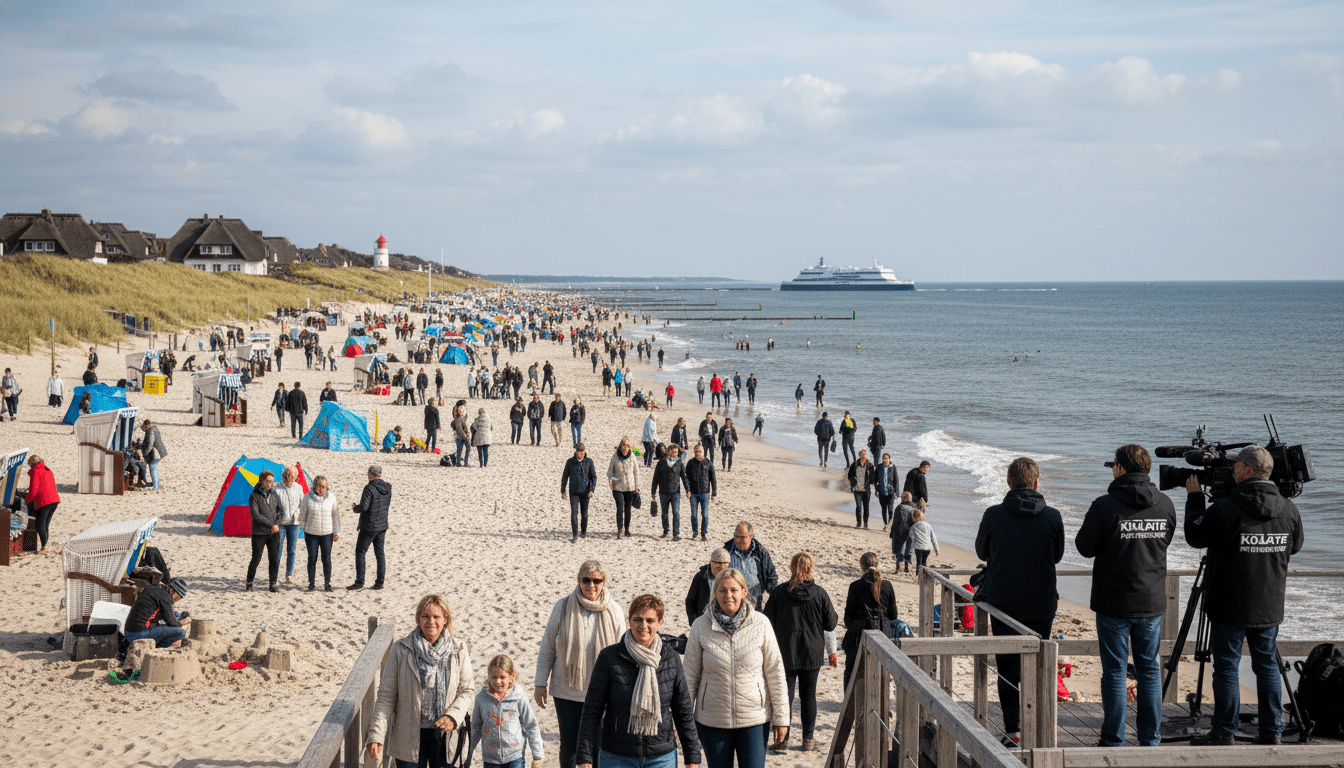
Germany domestic tourism gains as Middle East crisis redirects holidaymakers to North and Baltic coasts
Middle East conflict and rising fuel costs are driving Germany domestic tourism to beaches and lakes in 2026, with coastal bookings and short breaks on the rise.
Surge forecast by federal tourism coordinator
The federal government’s tourism coordinator, CDU MP Christoph Ploß, said recent instability in the Middle East is likely to shift travel demand toward Germany. He predicted stronger demand along the North Sea and Baltic coasts as holidaymakers opt for domestic alternatives such as Amrum and Usedom instead of traditional overseas destinations.
Ploß framed the trend as both a response to risk and an opportunity for local economies, arguing that the crisis abroad could translate into greater visits to German resorts. His comments reflect a wider conversation among policymakers and industry groups about how geopolitical shocks reshape travel patterns.
Booking platforms and hosts report optimism
Vacation rental platform Holidu reported expectations of a strong travel year at coastal destinations, with 91 percent of local accommodation providers forecasting stable or rising occupancy in 2026. Popular search terms on the platform included “Ostsee,” “Nordsee,” and “Bodensee,” indicating heightened interest in seaside and lakeside stays.
Holidu also found that 63 percent of holiday-home hosts plan to keep prices unchanged despite higher airline costs driven by rising kerosene prices. The platform’s results suggest that supply-side actors are willing to absorb some cost pressure to attract last-minute and domestic travelers.
Official statistics show contrasting trends
National statistics for 2025 present a more complex picture: the Federal Statistical Office recorded roughly 497 million overnight stays from 192 million guests, exceeding pre-pandemic levels for overall volume. Those figures, however, include business travel and foreign guests and do not by themselves confirm a sustained rise in main domestic holidays.
Independent research by the Travel and Vacation Research Association (FUR), which surveyed over 12,000 Germans, found the share of main holidays spent inside Germany—defined as trips of five nights or more—fell to 22 percent in 2025, or about 15 million main holidays. That represents a decline from the pandemic peak and the 18.7 million main domestic holidays recorded in 2019.
Short breaks and second trips buoy domestic demand
While the number of long domestic holidays declined, short trips of up to four nights surged. FUR data showed 91.2 million short stays—often booked as second vacations—exceeded pre-pandemic levels, with Germany playing a major role in those movements. Bavaria alone registered 11.3 million short trips, more than four times its number of main domestic holidays.
Coastal states such as Lower Saxony and Mecklenburg-Western Pomerania reported roughly double the short-break guest numbers compared with their main-holiday figures. In Schleswig-Holstein, the distribution between short and long stays was roughly even, with 2.9 million main domestic holidays making it a domestic leader.
Booking timing and market signals ahead of peak season
Market researcher TDA reported that by Easter 2026 bookings for package summer holidays—largely to Mediterranean destinations—reached only 59 percent of the prior year’s summer volume. That leaves about four in ten potential holidaymakers still undecided, creating an opening for last-minute domestic bookings.
Industry insiders say this booking lag benefits destinations that cater to spontaneous travelers. Hosts and regional tourism organizations are intensifying marketing for flexible arrivals and highlighting accessibility by car and train, factors that increasingly matter when fuel costs and flight uncertainties are top of mind.
Airlines, fuel supply and traveler confidence
Airline capacity and fuel supply concerns have also shaped decisions. Debate over constrained kerosene availability and higher jet-fuel prices has raised worries about disrupted return flights, which in turn pushes risk-averse travelers toward domestic options. Travel operator Dertour emphasized that although kerosene deliveries are somewhat reduced, 80 to 85 percent of usual supply capacity remains available and carriers have incentives to operate heavily booked leisure routes.
Some carriers have adjusted schedules for the summer season for economic reasons rather than absolute fuel shortages, TUI noted, and Lufthansa announced cuts of around 20,000 flights for the summer half-year, focusing mostly on city routes that attract fewer holidaymakers. These shifts alter route networks but industry representatives say core leisure links to the Mediterranean remain prioritized where demand is strongest.
Domestic tourism operators view the combination of higher outbound travel costs, geopolitical uncertainty and airline schedule changes as a potential net gain. If a significant share of the undecided travelers moves away from overseas bookings, coastal resorts and inland lakes could see meaningful uplift in arrivals across 2026.
Experience to date suggests the boost will be uneven: long domestic holidays remain below earlier levels while short stays and late bookings show resilience. Local authorities and tourism providers are positioning to capture that demand, focusing on flexible offers, price stability and the natural attractions that are currently drawing Germans from Antalya and Hurghada to Amrum, Usedom, Borkum and Sylt.
