
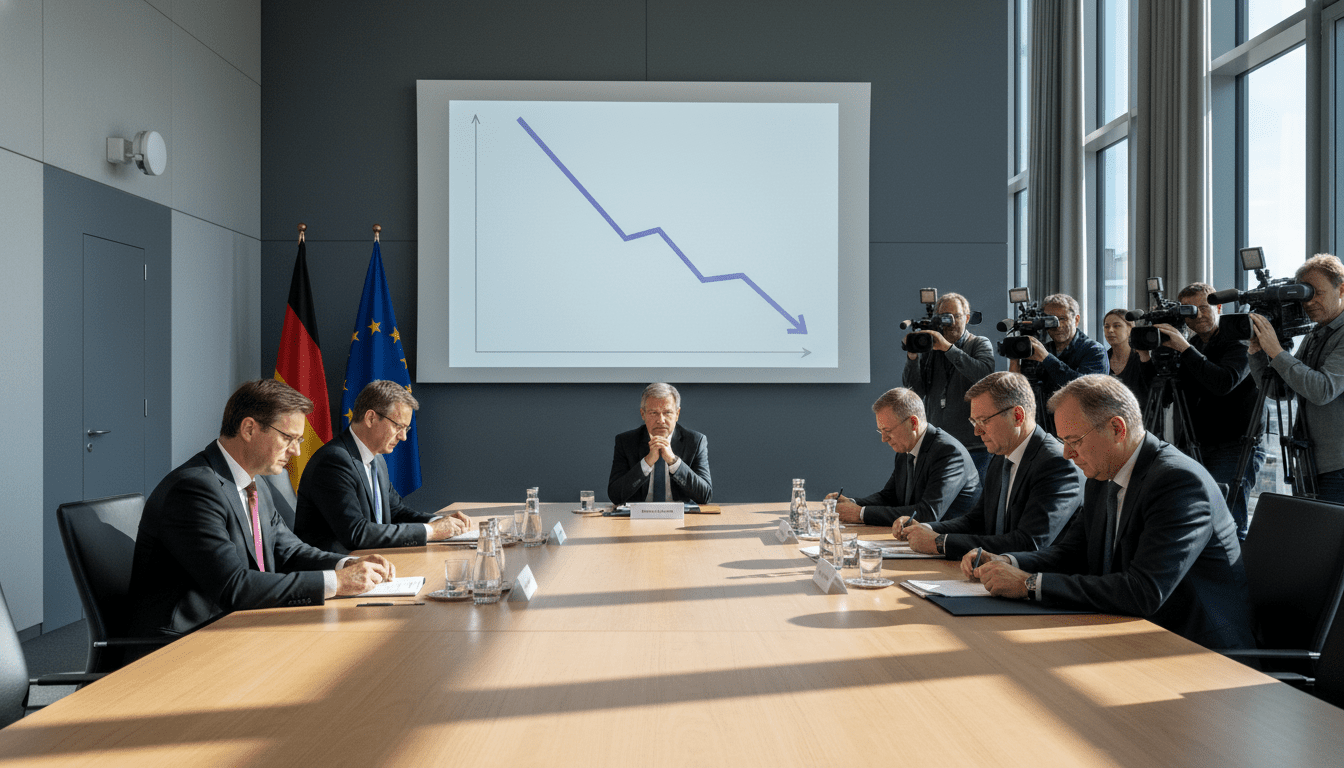
German export expectations slide to lowest level since April 2025 as Ifo and DIHK report renewed pessimism
Ifo and DIHK data show German export expectations fell to -5.5 in May, as automakers and metal firms cut forecasts amid geopolitical and energy pressures.
The barometer for German export expectations plunged to -5.5 points in May, marking the weakest reading since April 2025 and signalling renewed strain on overseas sales. The decline from -1.2 in April came despite a modest rebound in first-quarter exports, underscoring how fragile the recovery remains. Analysts point to elevated geopolitical risks and lingering economic headwinds as primary drivers behind the sudden shift in sentiment.
Ifo survey records steep deterioration in May
The Munich-based Ifo Institute reported the drop in its export expectations index following its monthly company survey, noting that the reading is the lowest in over a year. Ifo’s head of economic research, Timo Wollmershäuser, said companies have grown more cautious even after an uptick in shipments earlier this year. The institute framed the development as a setback after tentative improvement, attributing it largely to an uncertain global environment.
Ifo’s figures show the pace of deterioration varied across industries, with some sectors turning decidedly negative after months of optimism. The institute highlighted that the overall export recovery seen in the first quarter has not yet translated into durable confidence among exporters. Firms told Ifo researchers that external demand remains uneven, and many expect further softness in foreign markets.
DIHK poll of 23,000 firms shows exporters shifting to pessimism
A parallel survey by the German Chamber of Commerce and Industry (DIHK), which canvassed roughly 23,000 businesses, painted a similar picture of growing concern among exporters. According to the DIHK results, 29 percent of industrial firms anticipate falling exports in the near term, while only 19 percent expect increases. That gap signals a broad swing toward caution within the manufacturing base.
The DIHK said the tentative upswing at the start of the year was effectively erased by a recent geopolitical shock in the Middle East, which interrupted trade flows and clouded near-term demand projections. Chamber officials warned that the shock compounded existing vulnerabilities in global supply chains and dampened orders from key trading partners.
Automotive and metal industries register the sharpest pullback
Among Germany’s export-dependent sectors, the automotive industry experienced a notable setback after four months of upbeat forecasts, with companies now expecting a decline in overseas shipments. Automakers and suppliers cited softer demand in key markets and logistical uncertainties as factors behind the revised outlook. The reversal is particularly consequential given the sector’s outsized contribution to Germany’s export totals.
Metal producers also reported weakening prospects for foreign sales, reflecting lower commodity-related orders and tighter investment cycles abroad. Together with autos, these industries represent a substantial share of industrial exports and their retrenchment is likely to damp GDP momentum if trends persist. Energy-intensive manufacturers, in particular, signalled pressure on cost competitiveness that could further erode export volumes.
Electronics and furniture show limited pockets of strength
Not all exporters turned negative: the electronics sector retained a modest degree of optimism about foreign demand, though its confidence fell short of last month’s levels. Producers pointed to ongoing demand for specialized components and rising orders in certain regional markets as reasons for relative resilience. Still, firms cautioned that the outlook remains contingent on supply-chain stability and cyclical demand.
Furniture makers were among the few groups projecting higher exports, benefiting from niche demand and inventory restocking in some markets. These gains are uneven and generally smaller in scale compared with declines seen in heavy industry. Sector analysts said such pockets of strength may provide temporary support but are unlikely to offset broader weakness across industrial exports.
Geopolitical tensions and energy costs raise downside risks
Economists stress that heightened geopolitical uncertainty is exerting a clear drag on exporters’ confidence, with recent conflicts and trade frictions interrupting normal trading patterns. Rising energy and input costs also contribute to diminished competitiveness for European manufacturers on global markets. The combination of these factors makes forecasting near-term export trajectories particularly challenging.
Policymakers and business groups have signalled readiness to monitor developments closely, with options ranging from targeted support measures to efforts promoting diversification of trade relationships. For now, companies appear to be recalibrating production and investment decisions to reflect a more cautious external environment.
The drop in German export expectations to -5.5 in May, following a reading of -1.2 in April and marking the weakest stance since April 2025, signals a turning point for exporters who had briefly anticipated recovery. With automakers and metals firms leading the slowdown and political and energy risks on the rise, the near-term outlook for exports is uncertain and will hinge on developments in global demand and geopolitical stability.
