
AfB scales up as demand for refurbished IT devices rises amid procurement delays
AfB reports rising demand and revenue for refurbished IT devices while facing procurement delays, chip shortages and product-design hurdles across Europe.
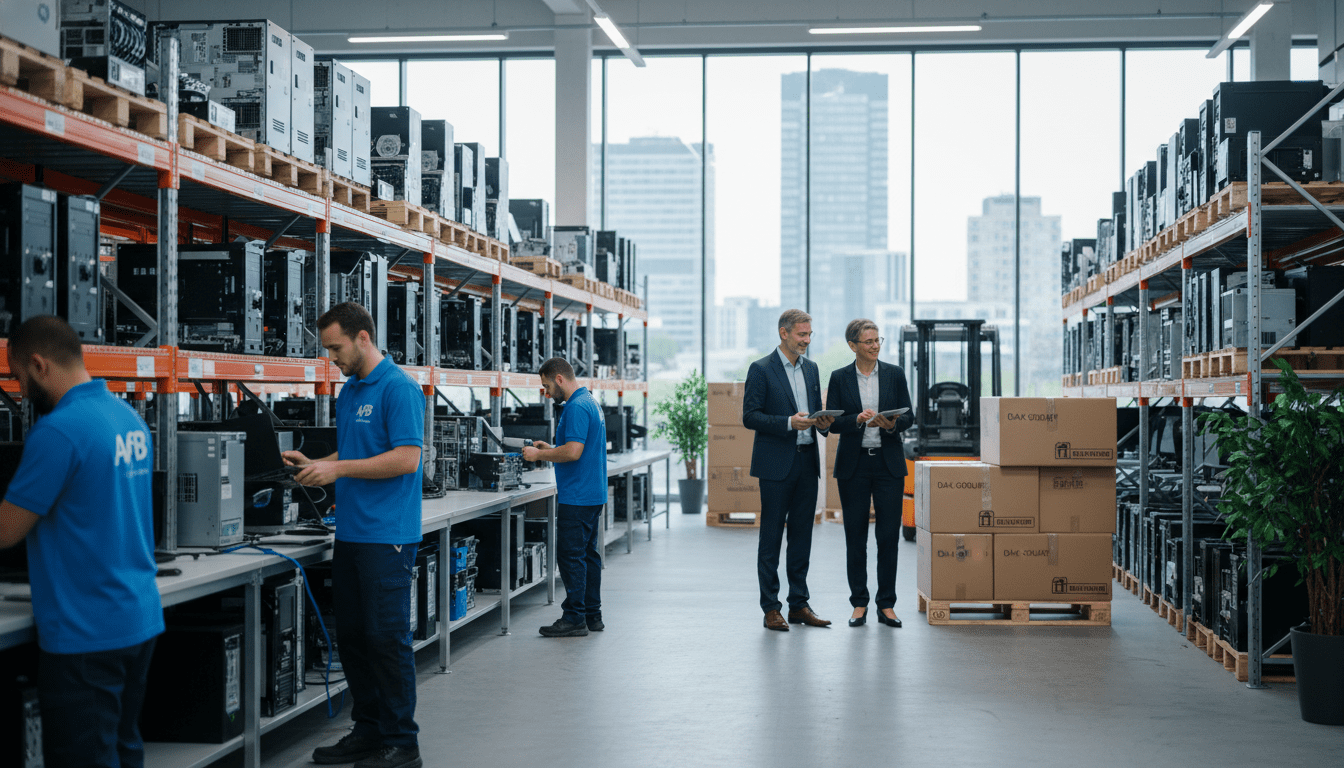
AfB’s Ettlingen hub processes hundreds of thousands of devices
The Ettlingen facility of AfB (Arbeit für Menschen mit Behinderung) receives stacked laptops, phones, monitors and headsets that companies have retired but not yet scrapped. The social enterprise says it collected 728,000 IT and mobile devices in the last year, more than 500,000 of them in Germany alone. AfB wipes data, refurbishes and resells equipment, positioning refurbished IT devices as an alternative to new purchases.
Corporate clients and cross-border footprint drive supply
More than 2,000 clients — from DAX firms to medium-sized companies and public authorities — hand over end-of-lease equipment to AfB for processing. Clients named by the company include Siemens, Hannover Re, Heidelberg Materials and Deutsche Telekom, and AfB operates roughly 20 locations across Germany, Austria, France, Switzerland and Slovakia. That client base supplies a steady flow of used hardware even as some firms delay new purchases because of supply uncertainty.
Revenue growth underlines market momentum
AfB reported revenues of €56.7 million in 2023 and €65.7 million in 2024, showing strong year-on-year growth, and the company says 2025 revenues rose again without disclosing a precise figure. Industry projections cited by AfB expect the global market for reused electronics to expand substantially over the coming decade, supporting long-term demand for refurbished IT devices. Still, AfB’s leadership warns that macroeconomic pressures and ongoing chip shortages are reshaping the timing and volume of device returns.
Refurbishment process and quality assurances
Every device accepted by AfB undergoes comprehensive data deletion and a 60-point-plus inspection that checks everything from cosmetic scratches to USB ports and battery health. Functioning components recovered from dismantled units are reused to upgrade other devices, and reconditioned products are offered through AfB’s own stores and online shop with a one-year warranty. The company reports a reuse rate of 71 percent; units unsuitable for repair are disassembled and sold for material recovery.
Sustainability gains and engineering limitations
AfB emphasizes the environmental benefits of secondhand IT: refurbishing saves energy, water and raw materials compared with manufacturing new devices. However, technical design choices by some manufacturers complicate repair and reuse; for example, tightly soldered assemblies in certain smartphones and laptops can make component replacement difficult. AfB notes that product design and limited recycling-readiness in many devices remain obstacles to achieving higher reuse rates across the sector.
Short-term rentals and public-sector deployments
Beyond resale, AfB offers short-term rentals that serve public authorities and event organizers, expanding the company’s revenue mix and use cases for refurbished equipment. The company supplied 3,600 devices to 43 municipalities for recent local elections in Bavaria and provided equipment for large public events, including the 2025 Evangelical Church Congress. These services illustrate how refurbished IT devices can meet temporary, high-volume needs while keeping hardware in circulation.
Companies still discard hardware, AfB warns
Despite the growing market for reconditioned equipment, AfB reports that some organizations continue to scrap hardware rather than seek refurbishment or recycling. The firm accepts all types of devices — from modern laptops to older CRT monitors — and it stresses that broader adoption of repair-friendly design would improve material recovery and circularity. Increasing corporate sustainability reporting is cited as a reason many organizations now choose social refurbishers, but AfB says more progress is needed upstream at the design and manufacturing stages.
Outlook: steady demand but operational headwinds remain
AfB’s mix of social employment, large-scale processing capacity and a growing European client network positions it to benefit from rising interest in refurbished IT devices, yet the company must navigate cyclical procurement shifts and component shortages. Continued revenue growth and rising volumes indicate market momentum, but higher reuse rates will depend on device design changes and wider industry commitments to circular practices. The next phase for AfB will hinge on balancing social objectives with commercial scale while advocating for repairable, recyclable electronics.
