
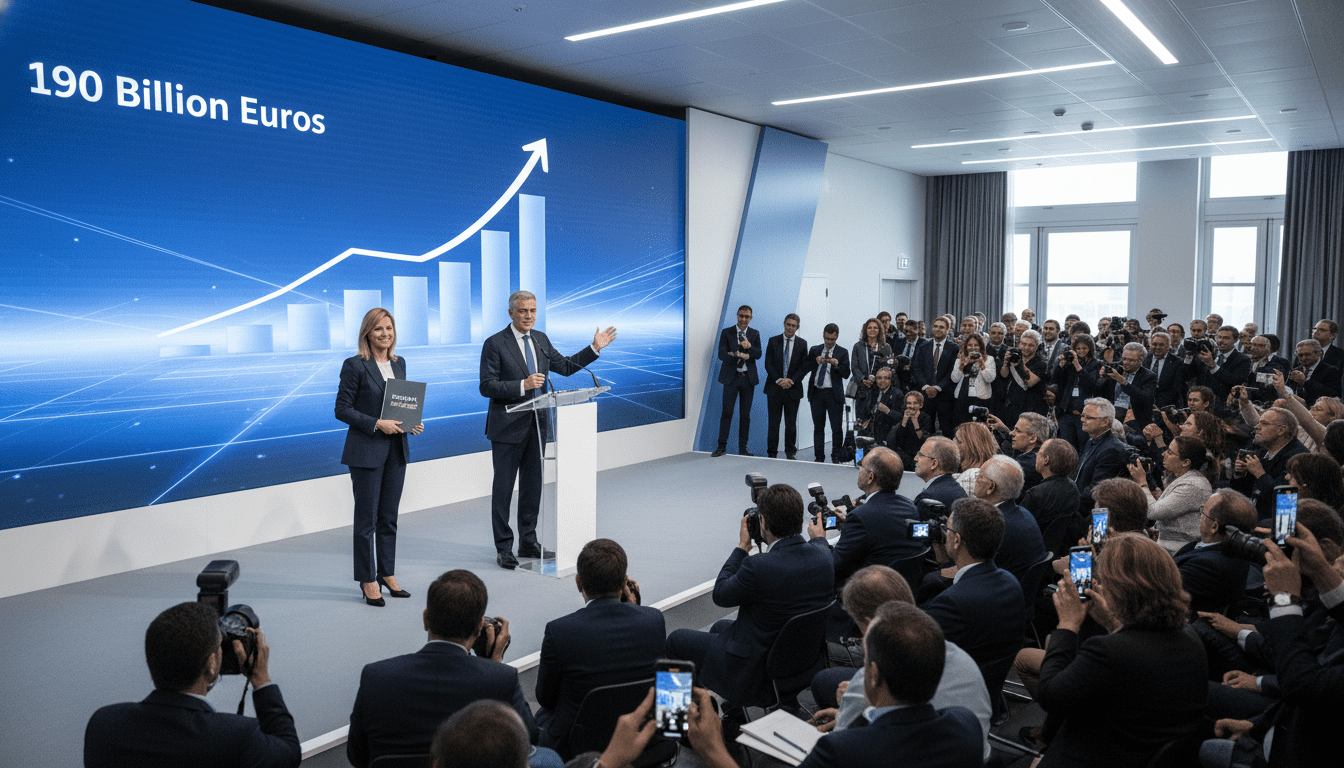
Stellantis strategy: Filosa outlines €190bn target and 7% margin with battery and Tata partnerships
Stellantis strategy: CEO Antonio Filosa reveals a five-year plan to hit €190bn revenue and 7% margin through Chinese battery deals and a Tata cooperation.
Antonio Filosa presented a measured Stellantis strategy this week that set a five‑year target of €190 billion in revenue and an operating margin of 7 percent. The plan, aimed at closing gaps across market segments and rebuilding product appeal, drew a tepid response from investors who had expected bolder, headline-grabbing moves. Filosa’s approach emphasizes partnerships, platform consolidation and a shift of resources to North America while acknowledging past strategic trade-offs.
Filosa’s five‑year plan and investor reaction
Filosa framed the program as incremental and pragmatic rather than transformational, focusing on steady revenue recovery and margin improvement. Investors reacted with limited enthusiasm, signaling skepticism that the roadmap will quickly reverse recent financial volatility. Market observers noted the contrast with predecessor leadership styles that were more aggressive or charismatic in presenting long-term visions.
Financial targets and the legacy of Carlos Tavares
The new targets aim to restore revenue to roughly €190 billion and achieve a 7 percent operating margin within five years. That pledge comes against a backdrop of large swings under the previous leadership, when revenue climbed to about €190 billion in 2023 but is projected to fall back to roughly €153 billion in 2025 alongside a substantial net loss. Analysts say reconciling those fluctuations and trimming losses will require both cost discipline and renewed product momentum.
Strategic partnerships for batteries and markets
A central pillar of the plan is deeper cooperation with Chinese suppliers to secure lower‑cost batteries and close supply gaps. Filosa also formalized a partnership with India’s Tata Group and Jaguar Land Rover to accelerate market access in India and North America. Company executives described these alliances as routes to scale and cost efficiency rather than full integrations, and they will be critical to executing the electric vehicle transition on a competitive cost basis.
Platform consolidation and a renewed software emphasis
Stellantis intends to reduce complexity by moving new European models to a unified platform that can underpin vehicles from small cars to mid‑size segments. The blueprint echoes earlier industry efforts to standardize hardware, while placing greater emphasis on electronic architectures and software layers. Executives said software-defined platforms will command increasing investment as software and digital features become central to product differentiation.
North America investment and model refreshes
Filosa signaled a reallocation of capital toward North America, where product ranges have aged and relied on a narrow set of models. The plan includes funding for newer model generations and refreshed offerings intended to regain market share and margin in the region. Company statements stressed that turning around North America is a priority because prolonged underinvestment has left Stellantis exposed to competitors with fresher lineups.
Quality concerns and engineering capacity
Observers warned that past cost-cutting measures contributed to declines in perceived quality and durability, particularly for internal combustion engines and some battery systems. Filosa’s plan acknowledges those legacy issues but faces scrutiny over reductions in engineering headcount in locations such as Rüsselsheim. The effectiveness of the strategy will hinge on whether the company can rebuild engineering depth while maintaining the cost benefits of platform consolidation.
The plan stops short of promising flamboyant product reveals or niche halo models to generate immediate excitement, instead betting on filling long‑neglected gaps across mainstream segments. Execution risks remain, including the speed of battery supply deals, integration work with partners and whether new models will trigger the consumer “want‑to‑have” response needed to lift volumes.
Filosa’s message to investors and dealers was steady: restore profitability through a mix of partnerships, streamlined platforms and targeted investment rather than dramatic strategic pivots. The coming quarters will test whether that incremental approach can translate into the product momentum and financial stability Stellantis needs to meet its stated €190 billion target and sustainable margins.
