
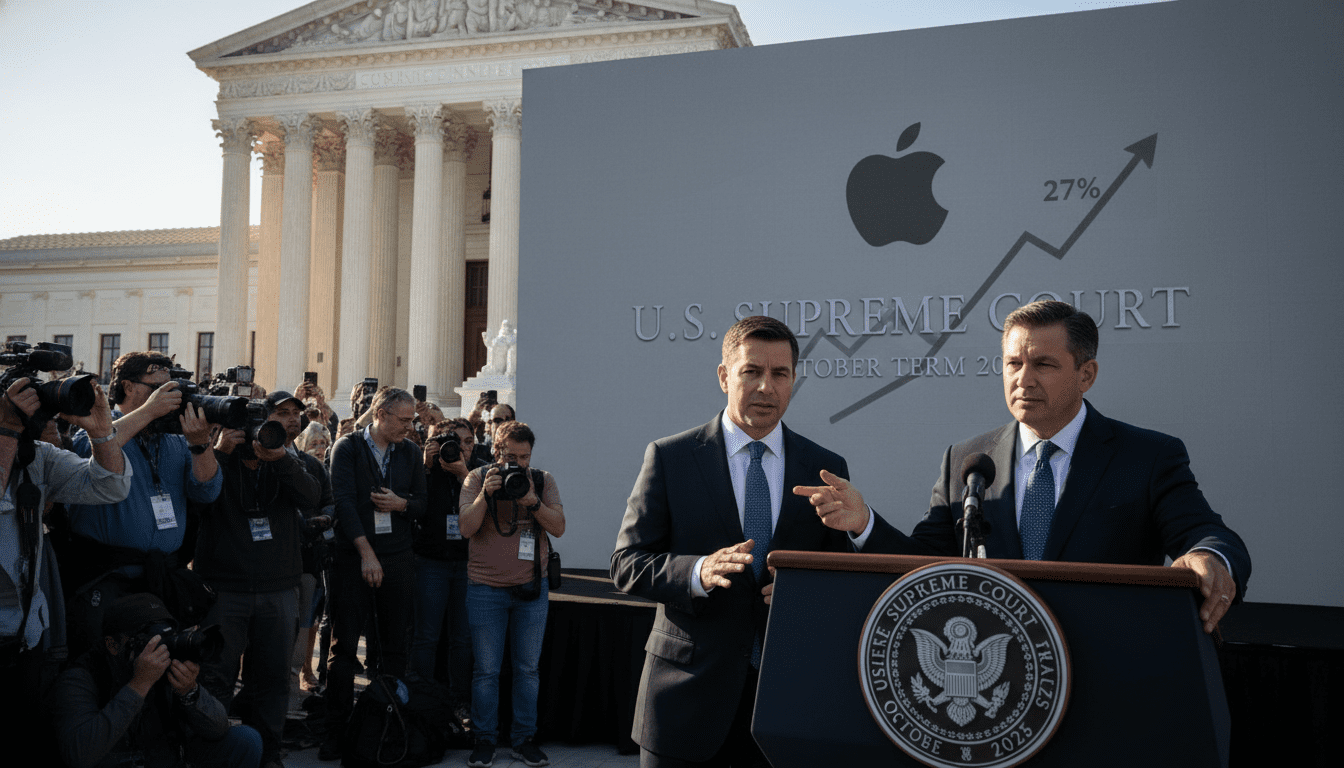
Apple’s 27% Commission on External Links Found to Violate Court Order
U.S. court found Apple disobeyed an injunction after introducing a 27% commission on purchases made via external links, escalating the Epic Games dispute.
Apple allowed external app-store links but attached a new 27% commission on purchases completed within seven days of a click, a move that triggered immediate legal contention and a 2025 ruling that the company violated a court order. The decision has intensified scrutiny of Apple’s app ecosystem rules and reopened questions about how far platform owners can go in regulating third-party link flows. Epic Games, which has been in a years-long legal fight with Apple, argued the fee effectively undermined the injunction and sought further remedies.
Court ruling and legal findings
A federal court in 2025 determined Apple had not complied with an earlier injunction by imposing conditions on external links, including the contested commission. The judge concluded that the new policy fell outside the scope of permissible measures and amounted to a de facto barrier to the injunction’s intended effect. Legal observers say the finding underscores how subtle policy adjustments can carry significant legal risk in ongoing platform litigation.
The ruling did not immediately prescribe a new remedy beyond finding noncompliance, but it opened the door to additional relief sought by Epic Games. That company argued the commission created a chilling economic effect on developers and third-party commerce routed from outside the App Store. Apple faces the possibility of further court orders or fines if the matter is not resolved on appeal.
Details of Apple’s link policy change
Under Apple’s revised policy, developers may include external links but purchases that occur within seven days of a user clicking those links are subject to a 27% commission. Apple presented the restrictions as a way to preserve transaction integrity and platform security while allowing some degree of link-out functionality. Critics countered that the seven-day attribution window and the high commission rate effectively deterred meaningful use of external links.
Developers and app publishers have raised practical concerns about tracking, attribution disputes, and how the fee would be calculated for multi-step purchases. Small and independent developers warned the policy could force them back toward in-app purchases to avoid the levy, reducing the real choice the injunction intended to create.
Epic Games’ challenge and next steps
Epic Games argued the commission violated the prior court order by imposing a punitive economic condition on the very links the injunction sought to enable. The company has repeatedly framed its legal campaign as a broader fight over platform gatekeeping and fair competition in digital marketplaces. Epic’s filings highlighted the commission as evidence that Apple was using technical and contractual levers to preserve its app-sales ecosystem.
Following the 2025 ruling, Epic has signaled it will press for stronger enforcement or further relief, and the dispute may now be positioned for review by higher courts. Legal analysts expect additional appeals and procedural skirmishing that could determine whether the issue ultimately reaches the U.S. Supreme Court.
Implications for developers and the app economy
If Apple’s approach stands, the 27% commission could reshape incentives across the app economy by steering purchases back through the App Store. That would blunt the injunction’s policy goal of increasing developer choice and potentially maintain Apple’s revenue control. Conversely, if courts bar the fee, Apple may need to craft alternative compliance measures that avoid economic disincentives.
Industry groups and developer associations are watching closely, noting that the outcome will influence not only app stores but how other platform companies design compliance with judicial mandates. The case underscores a wider regulatory and legal debate about platform accountability and how technological design choices can serve commercial ends.
Potential path to the Supreme Court
With the 2025 finding of noncompliance and the high stakes involved, parties appear likely to seek further review. The procedural posture and the broader implications for antitrust and competition law make the matter an attractive candidate for appellate courts to consider. If accepted by the U.S. Supreme Court, the dispute could set a precedent on how courts police platform behavior after injunctions and what remedies are available when companies introduce offsetting restrictions.
A Supreme Court review, if it occurs, would focus on the interplay between equitable relief, platform governance, and the permissible scope of post-injunction policy changes. Legal experts caution that such review would take years and could leave the market in a state of prolonged uncertainty while appeals play out.
The 2025 ruling that Apple disobeyed the injunction by imposing a 27% commission on purchases within a seven-day attribution window highlights the complex legal terrain that governs digital marketplaces. Stakeholders across the technology and gaming industries are likely to closely follow ensuing appeals and any further judicial guidance that clarifies how platform operators must implement court-ordered changes.
