
Germany’s Klimaschutzprogramm 2026 Deemed Insufficient by Experts; Courts Urged to Defer to Government
Experts warn Germany’s Klimaschutzprogramm 2026 risks missing legally binding emissions targets; courts limited to review, leaving concrete policy choices to the government.
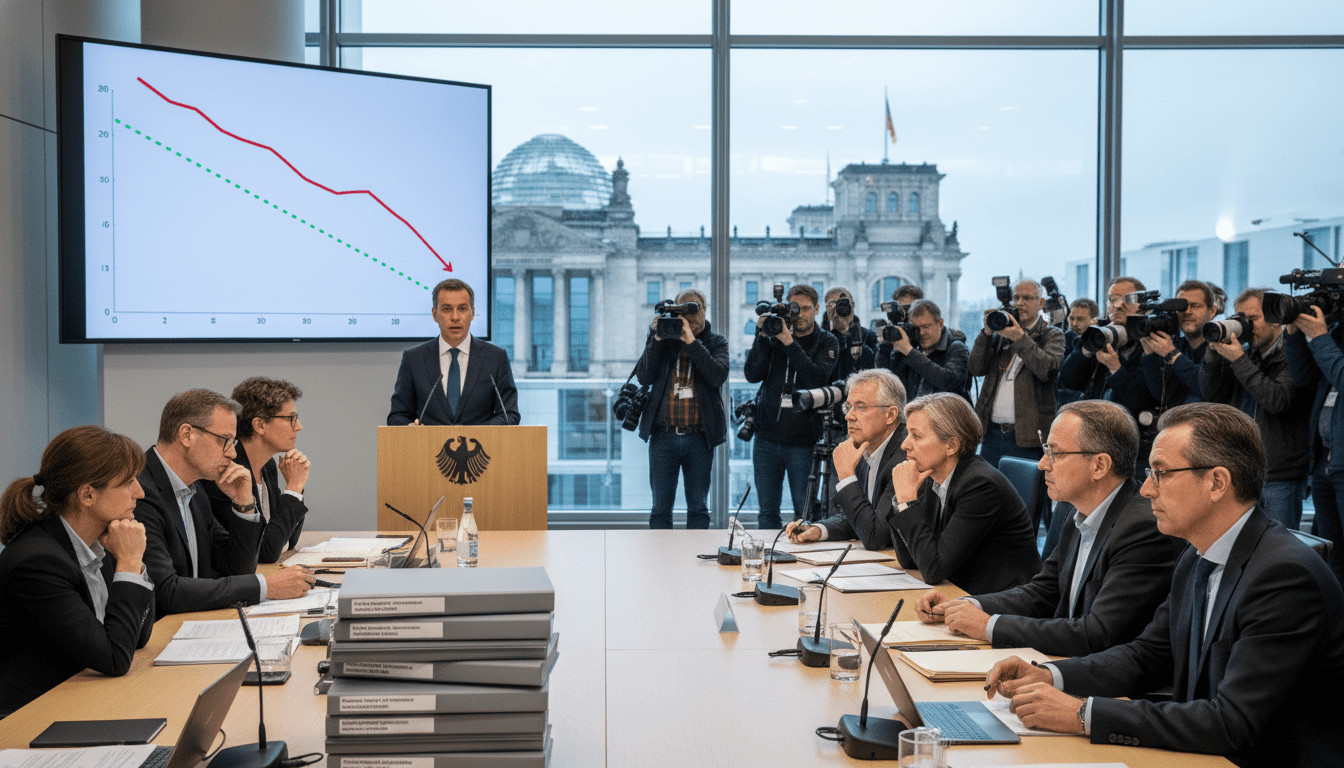
Germany’s Klimaschutzprogramm 2026 has been flagged by the independent Experts Council for Climate Issues as likely to underestimate future emissions, a finding that raises the prospect of new legal challenges even as senior judges stress that courts must not prescribe specific policy measures. The Experts Council identified mismatches between projection data and the legally binding reduction pathways enshrined in the Klimaschutzgesetz, while the Federal Administrative Court president reiterated that enforcement of those targets remains primarily the government’s responsibility. With a January 2026 ruling already establishing the binding nature of the law’s targets, the debate now centers on projections, political choices and the limited remedial role of the judiciary.
Experts Council Identifies Projection Shortfalls and Long‑Term Risk
The Experts Council concluded that the projection model underpinning the Klimaschutzprogramm 2026 likely understates future emissions, particularly beyond 2040. In its public statement the council described the budget exceedance through 2030 as modest but warned of growing divergence thereafter, prompting calls for a rework of the programme. The assessment is framed as a forecast with inherent uncertainty, and its findings hinge on factual projection data that could, if contested, be litigated in court.
Federal Administrative Court: Targets Bind but Measures Are Political
Andreas Korbmacher, president of the Federal Administrative Court, reiterated that the Klimaschutzgesetz’s targets are binding on the federal government and that the climate programme must include measures sufficient to meet those targets. He emphasized that the court’s January 2026 decision affirmed this principle and remains controlling law. At the same time, Korbmacher stressed that it is the executive — not the judiciary — that must select and design the specific measures to achieve legally required reductions.
Courts Will Not Prescribe Individual Policy Steps
The Federal Administrative Court has drawn a clear line: judges can review compliance and, where necessary, require lawful action, but they will not dictate specific policy instruments or single measures. Korbmacher pointed to a 2022 Federal Constitutional Court precedent that rejected judicial imposition of discrete political choices, such as a speed limit, through constitutional complaints. This stance underlines judicial restraint and preserves the government’s wide discretion in choosing how to meet statutory climate obligations.
Litigation Risk Remains, Especially Over Long‑Term Projections
Legal experts and the Experts Council both note that differing interpretations of projection data could lead to fresh litigation aimed at forcing stronger or earlier measures. Korbmacher observed that the council’s assessment implies greater urgency after 2040, while the near‑term gap to 2030 appears smaller. Whether judges will be asked to resolve contested assumptions about emissions paths is ultimately a factual question for courts if plaintiffs bring evidence challenging the government’s projections.
Putenurteil Raises Questions About Animal Welfare Regulation
In a separate but contemporaneous development, the court’s recent “Putenurteil” on turkey fattening standards has spotlighted regulatory gaps in animal welfare law. The ruling found that certain industry practices did not meet legal minimums, but it did not outlaw intensive turkey farming outright nor prescribe exact stocking densities. The decision instead identified specific measures — for example, improved resting resources like straw bales — that were lacking in the contested operation.
Regulatory Vacuum and Calls for Political Action
Judges repeatedly urged lawmakers to fill regulatory gaps, noting that the Putenurteil exposes the absence of binding rules for turkey husbandry comparable to those for broiler chickens. Korbmacher argued that political solutions, ideally at EU level to avoid competitive distortions, would better address systemic deficiencies than case‑by‑case litigation. He also underscored that courts cannot substitute for the legislature when statutory standards are imprecise or absent.
Infrastructure Cases Highlight Conflicts Between Development and Nature Protection
The interview with Korbmacher touched on longstanding tensions between large infrastructure projects and environmental protection obligations, illustrated by the A20 motorway dispute and a unique bat habitat near Bad Segeberg. Courts have required robust mitigation concepts for projects affecting protected species, and in one instance a state agreed to substantial funding for conservation measures to enable construction to proceed. Korbmacher warned that designating projects as being of “overriding public interest” does not nullify strict EU nature protections, and that broader legal changes would be required to subordinate species protection to infrastructure goals.
The current situation leaves Germany at a crossroads: legally binding climate targets and robust nature‑protection obligations are now established, but practical compliance depends on political choices, better regulatory detail and transparent projection methods. With the Experts Council urging revisions to the Klimaschutzprogramm 2026 and courts maintaining oversight without micromanaging policy, the pressure is on the government to translate legal obligations into concrete, verifiable measures that withstand both scientific scrutiny and potential litigation.
