
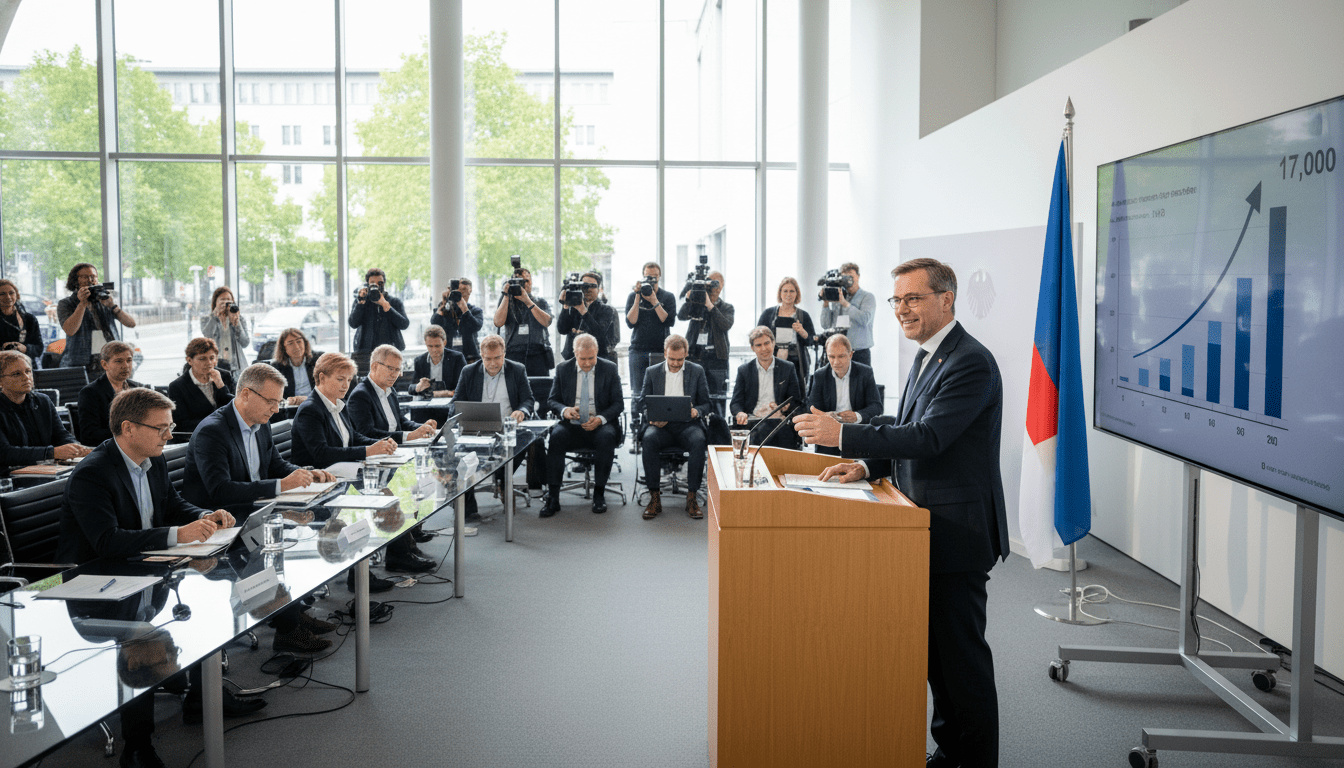
Germany’s electric car purchase subsidy draws nearly 17,000 applications in first day
Nearly 17,000 applications hit Germany’s nationwide electric car purchase subsidy in 24 hours; up to €6,000 per private buyer and €3bn available through 2029.
Germany’s new electric car purchase subsidy attracted a surge of interest in its first day of operation, with the Federal Environment Ministry reporting nearly 17,000 applications within about 24 hours. The program, aimed at boosting electric vehicle uptake, offers grants of up to €6,000 for eligible private buyers and lessees and applies to new battery-electric cars, specified plug-in hybrids and vehicles equipped with range extenders. Eligibility requires that the vehicle be registered on or after 1 January 2026, and the ministry stressed that the measure is targeted at private passenger cars rather than company vehicles.
Immediate uptake and application figures
The Federal Environment Ministry said the application count approached 17,000 shortly after the scheme opened, reflecting strong consumer interest and pent-up demand for purchase support. Officials described the initial volume as an indication that financial incentives can rapidly influence buying decisions, especially where lower operating costs and wider model choice converge. The ministry did not provide a breakdown by region or vehicle type in its first release, but it signalled that administrative systems will be monitored to handle demand.
Who qualifies and what the subsidy covers
The subsidy covers purchases and leasing contracts for new battery-electric cars, certain plug-in hybrids that can run on both electricity and fuel, and EVs fitted with range-extending small combustion engines. To qualify, the vehicle must have been first registered on or after 1 January 2026; the support is restricted to private buyers and is not available for company cars or fleet purchases under the current rules. The precise grant amount is means- and model-dependent, with the maximum benefit capped at €6,000 and scaled according to household income, family size and the car’s characteristics.
Funding envelope and expected reach
The federal government has allocated €3 billion from the Klima- und Transformationsfonds (Climate and Transformation Fund) to finance the purchase premium through 2029, a pot officials say could support roughly 800,000 vehicles if average grant levels align with initial estimates. That funding horizon and the projected vehicle count establish an effective ceiling for the program, meaning the pace of applications and the distribution of grant levels will determine how far the funds stretch. Ministry planners are watching application trends closely to assess whether adjustments to administrative processing or communication will be required.
Government rationale and ministerial statements
Federal Environment Minister Carsten Schneider (SPD) framed the subsidy as a tool to accelerate the transition to zero-emission mobility while offering households protection against volatile global fuel markets. Schneider highlighted factors such as falling prices for electric models, faster charging infrastructure rollout and the broader aim of reducing dependency on imported fossil fuels as key policy drivers. The ministry emphasised that the measure complements other climate and transport initiatives intended to expand charging networks and encourage domestic manufacturing.
Global market context and IEA figures
The subsidy announcement comes as global electric vehicle sales continue to grow: the International Energy Agency reported that electric models accounted for about a quarter of new car purchases in 2025, with global EV sales rising roughly 20 percent to around 20 million vehicles. The IEA has signalled that the share could rise toward 30 percent in 2026 as battery costs decline and policy responses to energy market pressures stimulate demand. Production and sales remain concentrated; China accounted for approximately 60 percent of globally sold electric cars, while manufacturers in Europe and North America each held roughly 15 percent of the market.
Market and administrative implications for dealers and infrastructure
Auto dealers and leasing companies are likely to see immediate upticks in enquiries and contract activity as consumers seek to secure eligible vehicles and lock in subsidies, potentially accelerating inventory turnover for electrified models. Charging infrastructure providers and local authorities may face heightened near-term demand for public and private charging points, underscoring the need to coordinate investment and permitting to match vehicle uptake. Analysts note that the concentrated funding pool could create competition among buyers for higher grant tiers, which may influence purchasing timing and dealer incentives.
The initial application surge is a visible test of how quickly incentive-backed policy can alter consumer behaviour, and the ministry’s next steps will focus on processing capacity and clarity over eligibility checks. With €3 billion earmarked through 2029 and eligibility tied to registrations from 1 January 2026, officials, industry and buyers will be monitoring both the pace of approvals and the program’s downstream effects on sales, charging rollout and emissions.
