
Australia orders sale of Chinese-linked stakes in Northern Minerals amid rare-earths push
Australia gives six Chinese-linked shareholders two weeks to divest from Northern Minerals amid a US–Australia rare-earths push and national security concerns.
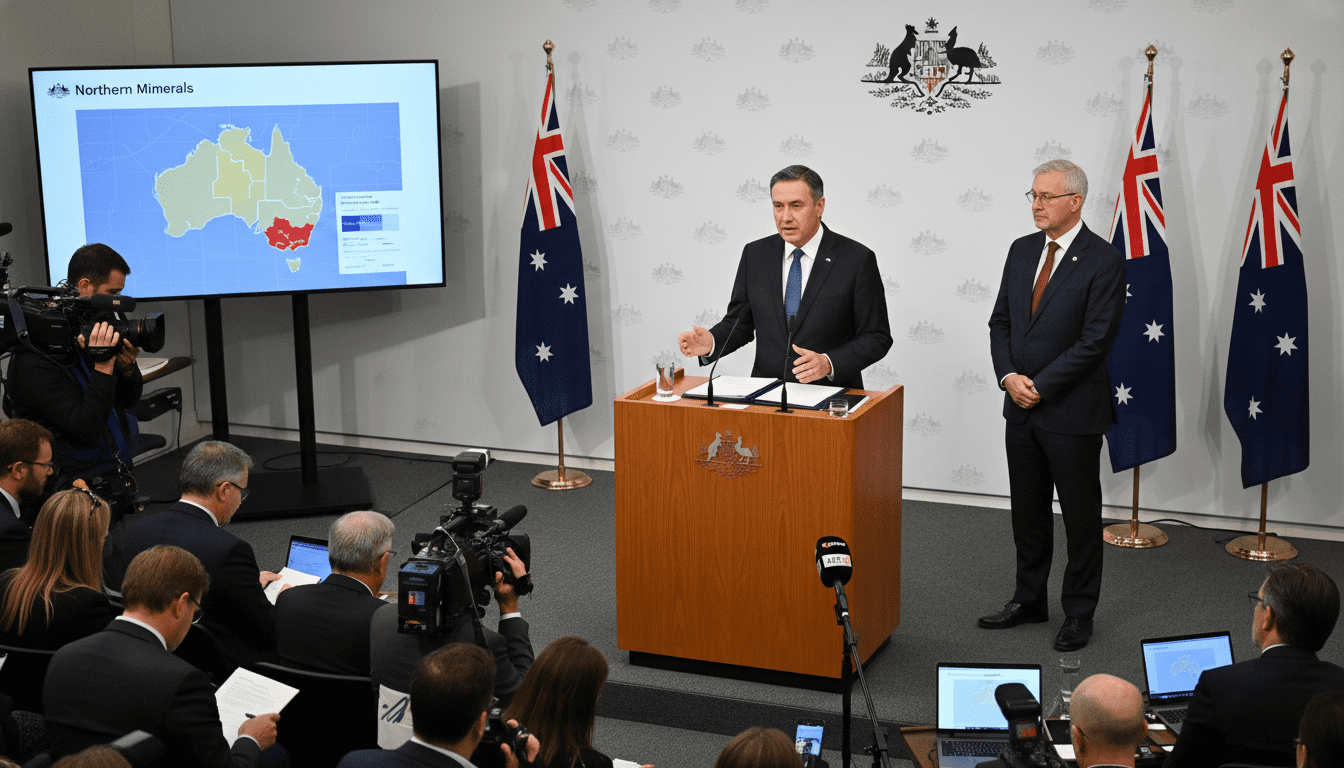
Northern Minerals, the Australian miner at the centre of a US–Australia strategy to build an alternative supply of rare earths, has been ordered by the federal government to see six shareholders sell their stakes within 14 days. The directive, announced by Finance Minister Jim Chalmers, targets investors linked to mainland China, Hong Kong and the British Virgin Islands who together hold 17.6 percent of the ASX-listed company. Canberra said the step is necessary to safeguard critical mineral supply chains as Australia and the United States seek to reduce dependence on China for dysprosium and terbium.
Government directive and deadline
Finance Minister Jim Chalmers set a two-week deadline for the six shareholders to divest their holdings, citing national security concerns raised by the Foreign Investment Review Board. The decision follows scrutiny of Northern Minerals’ shareholder register and reflects Canberra’s wider effort to ensure that strategically important mining assets are aligned with allied security interests. Officials framed the order as consistent with previous measures: two years ago a similar action required a group of shareholders to sell for comparable reasons.
Composition of the shareholders and stake size
The six investors under the divestment order include three entities based on the Chinese mainland, two in the Hong Kong Special Administrative Region and one registered in the British Virgin Islands. Together they hold roughly 17.6 percent of Northern Minerals’ issued capital, a significant block in a small-cap company that has long been described as a penny stock. Regulators say their presence raises the prospect of undue influence, and the divestment order aims to remove any potential vectors for foreign state leverage over critical-minerals production.
Browns Range and the Wolverine deposit’s strategic value
Northern Minerals operates the Browns Range project in Western Australia, home to the Wolverine deposit which is considered Australia’s richest resource of dysprosium and terbium. Those heavy rare-earth elements are essential for high-performance permanent magnets used in electric vehicle motors, specialty industrial equipment and certain defence technologies, giving the deposit clear civil and military significance. Canberra and Washington have both identified capacity to produce these metals outside China as a strategic priority, increasing the political sensitivity of who controls relevant assets.
Financial backing under the US–Australia rare-earths agreement
Browns Range has attracted official finance commitments that make it a linchpin of the bilateral rare-earths initiative agreed last year during Prime Minister Anthony Albanese’s visit to Washington. The United States Export-Import Bank and Export Finance Australia have together provided loan commitments totalling more than US$230 million to support the project’s development. The broader pact envisages up to US$8.5 billion of allied investment across selected mining and processing ventures, with both governments initially proposing billion-dollar contributions to accelerate supply-chain alternatives to China.
Market response and company outlook
Northern Minerals’ share register has shown limited investor returns to date, and the stock has historically traded at fractions of an Australian dollar, peaking well below ten cents per share. Trading was suspended on the day of the government announcement after the stock last traded at two Australian cents, underscoring the company’s small-market status despite its strategic assets. Analysts caution that while government support and export finance raise the project’s profile, technical, environmental and capital‑intensive processing challenges remain before Browns Range can deliver sustained volumes.
Canberra’s broader strategic calculation
The forced divestments should be read against a backdrop of growing strategic competition over critical minerals, where Australia seeks to balance openness to foreign capital with the need to prevent potential leverage by rival states. Officials have argued that protecting upstream and midstream capacity in rare-earths value chains is essential to maintain sovereign access for allied defence and industrial sectors. The move is likely to prompt further scrutiny of foreign ownership in other projects deemed sensitive, even as Canberra continues to court investment and jobs in regional mining.
Australia’s directive will test how rapidly private shareholders can be replaced without disrupting project financing or deterring other international investment, and the coming two weeks will determine whether the six flagged holders comply voluntarily or whether further regulatory steps are required.
