
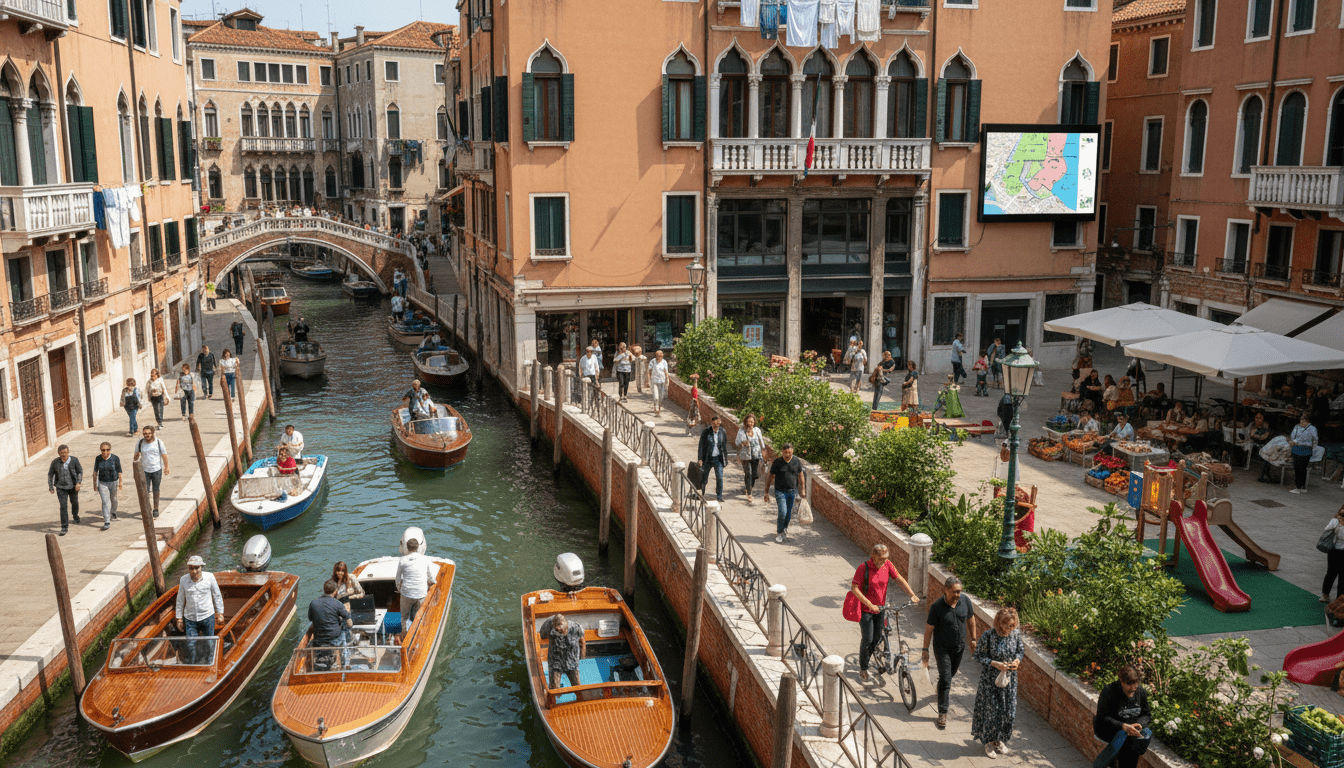
Living Venice: How Castello Reveals the City’s Everyday Resilience
An intimate portrait of Venice’s Castello shows how everyday life, local commerce and digital services sustain resilience despite tourism and housing pressure.
A neighborhood that keeps the city alive
Nestled in the eastern sestiere of Venice, Castello is described by residents as where the city remains itself. The district combines long-term inhabitants, families, small business owners and an international mix of professionals, creating a social fabric that resists tourists’ concentrated flows.
Local routines shape daily life more than monuments do, and neighbors rely on one another in ways large and small. This sense of continuity gives Castello an identity distinct from the crowded zones around St. Mark’s Square and the Rialto Bridge.
Housing shortages and a shifting population
Historic Venice now houses roughly 50,000 residents in the islands of the lagoon, a fraction of its former urban population. Rising rents, scarce affordable units and the dominance of visitor accommodation have driven many permanent residents to the mainland district of Mestre.
Those demographic shifts alter school rolls, commerce and municipal priorities, and they intensify debates over how to preserve a livable city core. For many locals, preserving affordable housing is as urgent as flood protection and tourist management.
Small shops and day-to-day rituals
Castello’s bakeries, butcheries and markets are both commerce and social center; they are the places where neighborhood news, football scores and practical advice are exchanged. Artisanal practices — from hand-sliced Prosciutto to freshly baked bread — anchor consumption to local suppliers and slow rhythms.
Sport and communal gatherings also reinforce belonging: tiny stadiums and local matches become family events, and traditional trades remain visible despite broader economic change. These rituals sustain a civic life that large-scale tourism rarely touches.
Mobility without cars and the role of spazzini
Venice’s car-free streets create a distinctive urban environment: no traffic noise, short walking distances and a culture organized around foot and boat transit. The city functions like a living example of the “15-minute city” principle, with most daily needs reachable by short walks.
Essential services depend on specialized routines: goods are transferred from boats to handcarts, and municipal waste collection is a visible, scheduled act of public service. The spazzini — the street sweepers and waste collectors — perform tasks that are indispensable to the city’s cleanliness and functioning.
Digital services woven into historic streets
Contrary to expectations of anachronism, Venice has invested in modern digital infrastructure that reaches into private homes. High-speed fiber is common in many apartments, and municipal services are increasingly available via apps and online platforms.
Residents can monitor utilities, pay local taxes and manage administrative tasks digitally, a convenience that shapes daily life and reduces friction for both long-term inhabitants and incoming residents. This hybrid of heritage urban space and contemporary connectivity is a defining characteristic of the neighborhood.
Tourist flows and seasonal rhythms
Tourism remains omnipresent, concentrated at the Rialto Bridge and St. Mark’s Square while many neighborhoods receive fewer day visitors. Measures to manage day-trippers, including an entry fee introduced for visitors in recent years, have shifted patterns but not ended the year-round stream of tourists.
Castello sees peaks tied to cultural events such as the Biennale, when art and architecture audiences briefly transform local streets. Outside those events, the district returns to its quieter cadence, offering a different model of urban life inside a world-famous destination.
Venice as a living organism
For residents, Venice is not a static museum but a living organism: vulnerable yet energetic, stubbornly particular and adaptively modern. In Castello, everyday practices — from neighborhood shops to digital public services — demonstrate how a historic city can sustain daily life amid environmental pressures and global tourism.
