
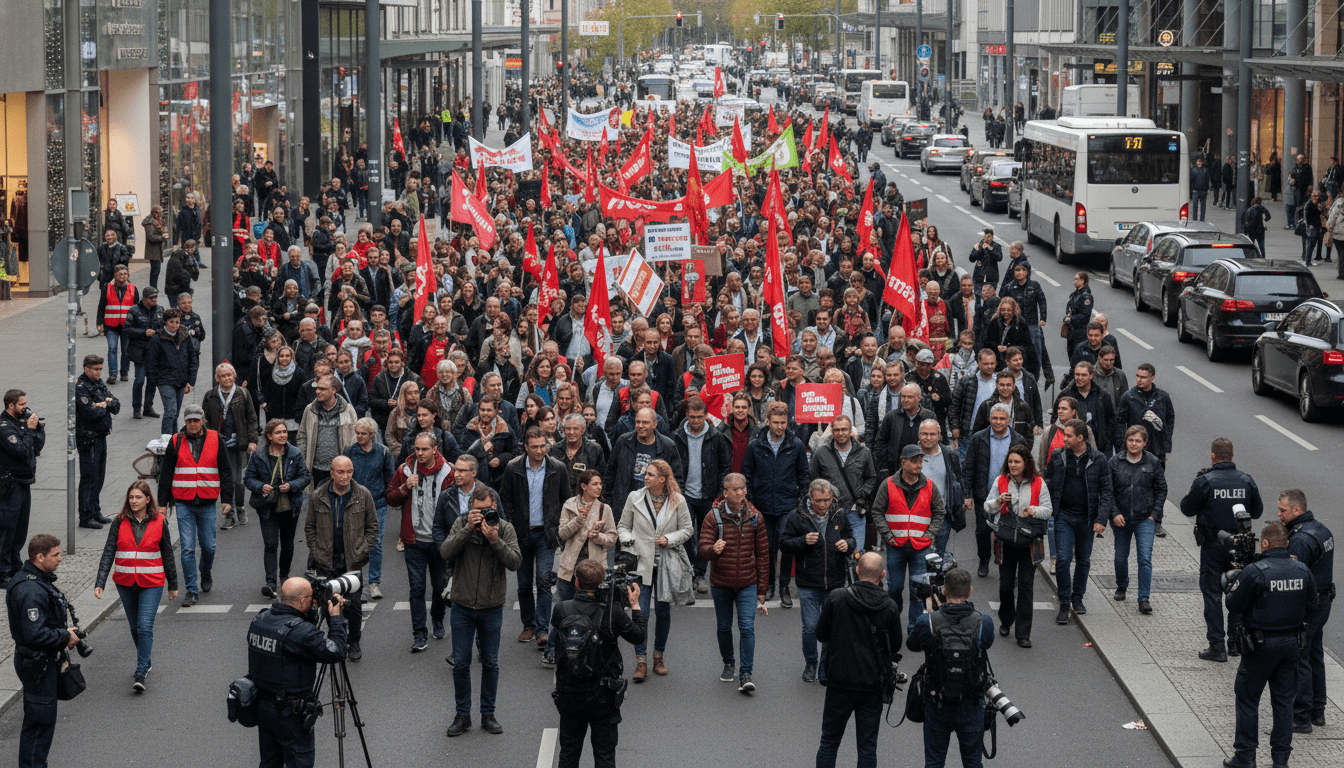
German retail strikes draw more than 5,000 participants as Verdi demands 7% pay rise
Over 5,000 workers joined German retail strikes as Verdi demands a 7% wage increase (min €225). Employers have offered 3.5% over two years in some regions; fresh talks are scheduled for May 18, 2026.
More than 5,000 workers took part in coordinated warning strikes across multiple German states on Friday, intensifying the dispute over pay in the retail and wholesale sectors. The industrial action, organized by the trade union Verdi, affected more than 200 sites and included both supermarket chains and fashion and department stores. Verdi framed the mobilization as a nationwide response to what it called an inadequate employer proposal and as leverage ahead of upcoming bargaining sessions.
Large-scale participation across seven states
The warning strikes were registered in Berlin-Brandenburg, Bavaria, Baden-Württemberg, North Rhine-Westphalia, Hesse and Hamburg, according to Verdi. Union officials said pickets and short walkouts occurred at dozens of individual outlets belonging to major chains. Companies reported disruption to normal operations at stores belonging to Edeka, Rewe, Kaufland, Marktkauf, Penny, Douglas, Primark, Zara, H&M, Metro and Ikea.
Verdi demands a 7% increase and a floor of €225
Verdi has presented a clear wage demand: a 7% increase across the bargaining groups or, alternatively, a minimum monthly uplift of €225 for affected employees. The union said that demand is calibrated to protect purchasing power for low- and mid-income retail staff and to address rising living costs. Verdi board member Silke Zimmer pressed employers at a public rally in Dortmund to table a “negotiable” offer, calling the latest employer submission “scandalously low” in remarks relayed by union spokespeople.
Employers propose phased 3.5% rise for some regions
The Handelsverband Deutschland (HDE), representing employers, said it had offered a total raise of 3.5% over a two‑year contract for collective bargaining areas including Hamburg and North Rhine-Westphalia. Under that proposal, wages would rise by 2.0% from November 1, 2026, and by a further 1.5% in the second year. HDE framed the offer as measured and tied to what it described as the “most difficult economic situation in 20 years,” arguing that larger increases would jeopardize business viability.
Retail employers warn of job risks and structural pressures
Employer representatives emphasized the sector’s recent employment erosion, pointing to roughly 73,000 lost retail jobs since 2022 as evidence of structural strain. The HDE warned that an outcome perceived as unaffordable by firms could accelerate closures and more job cuts, especially among smaller outlets and independent retailers. Industry officials also cited high energy costs, supply-chain pressures and declining footfall in certain urban locations as factors weighing on margins.
Stores affected and companies named in actions
Verdi reported that over 200 establishments were involved in the warning strikes, naming supermarkets, discount outlets and several international clothing chains among those impacted. Management at affected brands confirmed limited store closures, service delays or staff shortages at specific sites while other branches continued to operate under reduced staffing. Shoppers in major cities encountered interrupted service at cash desks and temporary reductions in available product ranges at some locations during the day of action.
Bargaining calendar and next rounds of talks
Union and employer negotiators have a new set of meetings scheduled for Monday, May 18, 2026, with talks covering the retail sector in Hesse and the wholesale and foreign trade bargaining group in North Rhine-Westphalia. Verdi leaders signaled they will use the upcoming sessions to press for continued movement on the 7% demand, while HDE negotiators said they will defend the two‑year 3.5% framework. Both sides acknowledged the risk that a protracted dispute could widen the scope of industrial action in the coming weeks if no compromise emerges.
The strike wave marks a significant escalation in a season of industrial unrest across Germany’s service and public sectors, as unions press for higher wages to offset inflation and employers counter with warnings about competitiveness and job preservation.
