
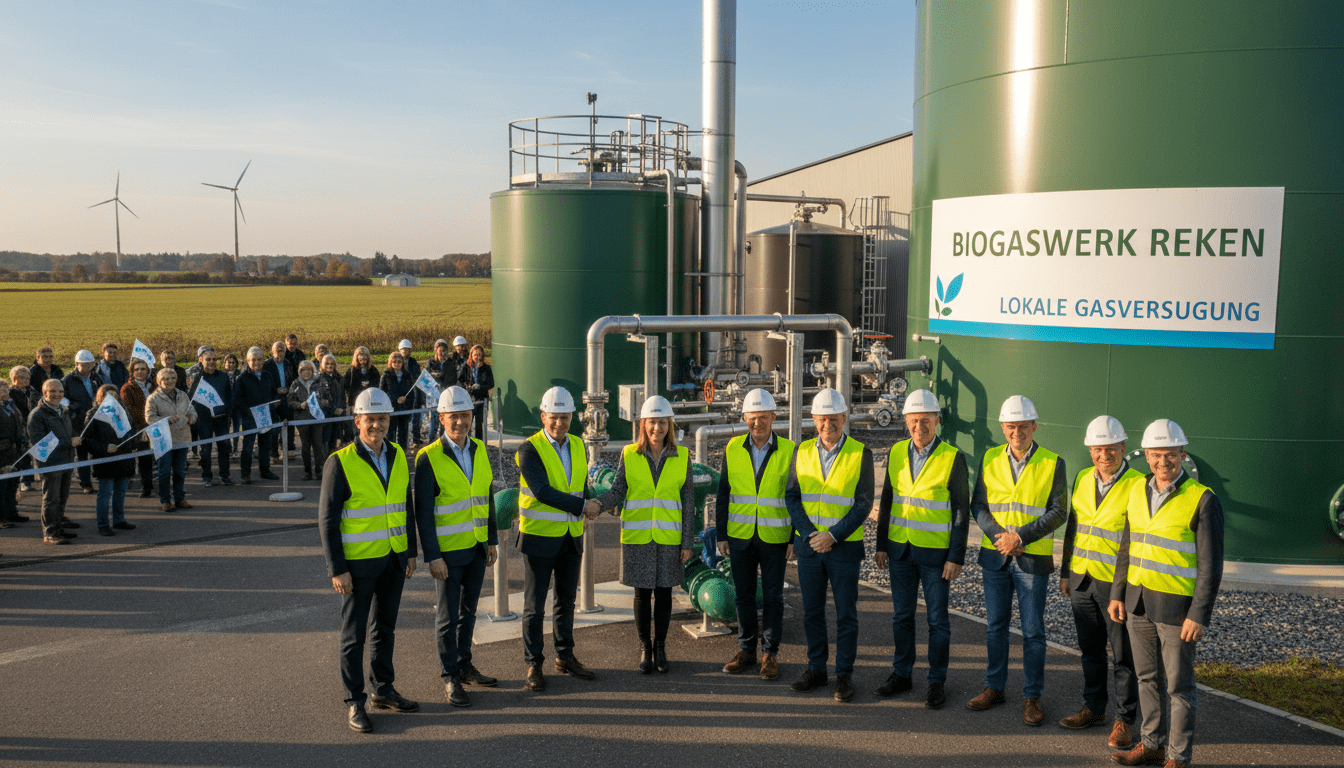
Reken Farm Emerges as Potential Local Biogas Supplier for New Gas Heaters
A Reken farm turns green rye into biogas, producing 50 tons of biomass daily and collecting gas under domes. It could supply homes installing new gas heating.
The morning air on a Münsterland farm smells of fresh-cut rye and livestock as tractors deliver a finely chopped green crop into concrete silos, where it is being converted into renewable gas. Farmer Hermann Benning says the rye is shredded so microbes can break it down more efficiently, feeding a fermenting mix of manure and plant residues that releases combustive gas. Community interest is growing as the plant in Reken demonstrates how local biogas production could feed households opting for new gas heating systems.
Rye and Manure Converted in Concrete Digesters
The farm’s biogas operation centers on five round steel-reinforced concrete tanks, three of which are used for the primary fermentation process. Workers tip about 50 tons of biomass into the system each day, according to the farmer’s walkthrough of the site. Through controlled anaerobic digestion, the mix of rye, slurry and agricultural residues breaks down and produces a methane-rich gas that accumulates beneath plastic domes above the tanks.
On-Site Process and Equipment
A small observation window looks into a bubbling slurry where bacteria are actively decomposing the feedstock. The plant uses mechanical shredders, mixers and pumps to ensure consistent feed and temperature, aiming to maximize gas yield and avoid process upsets. The captured gas is routed from the domes to storage and treatment units on-site, where it can be flared, used to fuel generators, or potentially upgraded depending on infrastructure and demand.
Capacity and Feedstock Strategy
Shifting from decades of vegetable farming for a local processing plant, Benning’s family now prioritizes energy crops for the biogas facility while still managing other arable work nearby. The farm’s daily throughput — roughly 50 tons — is intended to balance steady gas production with nutrient recycling from the digestate, a byproduct that can return to fields as fertilizer. Operators say the use of green rye and farm manure helps stabilize input costs and reduces reliance on imported fossil fuels.
Pathways from Farm Gas to Household Heating
Operators and local planners describe several possible routes for the gas produced in Reken to reach homes. It can be combusted on-site to generate electricity and heat, used directly in nearby heating systems, or upgraded to biomethane that meets natural gas quality standards for injection into regional pipelines. If upgraded and connected, farm-produced biomethane could become a localized supplier for households installing new gas heating systems, limiting transport emissions and shortening supply chains.
Economic and Regulatory Considerations
Turning a farm biogas plant into a regular gas supplier involves meeting certification, grid-connection and quality requirements, as well as complying with emissions and safety rules. Investment in upgrading equipment, building injection points or constructing compressed gas storage would be necessary to scale supply for domestic heating markets. Farmers and local authorities say policy incentives and stable pricing mechanisms will be critical to attract funding and ensure the model is commercially viable over time.
Local Impact and Broader Implications
For residents in Reken and surrounding communities, locally produced biogas promises job retention on farms, added revenue streams for agricultural producers, and new options for decarbonizing building heat. Environmental advocates note that when managed correctly, anaerobic digestion reduces methane leakage from manure and replaces fossil gas, though life-cycle impacts depend on feedstock choices and processing methods. Market observers add that wider adoption of farm-based biomethane would require coordinated planning between agriculture, energy utilities and municipal planners.
The Reken operation illustrates how a rural farm can serve as more than a food producer, evolving into a potential source of locally produced renewable gas for homes adapting to new heating technologies.
