
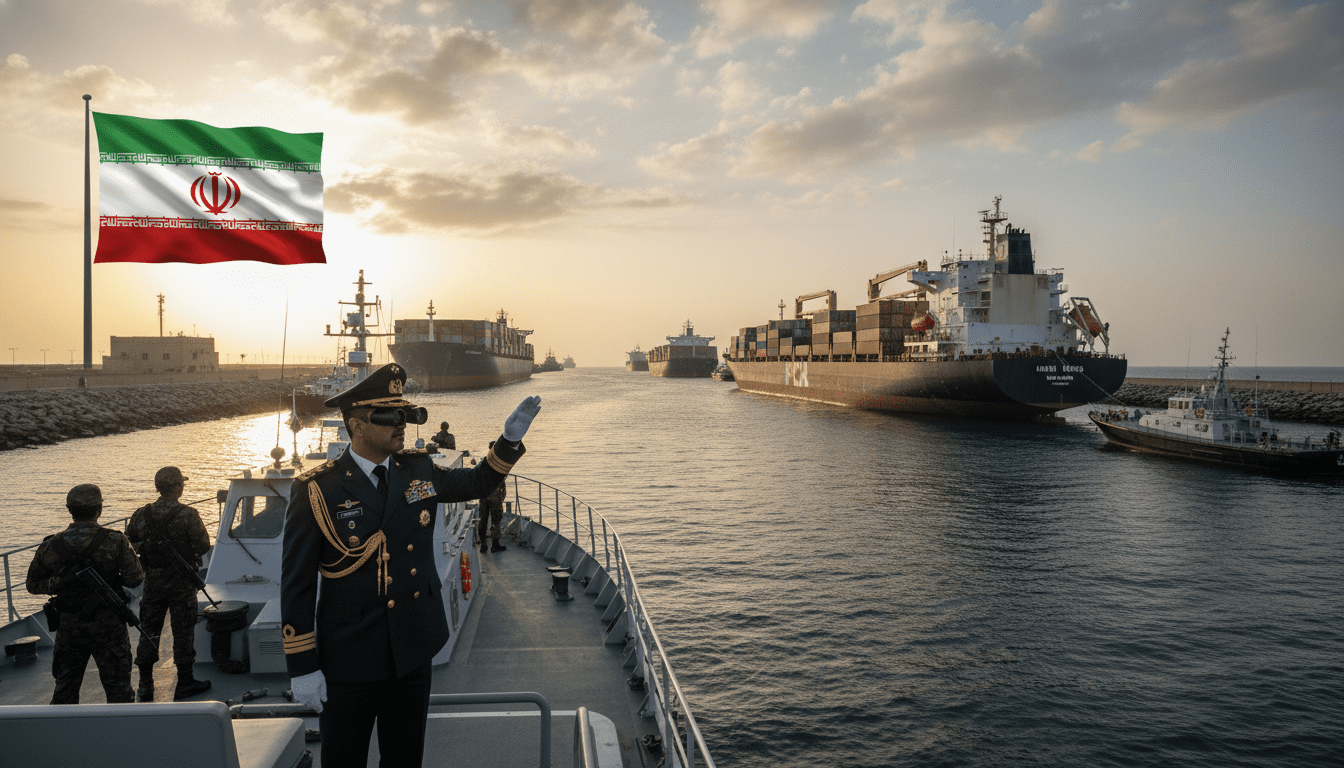
Strait of Hormuz Blockade Signals Return of Seaborne Power Politics
Ships in the Strait of Hormuz now face de facto permission controls that echo 16th‑century cartaz systems, reshaping global trade and security in 2026.
The recent restrictions on passage through the Strait of Hormuz, first enforced by Iranian Revolutionary Guard broadcasts in February 2026, have revived a centuries‑old model of controlling maritime chokepoints. What began as radio warnings and selective tolling has escalated into parallel naval postures, with the United States deploying maritime assets to protect shipping and regional allies warning of disrupted supplies. The incident has immediate consequences for oil and container traffic and raises broader questions about the stability of a rules‑based maritime order that dominated the post‑World War II era.
Historical precedent: Portuguese control of Hormuz in 1507
Afonso de Albuquerque’s capture of Hormuz in 1507 turned the island into a linchpin for early global commerce, where a license system known as the cartaz regulated who could pass and trade. That arrangement made the strait less a conduit of free commerce than a revenue and security asset for the controlling power. The historical cartaz bound captains to payment, prescribed routes and even restricted crewing, showing how dominance of a narrow sea lane can be used to extract wealth and influence.
February 2026 escalation: maritime warnings and contested transit
Since February 2026, Iranian Revolutionary Guard broadcasts on maritime VHF have warned that no vessel may transit Hormuz without authorization, effectively imposing a new pass regime on one of the world’s busiest choke points. Shipping companies reported instances where passage was conditioned on payments or where vessels flagged to U.S. or Israeli partners faced de‑facto exclusion. In response, U.S. naval forces established presence further east in an effort to ensure freedom of navigation and to deter seizures, creating a tense standoff along the corridor.
From public seas to great‑power blocs: the postwar order frays
The modern expectation of open sea lanes was built after 1945 on U.S. maritime predominance and international frameworks like GATT and later the WTO that lowered trade barriers. That system allowed seaborne trade to expand rapidly through the mid‑20th century, underpinning globalized supply chains. In 2026, however, competing strategic priorities—security, resource control and political leverage—are eroding that consensus, as major powers prioritize national resilience and influence over unfettered commerce.
Economic ripple effects: energy, manufacturing and supply chains
Control of Hormuz reverberates far beyond the Gulf because a significant share of global oil shipments transit the strait, and many manufactured goods move along interconnected maritime routes. Even short interruptions can spike energy prices, disrupt just‑in‑time manufacturing and force firms to reroute vessels via longer, costlier passages. Markets sensitive to security risks are already pricing in higher premiums for tanker insurance and freight, and industries dependent on steady raw‑material flows are reassessing inventory and sourcing strategies.
Geostrategic lessons: chokepoints as instruments of coercion
The reassertion of control over a narrow passage is a blunt reminder that geography remains a strategic tool: whoever controls an “engpass” gains leverage over states and industries on the far side. Contemporary policymakers and military planners are recalculating how to defend or bypass such bottlenecks, including investments in alternative pipelines, stockpiles, and overland corridors. The episode also highlights how economic sanctions and export controls have become complements to, rather than substitutes for, maritime coercion in the toolbox of statecraft.
Global responses and the search for resilience
States and companies are pursuing a mix of immediate and long‑term measures: naval escorts and convoys for critical cargoes, diplomatic efforts to de‑escalate, and commercial shifts toward route diversification and local sourcing. Some governments are accelerating projects to create alternative transit options and strengthen regional security partnerships, while insurers and port operators reassess risk models. The balance between deterrence at sea and investments in supply‑chain resilience will shape how frequently chokepoints can be used as geopolitical pressure points.
The developments in the Strait of Hormuz illustrate that the assumption of perpetual maritime openness is no longer safe; seaborne trade is once again vulnerable to the same contests for control that shaped early globalization. As nations and companies adapt, the new reality will likely be a more contested set of sea lanes, where military presence, economic policy and strategic planning determine who pays, who passes, and who prospers.
