
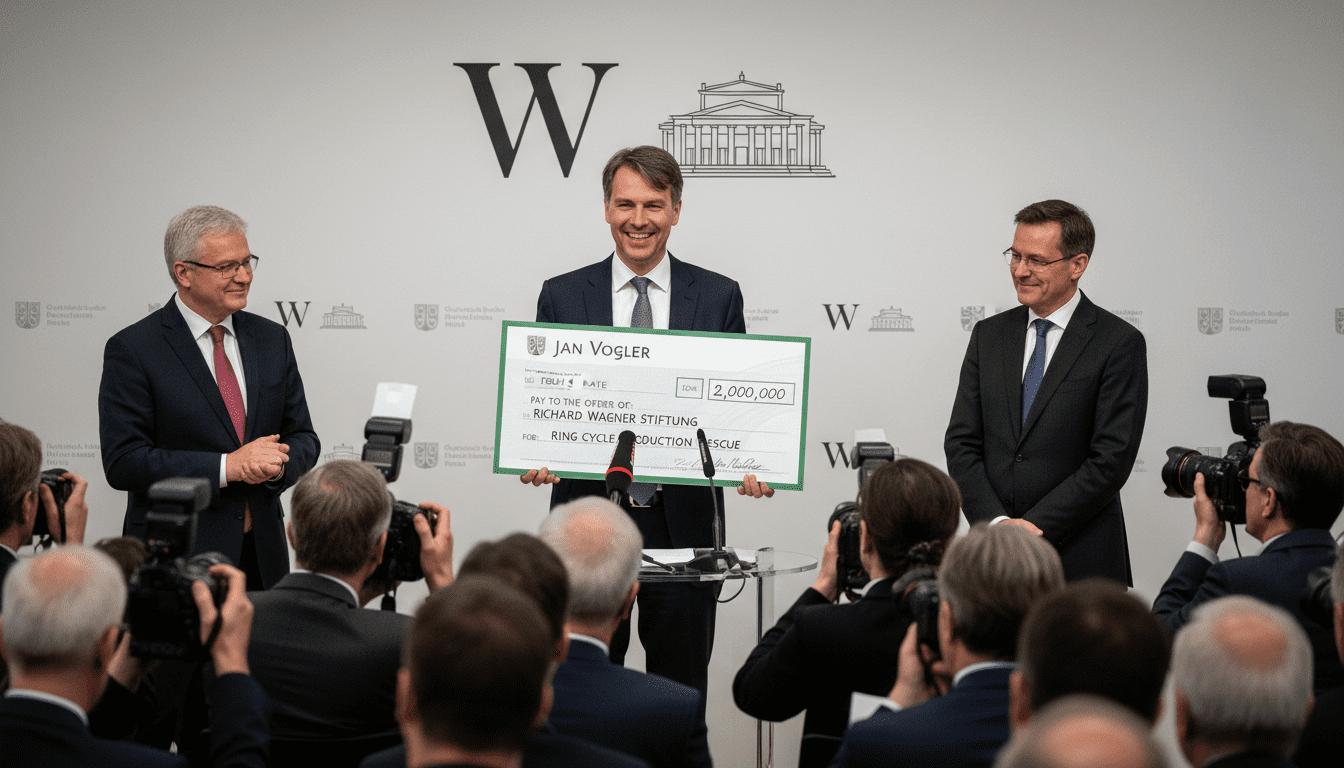
Jan Vogler Secures $2m Gift to Rescue Wagner Production at Dresdner Musikfestspiele
Jan Vogler wins a $2m gift to save a Wagner project and reveals how he rebuilt the Dresdner Musikfestspiele into an A‑list, financially resilient festival.
Jan Vogler announced that a last‑minute $2 million donation has covered a sudden shortfall that threatened a historically informed staging of Wagner’s Götterdämmerung at the Dresdner Musikfestspiele. The gift arrived after public funding for the production was refused in November, leaving the festival facing major musician fees and venue costs. Vogler’s ability to close that gap reflects a broader financial turnaround he has engineered at the Dresdner Musikfestspiele since taking the helm in 2008.
Emergency $2 million Gift Secures Wagner Staging
The donation, credited to an American supporter linked to foundations of scientific and cultural patronage, arrived on December 24 and was earmarked specifically for the Wagner project. The production requires payment for roughly 100 freelance orchestra musicians, 25 singers and multiple venue rentals, expenses that pushed the budget into precarious territory after the funding denial. Organizers said the targeted gift allowed rehearsals and contracts to remain on schedule and preserved the research‑driven approach to performance that the staging demands.
Festival leadership described the contribution as catalytic: it not only saved a single production but also protected the festival’s broader program for the season. Vogler and his team rapidly reallocated internal resources and used the pledge as leverage to retain key artists and technical staff. The swift response underscored the festival’s reliance on a mixed financing model where private support can determine whether ambitious projects go forward.
Vogler’s Ticket Revenue Surge and Budget Growth
Under Jan Vogler’s direction, ticket revenues at the Dresdner Musikfestspiele climbed from roughly €380,000 to €2.1 million, a transformation credited to programming choices and marketing. Over recent years the festival’s overall budget has doubled even as public subsidies declined, a feat organizers attribute to stronger earned income and an expanded sponsorship base. The festival now reports its own revenues at approximately €6.6 million, combining ticket sales and private contributions.
The city of Dresden continues to underwrite core operations, including the payroll for about 20 employees and a municipal subsidy that currently sits near €900,000 annually. City expenditures for the festival amount to roughly €2.5 million when in‑kind and administrative costs are counted. Vogler has repeatedly emphasized that modest municipal stability paired with entrepreneurial fundraising is the model that allowed the festival to rise into the top tier of European music events.
American Experience Shapes Funding Strategy
Vogler credits part of his fundraising acumen to years spent in the United States, where he observed privately financed festival models and cultivated lasting relationships. His first exposure to large endowments came as a young musician at the Marlboro Music Festival, where he learned how a capital endowment can underwrite artistic work. That experience informed his later approach: pursue diversified revenues, cultivate donor relationships and design projects that appeal to patrons’ interests.
The director’s American network has repeatedly yielded operational advantages, both in artist access and in philanthropy. Longstanding connections enabled collaborations and introductions that have translated into funding and creative partnerships, illustrating how international ties can bolster a regional festival’s ambitions.
Star Collaborations and Genre‑Spanning Programming
Programming at the Dresdner Musikfestspiele deliberately blends classical repertory with jazz, pop and spoken‑word events to broaden audience appeal. Vogler has booked marquee names from across genres, supplementing symphonic offerings with crossover projects—most notably collaborations with personalities such as Amanda Gorman and Bill Murray, where readings and performance are interwoven with live cello. These hybrid formats have drawn attention beyond traditional classical audiences and helped increase advanced ticket sales.
The festival’s commitment to uncompromising artistic standards is consistent across genres; Vogler insists that headline events must meet A‑class quality whether the stage hosts a chamber recital or a large orchestral production. The approach aims to maintain prestige while creating entry points for new attendees, a balance that organizers say contributes directly to higher ticket revenues and repeat attendance.
Sponsorship Approach and Partner Profiles
Vogler describes sponsors as a heterogeneous group with varied motivations: some seek brand visibility, while others fund projects for their research value or cultural legacy. Long‑standing regional partners provide stable backing aimed at public engagement, while international philanthropists may invest in ambitious, research‑led productions. The festival’s team tailors proposals to potential donors, reframing artistic plans to align with each sponsor’s priorities.
Persistence and relationship management are central to the festival’s sponsor strategy, according to colleagues. Vogler is noted for following up repeatedly, reshaping proposals and presenting multiple variants until a project finds support. That tenacity, combined with artistic credibility, has converted individual relationships into reliable financial commitments.
Contract Renewal and Outlook for the Festival
Vogler’s current contract with the city is set to expire this year and municipal leaders have indicated interest in extending his tenure, reflecting the festival’s elevated profile and improved finances. Any renewal talks will likely weigh artistic vision, managerial performance and the director’s ongoing balance of his own concert career with festival duties. Vogler has said he values the time he still devotes to daily cello practice, noting that many of his best festival ideas emerge while playing.
Looking ahead, the festival intends to maintain its cross‑genre model and to keep courting both institutional and private funders for large‑scale, research‑driven projects. Organizers expect that a combination of municipal support, earned income and international philanthropy will remain essential to fund future seasons and to sustain the festival’s A‑class ambitions.
Jan Vogler’s ability to convert relationships, programming innovation and American funding lessons into tangible cash has reshaped the Dresdner Musikfestspiele, allowing the festival to pursue high‑risk, high‑profile productions while broadening its audience base. The $2 million emergency gift that rescued the Wagner staging is the latest example of how targeted private support can preserve artistic ambition in a contested public funding environment.
