
West Ham vs Arsenal VAR review halts stoppage-time drama as Kavanagh inspects pitchside monitor
Pitchside VAR review halts West Ham vs Arsenal as referee Kavanagh checks Callum Wilson’s stoppage-time equaliser, leaving fans and players in suspense.
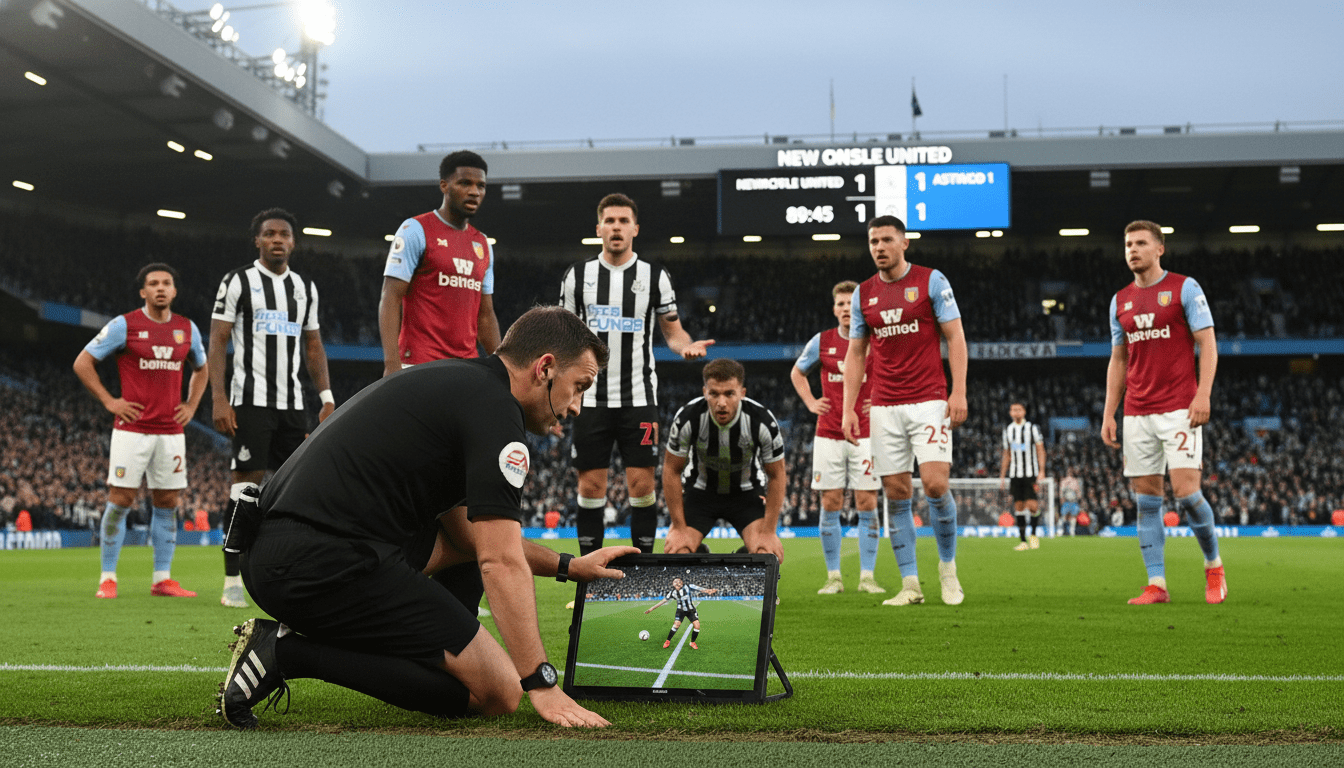
The match was plunged into tense uncertainty when referee Christopher Kavanagh paused play to consult the pitchside monitor in a late VAR intervention. The West Ham vs Arsenal VAR review centered on Callum Wilson’s equaliser in the fifth of six added minutes, a strike that briefly seemed to rescue his side before officials convened. With the monitor too small for the crowd to follow, players and staff clustered around the referee as the stadium waited for a ruling. The image of fourteen players—seven from each side—lined up behind Kavanagh captured the high-stakes nature of the moment.
Kavanagh summons the monitor
Kavanagh’s walk to the pitchside screen was deliberate and drew immediate attention from both benches and the broadcast world. The referee positioned himself at the monitor while match officials communicated via headset, initiating the standard on-field review process. Support staff and players moved close enough to peep at the display, but the screen’s limited size meant few could see the same angle simultaneously. The brief, public consultation underscored how crucial the decision was to the final outcome.
Players form a tight line behind the referee
Fourteen players stood shoulder to shoulder behind the referee in a scene described by observers as resembling a cinema row. Arsenal’s William Saliba remained crouched in the background, hands clasped and eyes fixed on the screen, an instant that many interpreted as a silent plea for a favourable outcome. The proximity of the players to the official highlighted the human drama that accompanies VAR moments, where teammates and opponents alike watch the same clip with competing hopes. Such close quarters further illustrated the limits of pitchside viewing when compared with the multiple high-resolution angles available to VAR technicians.
The decisive moment: Callum Wilson’s stoppage-time strike
Callum Wilson’s goal arrived in the fifth minute of six added on at the end of the match, a time when margins are often decisive and emotions intense. The strike initially produced jubilant reaction from the West Ham contingent and a sense of shock among Arsenal supporters. Within moments, the referee’s intervention transformed celebration into anxiety as the VAR process began. That shift from elation to suspense is emblematic of late-match reviews, which can overturn or confirm results after prolonged anticipation.
Visibility issues on the sideline monitor
Reports from the touchline highlighted that the monitor used for the review was small, limiting what those gathered at pitch level could observe. Broadcast viewers typically see slow-motion, zoomed-in footage that the pitchside view cannot match, creating a disconnect between the cameras and those physically present. Players and staff therefore often rely on the referee’s verdict rather than direct observation of replay angles. This mismatch can inflame tensions and fuel debate about whether on-field reviews should be more transparent to those inside the stadium.
What VAR checks usually examine
While officials did not disclose the precise reason for the review in the immediate aftermath, VAR interventions at decisive moments commonly interrogate offside, foul play, handball, or goalkeeper involvement. The process involves VAR technicians advising the referee, who may then conduct an on-field review if there is a need to see the footage personally. The balance between technological accuracy and the flow of the game remains a core tension in these procedures. Officials aim to apply the laws of the game correctly while minimising disruption, but late stoppage-time checks inevitably have outsized consequences.
Reactions mixed among players and spectators
The visible tension among players illustrated how VAR reviews affect the psychological fabric of a match as much as the sporting outcome. Fans inside the stadium and viewers at home experienced a prolonged pause, with social media and broadcast commentary filling the gap as everyone awaited confirmation. Players who had celebrated were forced to suppress jubilation, while those defending a lead faced the prospect of conceding a crucial point. Regardless of the eventual ruling, moments like this shape post-match conversations around fairness, consistency and the role of technology in football.
The referee’s final decision remained the focal point as the stadium exhaled and the match narrative hung in the balance, leaving both sets of supporters awaiting clarity on whether Wilson’s stoppage-time strike would be recorded in the scoreline.
