
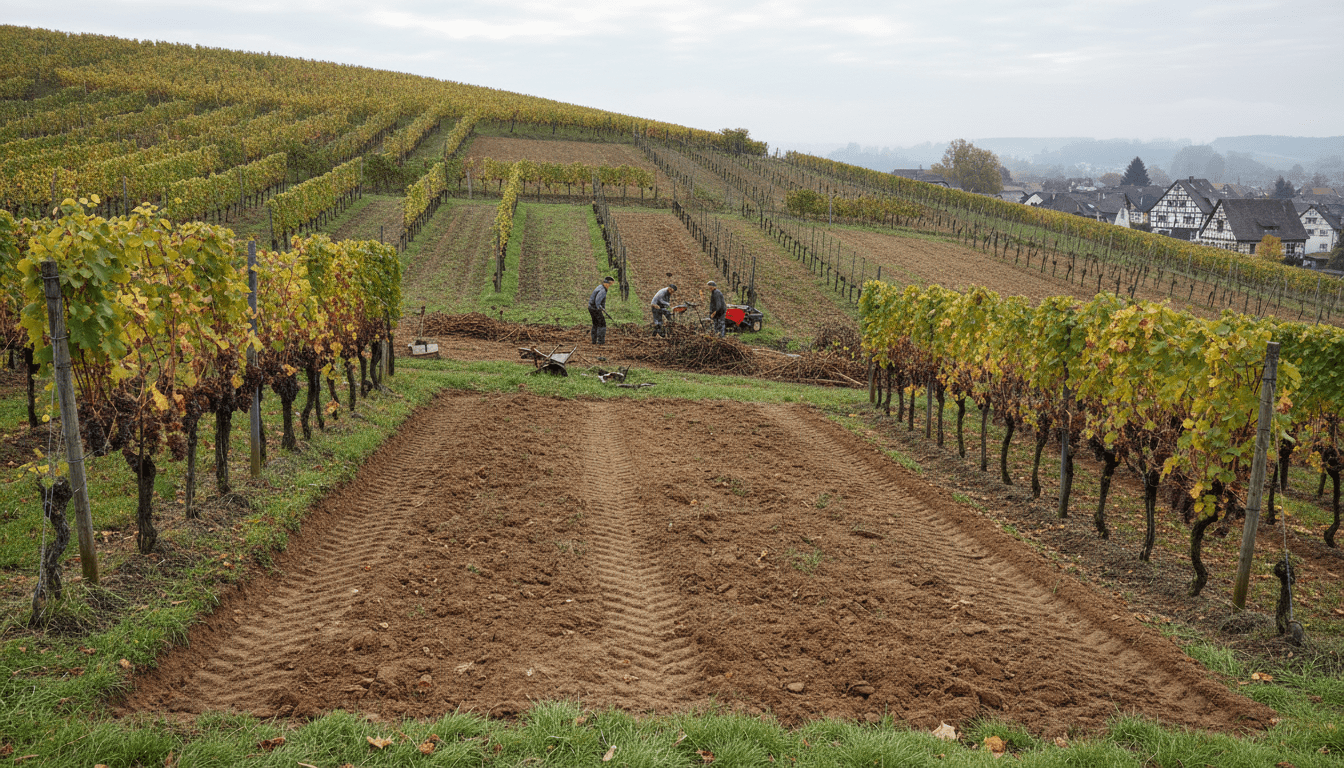
Vineyard fallows rise across Germany’s Rhine and Moselle valleys as wine sector faces structural shift
Vineyard fallows are appearing across Germany’s Rhine and Moselle valleys as rising costs, lower wine consumption and labor shortages push growers to pause cultivation, raising ecological and tourism concerns.
The sight of regular rectangles of fallow earth interrupting terraces of vines has become increasingly common in celebrated wine regions along the Rhine and Moselle. Growers and regional officials report that a mix of higher input costs, changing consumer habits and labour pressures is encouraging some vintners to temporarily or permanently stop cultivating parcels, creating visible gaps in traditional vineyards. Data from the German Wine Institute indicate a modest net reduction in registered active vine area this past year, underscoring a sector in transition.
Fallow plots appear across Rhine and Moselle vineyards
Across steep terraced slopes and flatter river plains alike, rows of vines give way to uncultivated strips that visitors and locals are noticing more frequently. In many cases these fallows are the result of decisions by individual growers to rest soils, reduce costs or await market improvements. Observers say the pattern is not confined to marginal sites: well-known sites in Rhineland-Palatinate and Hesse have reported parcels laid fallow, altering the visual character of long-established cultural landscapes.
Local wine bodies emphasize that not all fallow ground signals permanent abandonment, but occasional pauses in cultivation for economic or agronomic reasons. The distinction between temporary rotation fallows and definitive dereliction is central to how authorities and industry groups respond.
Registered vineyard area shows small decline this year
Official figures compiled at the national level show the registered area of active vineyards in Germany edged down from around 103,300 hectares to approximately 102,000 hectares year-on-year. The German Wine Institute attributes much of the decline to regional variation, with Baden-Württemberg accounting for the bulk of the reduction and notable drops reported in parts of the Moselle and Rheingau. Industry spokespeople stress that long-term totals have fluctuated around the 100,000-hectare mark for decades, but they caution the trend could accelerate if consumption declines continue.
Producers and analysts point out the reduction is uneven and driven by a convergence of factors rather than a single crisis. Regions with high proportions of labor-intensive red varieties or steep-site holdings are more exposed to cost and manpower pressures.
Steep-slope work intensifies economic pressure
The steep terraced vineyards that define the Moselle and portions of the Rhine require a disproportionate amount of human labour compared with flatter sites. Viticulture experts quantify the difference in workload: well- mechanized flat sites may demand a few hundred work hours per hectare, while steep terraces can require several times that effort. This imbalance has sharpened when wages, fuel and other input costs have risen, making some small and family-run holdings harder to sustain.
Producers in steep sites face the double challenge of higher costs and difficulty attracting seasonal or permanent workers willing to perform demanding, low-margin tasks. That reality often leads owners to scale back cultivation on marginal strips or to consider alternative land uses.
Pests, disease and the risks of permanent dereliction
Industry leaders warn that permanent abandonment carries additional risks beyond lost production and landscape change. Incompletely cleared or poorly managed derelict plots can become reservoirs for pests and fungal diseases that threaten neighboring blocks. Wine association officials describe scenarios in which abandoned rootstock and neglected vine material facilitate the spread of phylloxera, cicadas and pathogenic spores, increasing management burdens for adjacent active vineyards.
Those concerns have prompted calls for strict controls on how permanent clearances are handled and for rapid remediation when areas are taken out of viticultural production. Authorities say enforcement and legal frameworks are in place to limit unmanaged dereliction, but producers stress vigilance is needed.
Industry measures: land exchanges and temporary rotations
To prevent lasting loss of productive parcels, regional wine associations are piloting tools to reallocate land and encourage managed fallows. In the Rheingau, for example, a land-exchange or brokerage initiative is being set up to match growers who wish to relinquish plots with colleagues prepared to take them over. Such mechanisms aim to preserve cultivated continuity and protect scenic and touristic value.
At the same time, several federal states are promoting rotation fallows — temporarily resting parcels and planting cover crops — as an environmentally positive option. Financial incentives for temporary greening have been proposed or implemented in some regions to support soil improvement, biodiversity and water retention while preserving planting rights for future reactivation.
Diversification and alternative land uses proposed by growers
Where permanent conversion is considered, advisers and growers are exploring alternative crops and activities suited to former vine terraces. Proposals range from Mediterranean crops such as olives and lavender to more experimental uses like industrial hemp, managed grazing, or small-scale tourism infrastructure such as mobile wine stands and camping. Advocates argue that thoughtful reuse can maintain landscape upkeep, sustain rural income and keep parcels from becoming unmanaged hazards.
Proponents of diversification stress it should be tailored to microclimate, soil and slope conditions, and not undertaken hastily. They also say maintaining some form of agricultural or commercial activity on former vineyard land helps preserve cultural value and visitor appeal.
Efforts across the sector now aim to balance short-term economic realities with long-term stewardship of one of Germany’s signature cultural landscapes. Industry officials and regional ministries emphasize monitoring and targeted support to ensure that temporary fallows contribute to soil health and biodiversity without resulting in widespread, unmanaged abandonment that would harm neighbours and tourism.
