
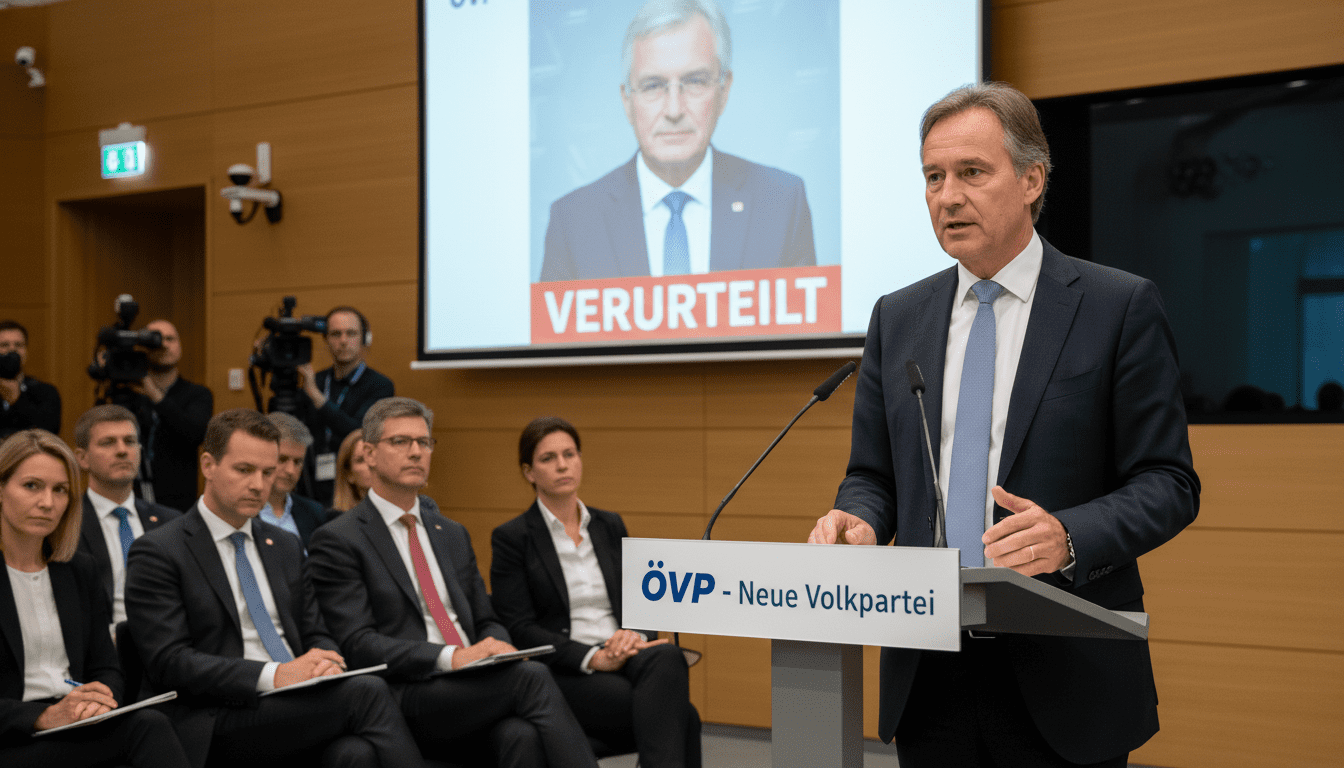
Wöginger conviction prompts ÖVP to appoint Ernst Gödl as parliamentary leader
Wöginger conviction prompts ÖVP to appoint Ernst Gödl as parliamentary leader, igniting criticism and debate over patronage and the party’s internal direction.
August Wöginger resigned as parliamentary leader of the Austrian People’s Party (ÖVP) after a court conviction for intervening in a civil service appointment, and the party has named Ernst Gödl as his successor. The Wöginger conviction, which carried a suspended sentence and a substantial fine, has already reshaped the ÖVP’s leadership lineup and intensified scrutiny of long-standing appointment practices. Party officials presented Gödl as a stabilising choice, while opposition figures seized the moment to demand broader reforms.
Details of the court ruling and Wöginger’s resignation
The court found that Wöginger had intervened roughly ten years ago to influence the appointment of a local tax office head, a move that ultimately benefited an associate instead of a more qualified candidate. The ruling imposed a seven-month suspended prison sentence and a monetary penalty of €43,200, prompting Wöginger to step down from his role as parliamentary group leader. While legal experts and some colleagues said the verdict was not unexpected, the speed with which the party accepted his resignation underlined the political urgency of the situation.
The case has reopened questions about informal networks and favouritism in public appointments that were once tacitly tolerated across Austria’s major parties. Investigators traced a chain of communications from Wöginger to ministry officials and members of the selection commission, which prosecutors argued altered the competitive balance of the hiring process. That procedural narrative has become central to how opponents characterise the ÖVP’s internal culture.
Surprise appointment of Ernst Gödl and his stated priorities
Ernst Gödl, who until the appointment was relatively low-profile at the national level, said he was taken aback by the decision to name him as Wöginger’s replacement. In his first public remarks Gödl emphasised three guiding principles—translated as stance, responsibility and dedication—and pledged to lead the parliamentary faction with steadiness rather than rhetoric. He framed his brief as restoring trust and delivering pragmatic coalitions within parliament.
Gödl’s résumé helps explain why party leaders settled on him: he was one of Austria’s youngest mayors at 23, has served a decade in the National Council and acted as the ÖVP’s security policy spokesperson. A trained lawyer from a farming family, he is viewed as someone who can bridge the party’s internal currents, from traditional agricultural constituencies to the worker-oriented wing and more conservative security-focused elements.
Chancellor Christian Stocker’s reaction and party solidarity
Chancellor Christian Stocker stood alongside both the outgoing and incoming parliamentary leaders when announcing the transition and offered measured praise for Wöginger’s years of service. Stocker described Wöginger as a dependable figure in coalition negotiations and characterised the sentence as severe, saying he had hoped for a different judicial outcome. That defence, delivered publicly, underscored the delicate balance between party loyalty and the need to address public concerns about integrity.
At the same time, party insiders acknowledged privately that the episode had forced conversations about behaviour that was previously tolerated as routine political practice. Stocker’s visible support for Wöginger, coupled with a quick handover to Gödl, suggests the ÖVP is attempting to contain reputational damage while avoiding a prolonged public rupture.
Opposition reaction and wider political implications
The political opposition seized on the conviction as evidence of entrenched patronage within Austria’s centre-right establishment, with FPÖ and Greens leaders urging accountability beyond the individual case. FPÖ figures framed the verdict as proof that parts of the ÖVP had long operated as a self-protecting system, while Green politicians said the party needed a substantive change of course to rebuild public trust. Such criticism comes as the FPÖ maintains a strong showing in polls, intensifying pressure on the ÖVP to demonstrate reform.
Within the ÖVP, some members said the episode may ultimately have a cleansing effect by giving MPs a formal reason to refuse improvised requests for favours. Several deputies told colleagues that Wöginger’s fall removes a pretext for circumventing formal procedures, and that clearer rules on appointments could follow. Nevertheless, the party faces a test in persuading voters that a leadership shuffle and a new pledge to integrity amount to meaningful institutional change.
Wöginger’s swift exit and Gödl’s unexpected elevation mark a pivotal moment for the ÖVP as it seeks to navigate legal fallout while preserving internal cohesion. The coming weeks will reveal whether Gödl can steady the parliamentary group, whether Stocker’s support for his predecessor will cost political capital, and whether the affair prompts concrete reforms to appointment procedures. Observers will be watching both parliamentary votes and party meetings for signs of whether this episode produces lasting change or becomes another chapter in a familiar cycle of scandal and recovery.
