
Romania no-confidence vote topples Bolojan government
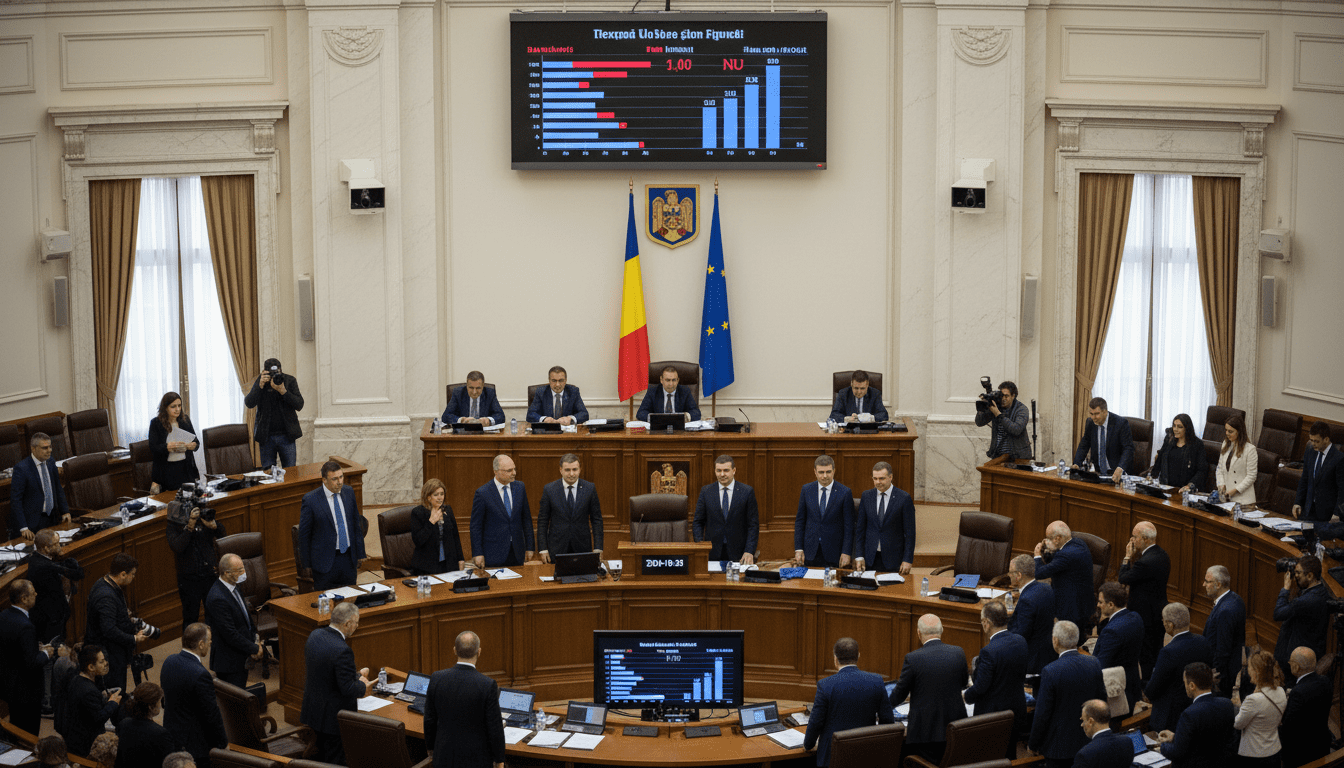
Romania no-confidence vote removes PM Ilie Bolojan after 281 of 464 MPs backed the motion, endangering EU funds, credit rating and prompting a new premier choice
The Romanian parliament removed Prime Minister Ilie Bolojan’s pro‑European minority government in a decisive no‑confidence vote, plunging Bucharest into immediate political uncertainty. The Romania no-confidence vote saw 281 of 464 deputies withdraw support for the government, exceeding the 233 votes required to carry the motion. The motion was backed by the Social Democratic Party (PSD), the right‑wing Alliance for the Union of Romanians (AUR) and several smaller far‑right groups, effectively ending Bolojan’s short tenure.
Parliament Ousts Bolojan in a Large Majority
The motion passed with a clear margin: 281 lawmakers voted against the government, while the remainder either opposed the motion or abstained. That outcome came after weeks of escalating tensions between Bolojan and members of the former coalition, particularly the PSD, which had joined the government less than a year ago. Bolojan had led a minority administration since late April after the PSD withdrew from the coalition, and he had repeatedly ruled out resigning.
Coalition Fractures After Nine Months
The four‑party pro‑European coalition collapsed after roughly nine months in office, with disagreements over fiscal policy at the core of the split. Bolojan accused the PSD of retreating from agreed austerity measures, including plans for partial privatisations that the party said would harm its constituencies. The PSD’s exit left Bolojan governing as a minority and vulnerable to an opposition alliance that combined center‑left and far‑right forces.
Economic Stakes: EU Funds, Debt and Market Confidence
Political instability arrives at a precarious economic moment for Romania, which faces one of the highest budget deficits in the European Union and a spike in new borrowing. State figures show that recent additional borrowing reached roughly 7.9 percent of GDP in the last reported quarter, well above the EU’s three percent criterion. The collapse of the government raises immediate concerns about Romania’s access to roughly €10 billion in EU funding that must be requested by August, as well as potential impacts on the country’s credit rating and the stability of the leu.
President Must Propose a New Prime Minister
Following the vote, pro‑European President Nicușor Dan is required to nominate a new candidate for prime minister to be voted on by parliament. Dan has pledged to maintain Romania’s pro‑Western orientation, but the constitution allows the president to dissolve parliament and call early elections if two successive nominees are rejected. That process gives parties a narrow window to form a workable majority or risk nationwide elections that could deepen uncertainty.
Shifting Party Fortunes and the Rise of AUR
The vote underscored a dramatic reshaping of Romania’s political landscape, with the PSD’s credibility weakened and the AUR capitalizing on popular discontent. Recent surveys cited inside political commentary have shown significant gains for the right‑wing AUR, which has overtaken the PSD in some polls and now figures prominently in coalition calculations. That shift complicates governance for pro‑European forces and creates pressure on mainstream parties to reassess strategy ahead of any potential snap vote.
Regional and International Concerns Over Blockade
EU and NATO partners are closely watching developments in Bucharest, where a prolonged parliamentary deadlock could hinder Romania’s commitments and regional stability. Diplomats and markets tend to react quickly to signs that a member state may be unable to implement reforms or meet funding deadlines, and investors will monitor any risk to public finances and currency stability. With significant EU funding and strategic NATO responsibilities on the line, the outcome of the next weeks will be scrutinized in Brussels and capitals across Europe.
The immediate calendar now hinges on President Dan’s nominations and the willingness of parties to negotiate a coalition or confidence arrangement that can command a parliamentary majority. If no broadly acceptable candidate emerges within the constitutionally mandated steps, Romania faces the prospect of early elections that would set a new political trajectory. Observers say the path forward will depend on swift compromise to safeguard EU funding, market confidence and Romania’s pro‑Western policy commitments in the coming months.
