
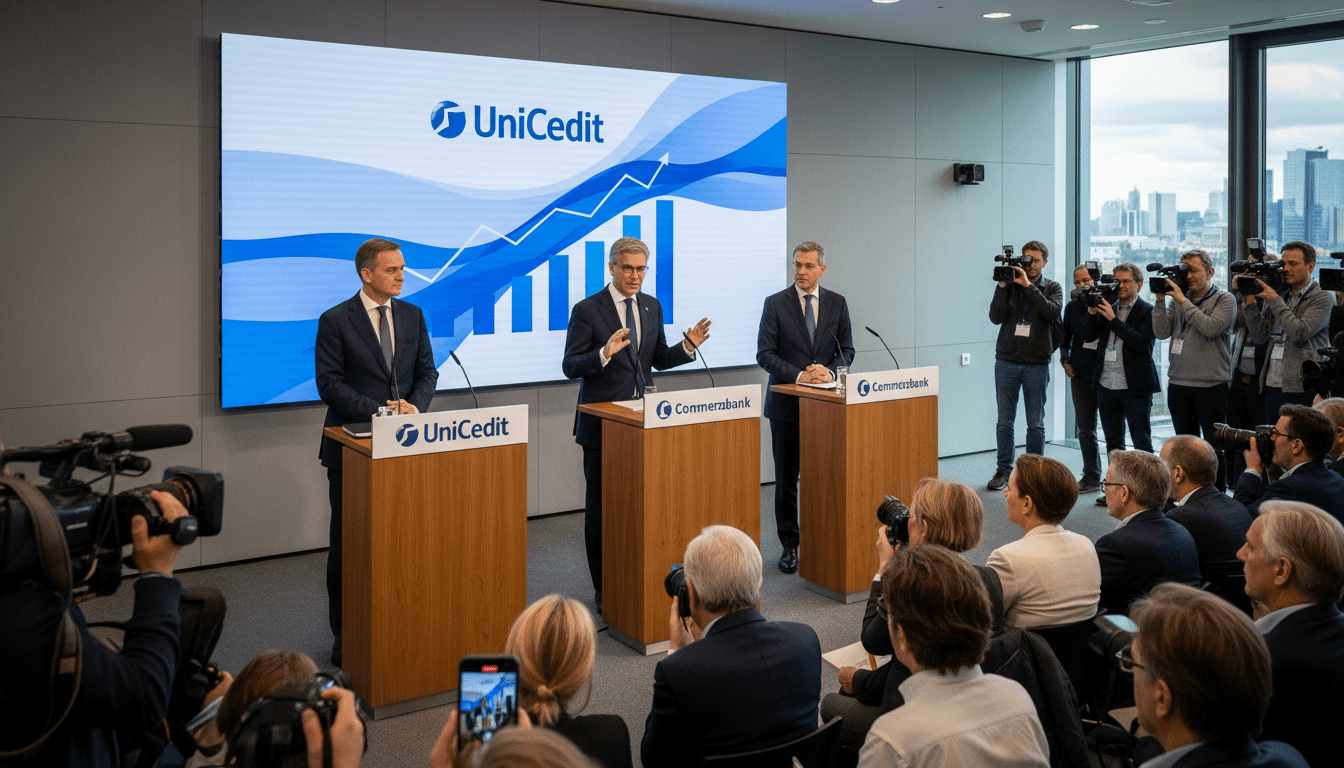
UniCredit takeover of Commerzbank advances as shareholders approve €6.7bn capital increase
UniCredit takeover of Commerzbank moves forward after shareholders approve a €6.7bn capital raise; formal offer to be presented and investors will have four weeks.
Shareholders approve €6.7bn capital increase
At an extraordinary general meeting, UniCredit shareholders voted to approve a capital increase of up to €6.7 billion, clearing a major procedural hurdle for the UniCredit takeover of Commerzbank. The bank said the vote provides the financing framework needed to convert the previously signalled proposal into a formal offer.
The approval gives UniCredit the capacity to issue the shares required under the planned exchange offer and signals investor backing for the deal mechanics put forward by management. UniCredit framed the move as necessary to accelerate its expansion in Germany through a potential combination with Commerzbank.
Formal offer to be presented and four-week acceptance window
UniCredit has said it will submit a formal offer following the shareholder approval, with CEO Andrea Orcel expected to present the terms to Commerzbank shareholders imminently. Under the timetable described by UniCredit, holders of Commerzbank shares would have a four-week period to tender their stock to the offer.
If the offer proceeds on that timetable, investors will have a defined window to evaluate the exchange and choose whether to accept or retain their shares. The planned four-week acceptance period is standard for voluntary exchange offers of this scale and will determine how quickly ownership consolidation could proceed.
Terms of the proposed exchange offer
The proposal first disclosed in March offers Commerzbank shareholders 0.485 new UniCredit shares for each Commerzbank share, an exchange ratio UniCredit said equates to €30.80 per Commerzbank share on the basis of mid-March reference prices. At that level the offer represented a roughly 4 percent premium to Commerzbank’s closing price on March 13 and valued Commerzbank at nearly €35 billion on the same basis.
UniCredit’s exchange structure would deliver acquirable equity rather than cash, making the transaction dependent on shareholder appetite for an increased stake in UniCredit. The capital increase approved by UniCredit’s investors is designed to supply the new shares that would be issued as part of that exchange.
Market reaction and valuation gap
Since the March disclosure, Commerzbank shares have traded materially higher, at times about 10 percent above the price implied by UniCredit’s proposed exchange, creating a valuation gap that could complicate take-up. That market movement leaves some Commerzbank investors weighing the certainty of the offer against potential further upside in the open market.
Analysts and market participants will be watching acceptance levels closely, as any significant mismatch between the exchange ratio and prevailing market prices can reduce the incentive for holders to tender. UniCredit will need to balance the mechanics of the proposal with market realities if it seeks meaningful participation from Commerzbank’s free-floating shareholders.
Management plans and potential job reductions
UniCredit has outlined an initial integration plan that anticipates material cost synergies in Germany, where it already operates through its HypoVereinsbank (HVB) unit. Management has estimated that the combination could lead to substantial restructuring in Germany, with earlier internal projections suggesting around 7,000 roles could be affected as functions are consolidated.
The proposed headcount reductions are part of a broader blueprint to merge retail and corporate operations and trim overlapping infrastructure. UniCredit has argued that combining operational footprints would strengthen its position in the German retail and Mittelstand market, but the scale of the workforce impact will be a central concern for employees, unions and political stakeholders.
Political stakes and regulatory review ahead
The takeover bid carries political implications because the German state remains a significant Commerzbank shareholder following prior interventions, and any deal will be scrutinised by regulators in Germany and across the European Union. Officials have repeatedly signalled an interest in maintaining financial stability and preserving domestic banking services, factors that could shape approval conditions.
Regulatory review processes typically assess competition, financial stability, and systemic risk, and the presence of a state investor means the German government may play an active role in discussions. UniCredit will need to satisfy multiple authorities and likely address conditions related to market concentration, branch networks and employment impacts to secure clearance.
Next steps and implications for the sector
If the UniCredit takeover of Commerzbank proceeds, it would reshape the German banking landscape by combining two major players and expanding UniCredit’s footprint in one of Europe’s largest banking markets. The transaction would also test cross-border consolidation dynamics in the EU banking sector and set a precedent for future deals involving state-participated institutions.
Observers will monitor the formal offer’s reception, regulatory timelines and any adjustments to terms that UniCredit might make to increase the offer’s attractiveness. The outcome will influence competitive positioning among European retail and corporate banks and could trigger further consolidation discussions across the sector.
The coming weeks will determine whether UniCredit secures sufficient shareholder acceptance and regulatory endorsement to complete the transaction, and stakeholders on both sides are preparing for a closely watched process with wide industry and political ramifications.
