
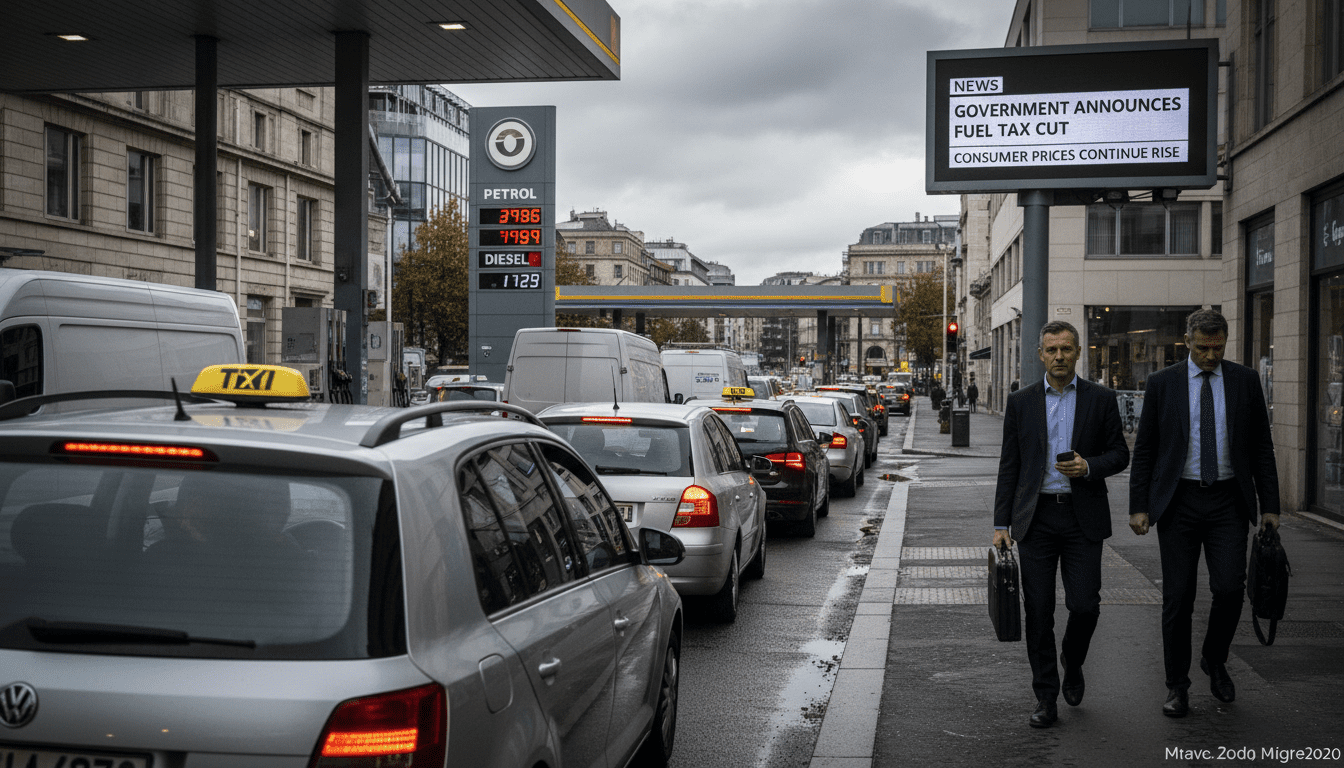
Tank rebate leaves drivers with smaller-than-expected cuts as fuel prices rise over weekend
Tank rebate in Germany falls short: ADAC data show E10 and diesel prices down only about 11 cents — less than the 16.7¢ tax cut introduced May 1, 2026.
Weekend price spike and ADAC figures
The average German pump price rose sharply over the weekend despite the new tank rebate, according to figures released by the ADAC. On Sunday the nationwide daily average for Super E10 stood at €2.017 per litre and diesel at €2.104 per litre, marking rises of 1.4 and 1.1 cents from the previous day.
Those increases came after the government’s fuel tax reduction took effect on May 1, 2026, intended to ease household fuel costs amid higher energy prices. Motorist groups and market observers are now scrutinising whether the relief is reaching drivers at the forecourt.
Shortfall versus the 16.7-cent tax reduction
Comparing prices with the day immediately before the tax cut shows a gap between expected and actual savings. E10 is presently about 10.9 cents cheaper and diesel roughly 11.1 cents cheaper than the pre-rebate daily averages — significantly less than the 16.7-cent-per-litre fiscal relief.
The tax measure removed the 14.04-cent energy tax and its VAT on that amount, producing an effective reduction of about 16.7 cents per litre that should, in theory, be passed to consumers. Consumer groups and some politicians have publicly criticised oil companies for not transferring the full reduction to end users.
ADAC and market analysis: crude prices not to blame
The ADAC has rejected higher crude oil costs as an explanation for the muted price relief at pumps. The motoring club noted that global crude prices were lower than at the end of April, meaning the recent retail increases are unlikely to be driven by upstream market moves.
Against that backdrop, the ADAC has called on retailers and refiners to lower retail prices further so that they fall by more than the full amount of the tax cut compared with pre-May 1 levels. The association argues that genuine relief for drivers requires a transparent and measurable pass-through of the policy.
Station-level variation and the 12:00 rule dynamics
Price behaviour at individual stations has been uneven, with notable regional and operator differences since the rebate began. Several operators were observed selling both diesel and E10 for under €2 per litre on Monday morning, while others kept prices well above that threshold.
Market participants say the so-called 12:00 rule — which allows one scheduled price change at midday — is affecting daily patterns. Retail prices often jump at the permissible midday update, sometimes by more than 10 cents, and then drift lower again toward the following morning, producing volatile intra-day price curves.
Regional disparities and the cartels authority observations
The Bundeskartellamt has reported larger-than-usual divergence in price curves across regions and operators. Its president, Andreas Mundt, noted that some petrol stations raised prices sharply while others made little or no change, producing stronger variation than in normal market conditions.
Regional differences are partly explained by distinct refinery and wholesale price structures in southern, central and northern Germany, with southern stations typically trading a few cents lower on average at certain times. These structural factors, regulators say, complicate a uniform pass-through of the tax measure.
Political reaction and fiscal implications
The government has framed the tank rebate as a temporary measure to ease household burdens caused by elevated fuel costs. Economy Minister Katherina Reiche urged that the full relief be passed on to motorists, describing it as an expectation from industry rather than a mere request.
Opposition and parliamentary figures have likewise demanded swift corrective action. SPD deputy parliamentary leader Armand Zorn said overcharging must be stopped quickly, while finance analysts warn that foregone tax receipts could total as much as €1.6 billion if consumption patterns and price effects persist through the two-month window.
Final paragraph: The coming days will be closely watched by motorists, regulators and policymakers as weekday trading resumes and forecourt prices continue to respond to the rebate, regional wholesale markets and retail strategies.
