
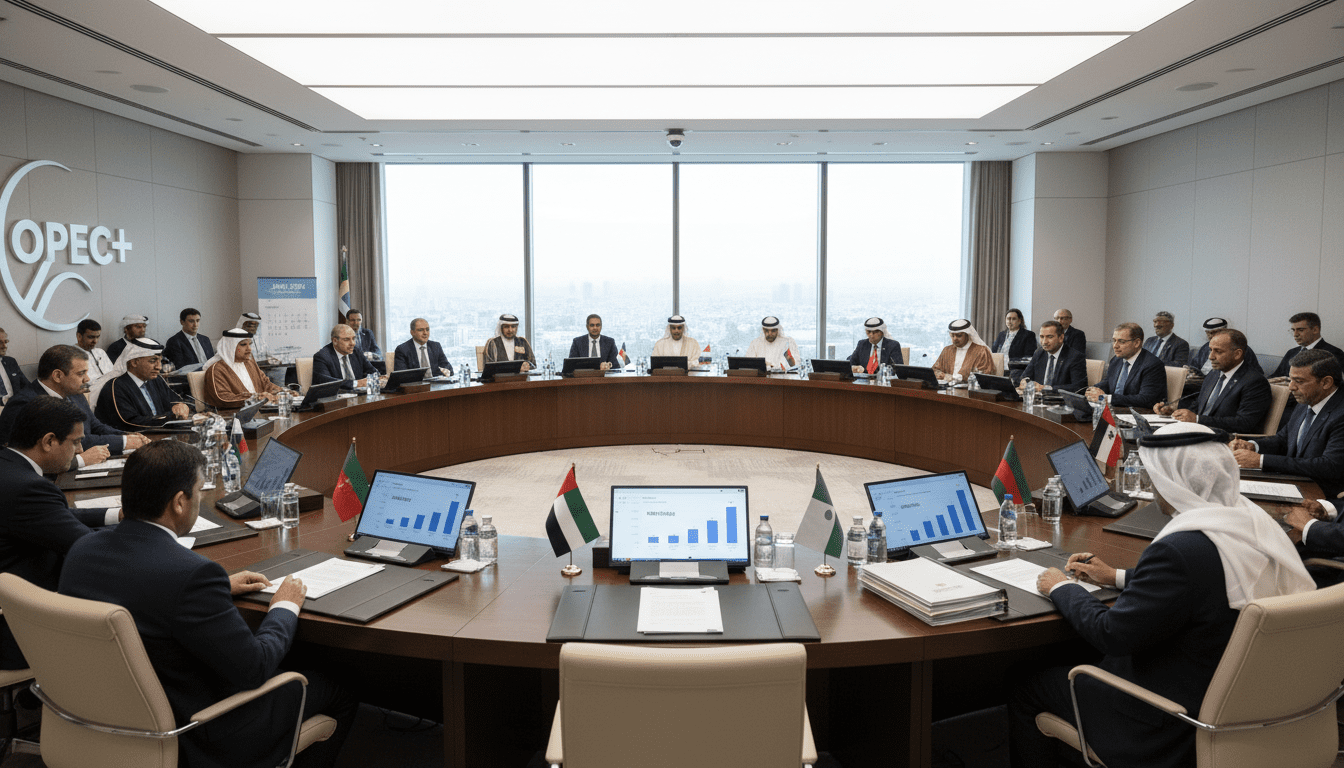
UAE Exit from OPEC Spurs OPEC+ to Raise June Oil Production
OPEC+ members pledge an extra 188,000 barrels per day for June after the UAE exit from OPEC, a move aimed at supporting market stability amid shipping disruptions.
OPEC+ approves June output rise
OPEC+ announced a further increase in collective production for June, adding 188,000 barrels per day to the group’s planned supply. The organization described the decision as part of a coordinated effort to support oil-market stability, marking the third consecutive monthly upward adjustment.
This follows increases of 206,000 barrels per day that were applied for April and May, adjustments that had included a small allotment originally intended for the United Arab Emirates. With the UAE’s departure, that share is no longer counted within the OPEC+ allocation framework.
Seven members commit to the additional supply
The new June uplift was explicitly attributed to seven key producers: Saudi Arabia, Russia, Iraq, Kuwait, Kazakhstan, Algeria and Oman. These countries together agreed to shoulder the extra output, signaling a willingness among core producers to act without the UAE’s participation.
OPEC+’s public statement emphasized the collective objective of preserving market balance but did not reference the UAE’s recent exit, which was announced by Abu Dhabi days earlier. Observers noted the omission even as the alliance pressed ahead with its production plan.
Implementation questioned amid shipping blockade
Analysts cautioned that turning decisions on paper into actual barrels could prove difficult given current logistical constraints. Most OPEC+ production capacity is concentrated in the Gulf region, where exports face disruption from Iran’s continued blockade of the Strait of Hormuz.
That shipping squeeze has pushed benchmark crude prices to multi-year highs, with markets reacting to the risk of constrained flows even as producers pledge more supply. Producers’ ability to deliver increased volumes will therefore depend on whether maritime routes and regional security conditions improve.
Russia benefits but also faces delivery limits
The recent output decision has been described as relatively favorable to some OPEC+ members, notably Russia, which has seen higher revenues from elevated prices. Nonetheless, Moscow has reported practical difficulties in meeting its own quota targets amid broader economic and logistical strains.
Those limits underline a recurring challenge for the alliance: agreement on paper does not guarantee that each member can ramp up production as intended, especially when individual countries confront sanctions, infrastructure problems or the operational impacts of conflict.
UAE exit reshapes decision-making within the alliance
The United Arab Emirates, a founding OPEC member since 1967, announced it would leave both OPEC and the extended OPEC+ arrangement effective May 1. Abu Dhabi said the move would allow it to pursue national interests and set output and pricing policy without the constraints of group quotas.
With the UAE gone, OPEC+ now comprises 21 countries including Iran, but routine production decisions have in recent years been driven by a smaller core group. The absence of the UAE removes one influential producer from that inner circle and may make future consensus-building more complex.
Adnoc investment signals independent growth strategy
Shortly after the withdrawal announcement, Abu Dhabi’s state oil company Adnoc revealed plans to invest roughly €46.45 billion in new projects over the next two years. The investment drive is intended to accelerate capacity expansion and position the UAE as a more assertive independent supplier.
Analysts say the move allows the Emirates to target higher output and greater commercial flexibility, strengthening its competitive stance relative to OPEC+ members and potentially increasing its market influence as global demand dynamics evolve.
Next OPEC+ meeting and market outlook
OPEC+’s core ministers have scheduled a follow-up meeting for June 7 to reassess production strategy and member compliance. That session will be closely watched for signals on how the group intends to manage supply if maritime corridors remain constrained or if geopolitical tensions evolve.
For traders and consumers, the near-term picture remains one of heightened volatility: commitments to boost output may calm markets if they are implemented, but delivery obstacles and shifting alliances could prolong price sensitivity and uncertainty.
The UAE exit from OPEC and the subsequent OPEC+ production decision illustrate how producer politics and regional security risks are jointly shaping global oil markets, with near-term outcomes hinging on whether pledged supplies can physically reach world markets.
