
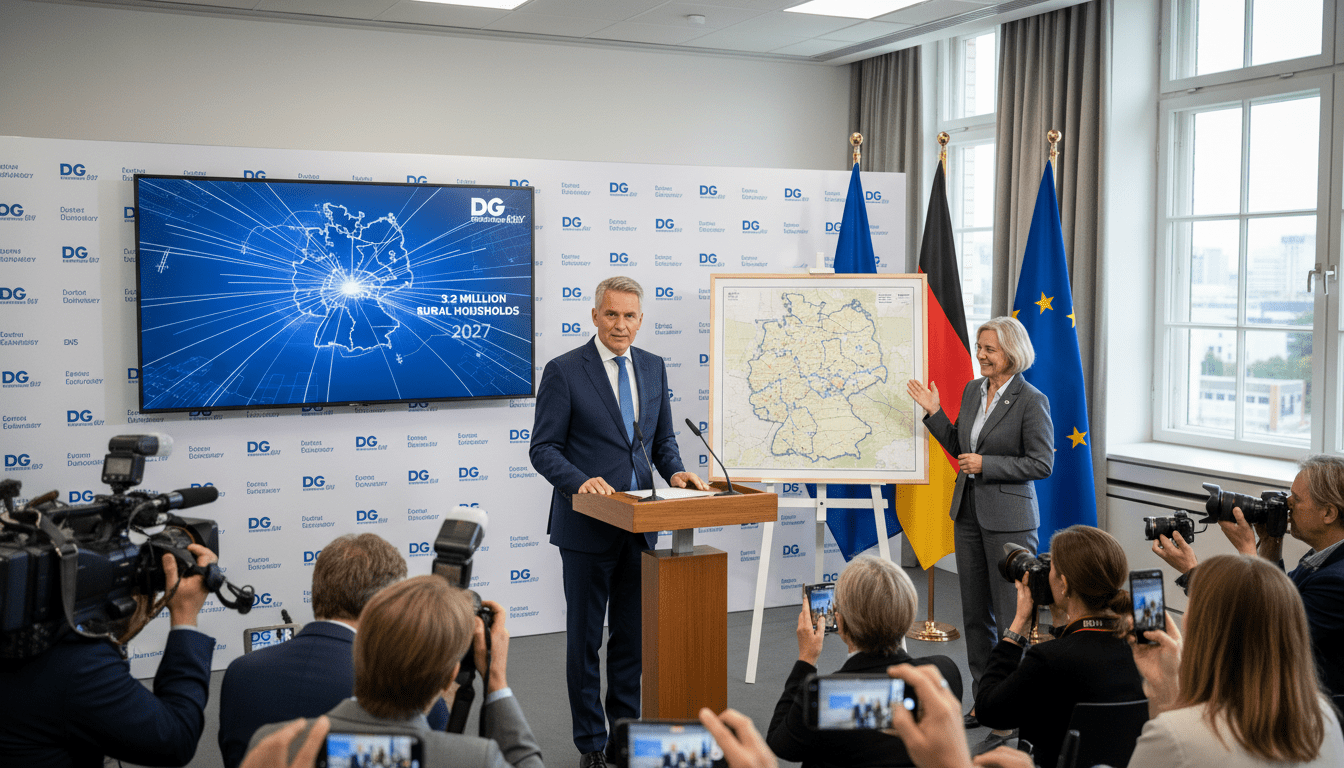
Deutsche Glasfaser expansion secures funding to connect 3.2 million rural households by 2027
Deutsche Glasfaser expansion secures funding to finance connection of 3.2 million largely rural households by 2027, as rollout adjusts from earlier targets.
Deutsche Glasfaser expansion will be financed to accelerate a rural fiber rollout that aims to connect 3.2 million households by 2027, the company confirmed. The plan, focused largely on communities outside major urban centers, comes as the provider adapts its strategy after falling short of its initial six‑million target. Currently about 2.6 million households are served by Deutsche Glasfaser, and the new funding is intended to close part of the gap while prioritizing underserved rural areas.
New financing announced
The financing package is designed to fund the next phase of Deutsche Glasfaser expansion, including the build‑out through 2027. Company statements indicate the money will be directed chiefly toward network construction and customer connections in non‑urban regions. The announcement marks a recalibration of the rollout pace and geographic emphasis compared with earlier plans.
Scope and timeline of the rollout
Deutsche Glasfaser intends to reach roughly 3.2 million households by the end of 2027, concentrating on villages and small towns that historically lack high‑speed fiber. The timeline sets a clear end date for the current expansion tranche and frames operational targets for the next two years. Project managers will prioritize areas where demand aggregation and local partnerships make rapid deployment feasible.
Current footprint and revised ambitions
As of the latest count in the company’s update, Deutsche Glasfaser supplies fast internet to approximately 2.6 million households. That figure reflects completed builds and active customers but also highlights the shortfall from the operator’s original ambition to cover six million households. The revised target underscores the difficulties of scaling infrastructure across widely dispersed rural geographies.
How the funds will be used
The secured financing is earmarked for classical network expenditures: trenching, fiber installation, customer connections and related construction logistics. Investment will also support administrative and planning costs tied to local permits and municipal coordination. Company officials say the financing will enable a focused deployment where cost per connection and take‑up rates present the strongest near‑term returns.
Impact on rural broadband access
Expanding fiber to 3.2 million households would significantly alter broadband availability in many rural communities, where alternatives such as DSL and fixed wireless often deliver inconsistent speeds. Faster, symmetrical fiber access can support telework, small business growth and public services in towns that have lagged behind metropolitan areas. The success of the expansion will depend on local take‑up rates and the ability to overcome logistical and regulatory hurdles.
Market context and competitive dynamics
Deutsche Glasfaser’s revised rollout arrives as Germany’s broadband market remains competitive, with national and regional players pursuing fiber and hybrid solutions. The company’s recalibrated ambition reflects both market realities and the capital intensity of rural deployments. Observers say private funding to complement public subsidies will be critical to achieving wide coverage without compromising commercial viability.
The new financing for Deutsche Glasfaser expansion shifts the provider’s focus squarely onto underserved rural areas and sets a firm deadline for the next phase of the rollout. Delivering on the 2027 target will require coordinated work with municipalities, efficient construction execution and sufficient customer uptake in each community.
