
Drone Attacks in Southern Lebanon Strike Israeli Forces During Evacuation
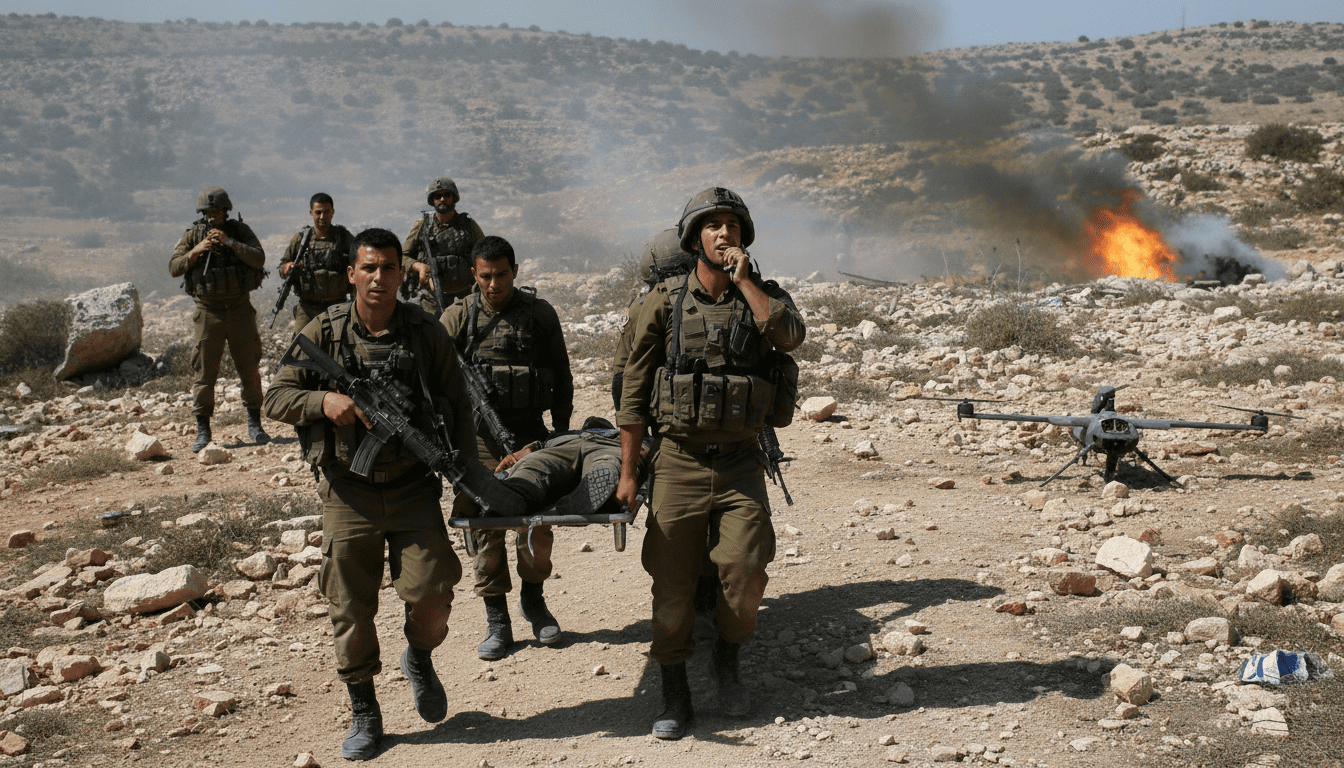
Drone attacks in southern Lebanon struck Israeli forces during a wounded evacuation on April 27, 2026, wounding soldiers and forcing a helicopter to abort landing.
An explosion landed within metres of soldiers as they loaded a stretcher in video circulated on social media, highlighting a new vulnerability for troops operating inside southern Lebanon. The footage shows the group reacting to the blast while nearby personnel attempted to secure the wounded, and a rescue helicopter was forced to take off almost immediately as more drones were detected. At least several Israeli soldiers were reported wounded in the incident, which observers say underscores the growing impact of drone attacks in southern Lebanon on ground operations. Military sources described the scene as chaotic and emblematic of evolving threats on the border.
Drone Strike Near Evacuation Point Caught on Video
The clip that circulated widely shows an explosion striking a position just as soldiers finished loading a stretcher, sending dust and debris over the evacuation site. Soldiers can be seen reacting and seeking cover in the seconds after the blast, while others continued to assist the wounded amid the smoke. Witnesses and multiple onlookers shared accounts of hearing several detonations and seeing small aerial vehicles overhead before and after the impact. The visual record has become a focal point for analysts assessing the tactical risk posed by small, guided munitions in close-quarters evacuations.
Helicopter Evacuation Aborted as Additional Drones Approached
A medevac helicopter that had landed to extract the injured was forced to lift off almost immediately after detection of further drones in the area, according to field descriptions. Pilots narrowly avoided secondary strikes and returned to a safer staging area, delaying the evacuation and complicating casualty care. Military medics were reported to have provided immediate first aid on the ground before a revised extraction plan was implemented. The aborted landing highlights the operational constraint that aerial threats impose on traditional casualty evacuation procedures.
Casualties Reported and Troop Vulnerability Highlighted
At least several soldiers were wounded in the attack; precise figures and the severity of injuries remain subject to confirmation from official military channels. The incident exposed the vulnerability of units operating inside populated or semi-urban terrain in southern Lebanon, where lines of sight and rapid movement are limited. Commanders face increased difficulty securing extraction corridors and maintaining situational awareness when small drones can approach with little warning. Analysts say the psychological effect on troops and medics is significant, as routine evacuations now carry heightened risk.
Increased Drone Use Is Changing Battlefield Dynamics
Military analysts note that the growing prevalence of inexpensive, commercially available drones adapted for attack roles has altered tactical calculations on both sides. Drones provide adversaries with a low-cost means to harass, surveil, and strike forces that previously relied on relative air superiority and conventional countermeasures. Advances in guidance, optics, and coordinated employment allow operators to press targets at standoff distances, complicating force protection measures. Defensive responses now often require layered electronic warfare, kinetic interception, and revised operational tempos to reduce exposure.
Broader Security and Humanitarian Implications
The strike and subsequent aborted evacuation raise concerns about collateral risks to civilians and humanitarian actors working in the affected towns, where damage to infrastructure and interruptions to medical transport can have cascading effects. Cross-border operations that carry the potential for drone-enabled strikes heighten the possibility of further escalation and put nearby non-combatants at increased risk. International observers and relief organizations monitoring the area have flagged the need for measures that protect medical evacuations and preserve access to care. Diplomatic channels may face renewed pressure to address both the immediate incident and the wider pattern of cross-border drone use.
The episode in southern Lebanon adds to a series of confrontations in which unmanned systems have figured prominently, and it is likely to influence both immediate tactical adjustments and broader strategic thinking. Commanders will reassess evacuation protocols and force-protection measures while policymakers weigh the risks of further escalation across the border. For now, the presence of drone attacks in southern Lebanon has introduced a persistent hazard that complicates operations, increases the danger to wounded personnel, and alters the calculus for forces operating in the region.
