
Palestinian municipal elections: Abbas-aligned camp wins majority as Gaza voting returns
Palestinian municipal elections saw President Mahmoud Abbas’s camp secure the most council seats, with voting held in the West Bank and for the first time in nearly two decades in a Gaza city.
Election authority announces broad Fatah gains
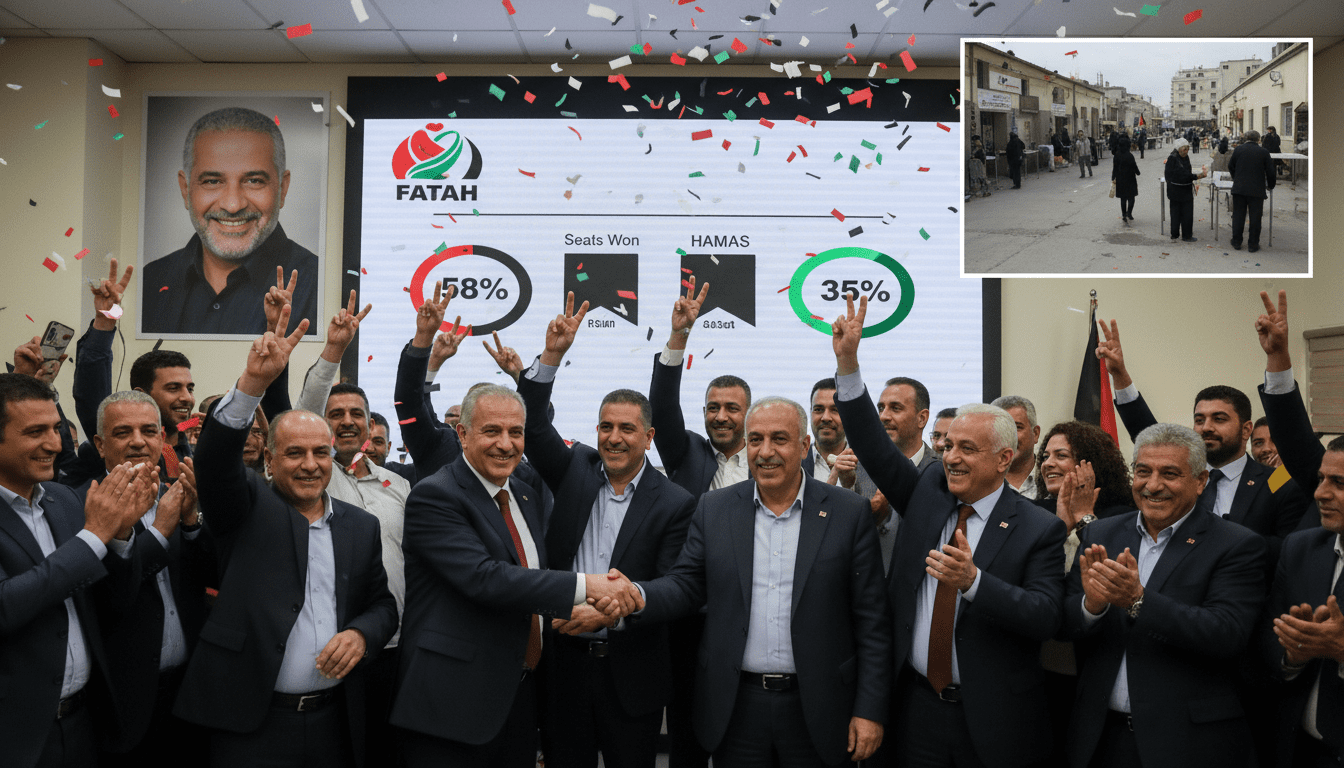
The Palestinian election authority reported that candidates affiliated with President Mahmoud Abbas’s Fatah movement won the largest share of seats in municipal councils across areas that held ballots. The announcement came on Sunday after voting was held the previous day in municipalities across the occupied West Bank and in one Gaza city.
In many West Bank localities, Fatah-backed lists prevailed largely unopposed, reflecting the movement’s entrenched administrative position. Observers noted that the contest was muted in parts of the territory where opposition groups either did not present lists or chose to boycott the vote.
Gaza returns to the ballot after nearly two decades
For the first time since 2006, residents of a Gaza city were allowed to take part in a Palestinian municipal vote, marking a symbolic return of polling to the coastal enclave. Gaza has been under the de facto control of Hamas since 2007, making the inclusion of a Gazan municipality a politically sensitive development.
The city included in the vote, Deir al-Balah, was selected by the Palestinian Authority and described by officials as comparatively less damaged in recent hostilities. Authorities framed the decision as a measured step to reassert administrative presence and to test local sentiment after years without formal PA elections in Gaza.
Deir al-Balah results and seat distribution
In Deir al-Balah, a list supported by Fatah won six out of 15 council seats, while a list linked to Hamas captured two seats. Two independent groups took the remaining positions, producing a fragmented council rather than a single dominant bloc.
The outcome was interpreted by local analysts as a modest victory for PA-affiliated candidates but not a sweeping mandate, given the plurality of independents and the limited share for the Hamas-aligned list. The mixed results underscore the complex local dynamics in Gaza and the difficulty of translating symbolic ballot access into clear political control.
Turnout gaps highlight regional divides
Voter participation varied sharply between the West Bank and Deir al-Balah, with the election authority reporting turnout near 56 percent in parts of the West Bank and roughly 23 percent in the Gaza city. The disparity signals different levels of engagement and political calculation across the territories.
Low turnout in Deir al-Balah reflected both security concerns and skepticism among some residents about the ballot’s impact on broader national issues. By contrast, higher West Bank participation—often in contests with few or no challengers—reflected longstanding PA administrative structures and localized mobilization.
Official reactions and political framing
Palestinian Prime Minister Mohammad Mustafa described the municipal vote as an important first step toward strengthening democratic institutions and advancing unity, saying the election took place under highly sensitive circumstances. PA officials presented the ballots as a measure to bolster governance at the municipal level and to demonstrate the authority’s ability to administer civil affairs.
A Hamas spokesman, however, played down the significance of the results and said the municipal outcomes would not affect overarching national questions. The movement has generally resisted cooperation under current arrangements and opted to boycott voting in many West Bank areas.
Analysts weigh domestic and international implications
Political analysts cautioned that municipal outcomes are unlikely to resolve the broader split between the Palestinian Authority and Hamas, but they may influence how external actors engage with local administrations. Reham Ouda, a Palestinian politics expert, observed that voters appeared to favor Fatah-aligned candidates as a means to secure uninterrupted international support and humanitarian assistance for municipal services.
Others suggested the ballot may provide the PA with a modest boost in legitimacy for local governance, especially if it can use the results to justify access to aid and reconstruction funds. Still, analysts warned that durable reconciliation will require sustained political dialogue and confidence-building measures beyond municipal ballots.
Practical challenges ahead for local governance
Municipal councils now face the practical task of translating electoral gains into improved services at a time of fragile infrastructure and constrained resources. In Gaza, the presence of multiple authorities and restrictions on movement complicates coordination on basic utilities and reconstruction projects.
In the West Bank, councils often operate under the PA’s administrative umbrella but face fiscal pressures and political constraints that can limit their capacity. Whether the newly elected representatives can deliver visible improvements will be a key test of the vote’s local legitimacy.
The municipal elections mark a tentative step toward renewed local representation amid long-standing political division, leaving both the Palestinian Authority and rival factions to navigate the limits of electoral outcomes in shaping national politics.
