
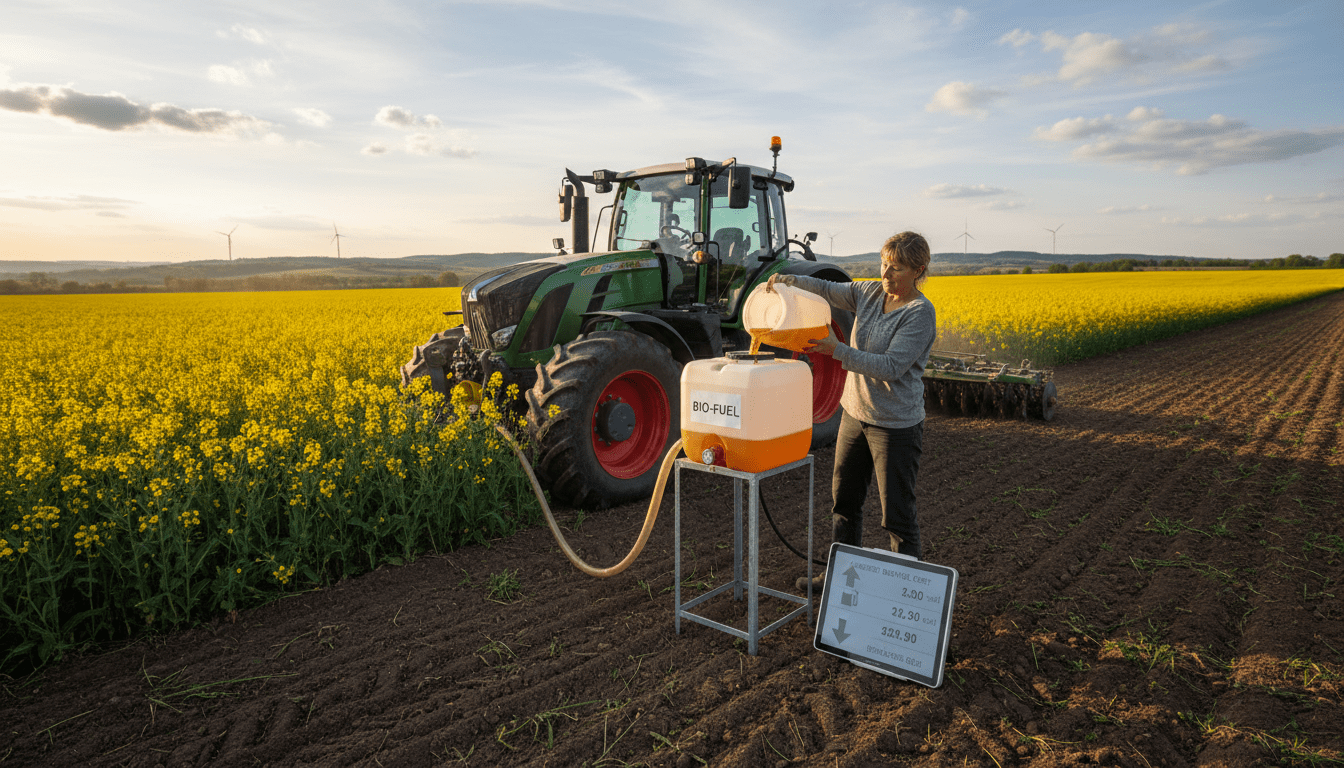
Farmers Turn to Rapeseed Oil as Diesel Prices Bite
High diesel prices are driving farmers to use rapeseed oil as tractor fuel, but technical limits, limited supply and regulations complicate a fast transition.
Across large parts of Europe, soaring diesel costs have prompted a practical shift on farms as rapeseed oil emerges as an on‑farm alternative for powering tractors. Farmers and co‑operatives report experimenting with rapeseed oil to cut fuel bills and rely more on domestic crops. The move is gaining attention this spring as growers weigh economic relief against practical, environmental and legal trade‑offs.
Farmers Start Testing Rapeseed Oil in Tractors
Many operators now run trials blending or directly using rapeseed oil in diesel engines to lower operating costs. Smaller farms with vegetable oil presses can convert part of their rapeseed harvest into fuel for immediate use, reducing exposure to volatile diesel markets. Field reports indicate variability in results, with success often depending on engine age, local processing quality and how the oil is stored.
Interest has spread from hobbyist retrofits to organized pilot schemes coordinated by agricultural associations. Those groups are documenting performance, maintenance requirements and cost savings to advise members on safe practices. The experiments are practical and incremental rather than widescale rollouts, reflecting caution among farmers and mechanics.
Technical and Regulatory Hurdles Remain Significant
Using straight vegetable oil or high‑blend biodiesel can pose mechanical challenges, including injector fouling, longer cold‑start times and shortened service intervals. Modern common‑rail engines, in particular, were designed for specific diesel properties and may require modifications or approved blends to avoid damage. Farmers are advised to consult manufacturers and technicians before switching fuels to prevent warranty and safety issues.
Regulation is another constraint: tax rules, fuel standards and vehicle approval processes differ across jurisdictions and often restrict the legal use of non‑standard fuels on public roads. While on‑farm use may be tolerated in some areas, accurate record‑keeping and compliance with emissions rules are necessary to avoid fines or retroactive taxes. Authorities are being asked for clearer guidance to reduce legal uncertainty for producers.
Economic Calculations and Supply Constraints
For many growers, the financial case for rapeseed oil rests on local oilseed prices, processing costs and the comparative price of diesel. Producing on‑farm fuel requires investment in presses, filters and storage, and the yield per hectare must be weighed against alternative uses of the crop such as food and feed. In good harvest years, farmers report potential savings, but margins can evaporate if rapeseed prices rise or processing expenses climb.
Supply logistics also limit broader adoption: not every region has sufficient rapeseed acreage or local crushing capacity to produce fuel at scale. Co‑operatives and aggregators can alleviate bottlenecks by pooling harvests and operating centralized processing facilities, yet building that infrastructure takes time and capital. In the short term, rapeseed oil is most feasible as a stopgap for farms with their own oil production or close access to processors.
Environmental and Crop Impacts of Increased Fuel Use
Using rapeseed oil as fuel changes the environmental calculus compared with fossil diesel and advanced biofuels. On the one hand, locally produced oil can reduce transport emissions and increase energy self‑sufficiency on farms. On the other hand, diverting crops to fuel raises questions about land use, biodiversity and fertilizer inputs if acreage expands to meet energy demand.
Experts caution that sustainable outcomes depend on crop rotation, reduced pesticide use and careful soil management to avoid unintended harms. Policymakers and agricultural advisers emphasize that any expansion of fuel‑oriented oilseed cultivation should be evaluated for long‑term effects on food production and ecological resilience. Pilot studies are incorporating lifecycle assessments to better understand net climate and environmental impacts.
Policy Signals and Market Reactions
The rise in farmer interest has prompted responses from industry groups and some regional authorities seeking to reconcile tax, environmental and agricultural goals. Calls for temporary exemptions, clearer labelling rules and support for local processing infrastructure have come from farming associations. Meanwhile, fuel suppliers are monitoring demand shifts and exploring options such as locally sourced biodiesel blends that meet vehicle standards.
Market signals remain mixed: retail diesel prices and regulatory clarity will be decisive for whether rapeseed oil remains an interim measure or becomes part of a broader energy strategy in agriculture. Financial incentives, investment in decentralized processing and standardized quality certification could accelerate adoption, but these require policy coordination and private capital.
As the planting season advances and fuel markets stay volatile, farmers will continue balancing immediate cost relief with longer‑term considerations of machinery health, legal compliance and environmental stewardship.
Farmers and industry groups say rapeseed oil is unlikely to replace diesel across the sector overnight, but it is already shaping practical conversations about energy resilience on farms. Producers planning to experiment are urged to follow technical guidance, document outcomes and engage with local authorities to ensure safe and legal use.
