
Fidan Frames Turkey as a Middle Power, Seeks Broker Role in Iran, Gaza and Ukraine Talks
At Oxford, Turkey’s FM Hakan Fidan said Turkey as a middle power can mediate Iran, Gaza and Ukraine disputes, positioning Ankara ahead of the July NATO summit.
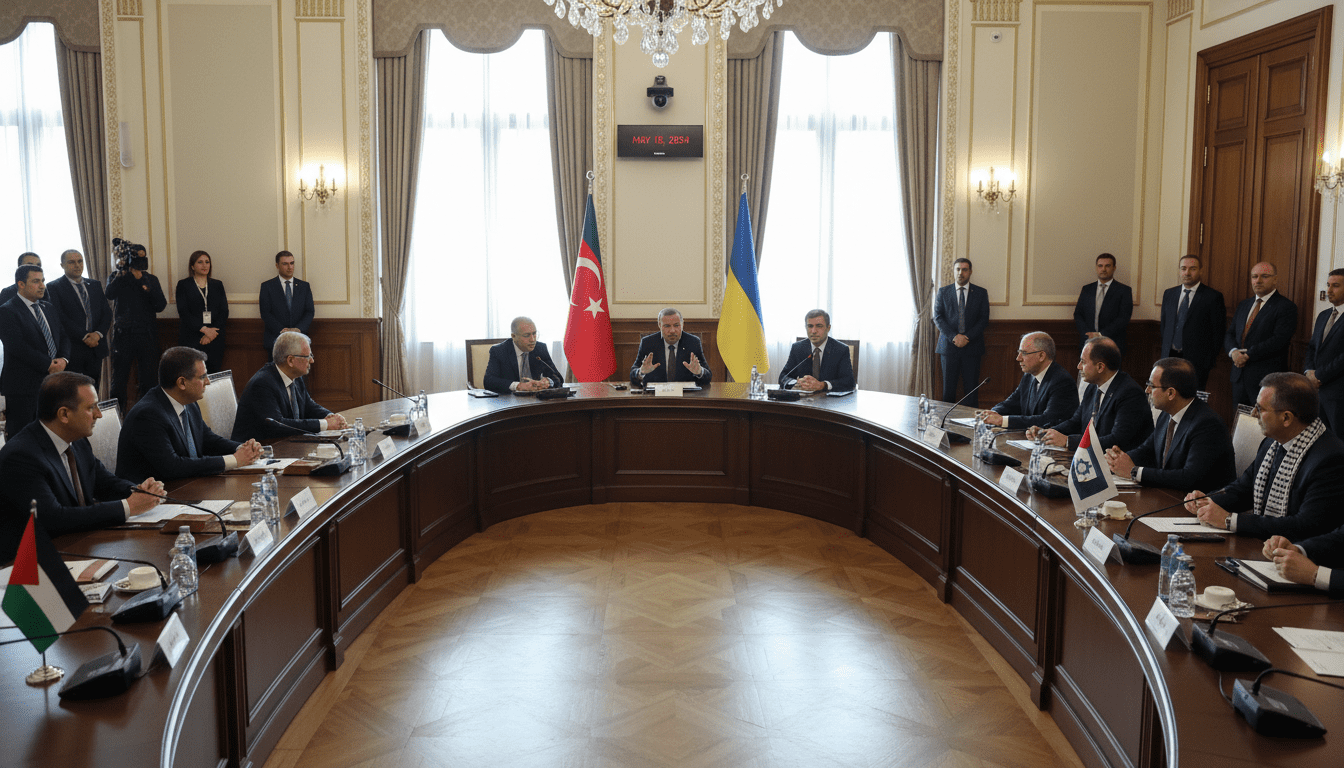
Turkey’s foreign minister told an Oxford audience that Ankara is positioning itself as a middle power and a diplomatic broker capable of keeping channels open amid rising global tensions. Hakan Fidan argued Turkey’s strategic traditions and broad contacts put it in a unique position to shuttle messages and facilitate talks on Gaza, Iran and Ukraine. He highlighted Ankara’s recent diplomatic engagements, including a strategic partnership agreement with the UK and preparations to host NATO leaders in July. The remarks underscored a deliberate Turkish effort to expand its role in high-stakes diplomacy while cautioning that mediation requires patience and restraint.
Fidan presents Ankara as a mediator
Fidan framed Turkey’s diplomatic posture as one built on sustained dialogue rather than coercion, saying Ankara prefers to create conditions for parties to reach their own settlements. He told the Oxford Centre for Global History that states with deep strategic traditions adapt better to uncertainty, and he asserted Turkey fits that profile. He also used forceful language to describe Ankara’s growing reputation, noting that some international circles now refer to Turkey as “the adult in the room.” The minister stressed that this status rests on access to multiple parties and a willingness to engage across fault lines.
Behind-the-scenes shuttle diplomacy
During a two-day UK visit, Fidan described active Turkish involvement in confidential exchanges between Washington and Tehran, portraying Ankara as a conduit rather than an arbiter. He said Turkish officials have been relaying messages and urging restraint, a role that complements Pakistan-brokered talks in Islamabad where US envoys were due to travel. Fidan expressed cautious optimism that pressure on both sides of the Iran standoff could push them toward compromise, while acknowledging significant gaps remain between core demands. He characterized this diplomacy as technical and incremental, aimed at resolving issues that had been stalled in the nuclear dossier.
Coordination with Washington and NATO dynamics
Fidan denied reports of direct US pressure on Turkey and said Ankara maintains good coordination with US leadership, citing recent phone contact between Presidents Erdogan and Trump over the ceasefire decision. He also reacted to suggestions that allies might face punitive NATO measures, saying Turkey has not been subject to threats of expulsion and appears to be working closely with Washington. The minister’s comments came as Ankara prepares to host the NATO summit in July, a timing that places additional diplomatic scrutiny on Turkey’s claims of impartial brokering. Hosting the summit will test Ankara’s ability to balance alliance responsibilities with independent mediation efforts.
Ukraine’s conflict recedes in global attention
Fidan warned that the war in Ukraine is losing international prominence despite its massive humanitarian toll, arguing that the Iran confrontation has shifted diplomatic bandwidth and media focus. He described the Ukrainian conflict as still devastating but noted its regional containment and Europe’s reduced energy dependence have lessened its immediate geopolitical shock. Turkey, he said, remains engaged in Ukraine-related diplomacy and has hosted talks between the parties, but he warned that global sensitivity is waning. Fidan predicted that, should progress be achieved on Iran, diplomatic attention would eventually return to Ukraine and related European security concerns.
Strait of Hormuz and potential demining operations
The minister addressed economic and security fallout from Iran’s partial closure of the Strait of Hormuz, noting the chokepoint’s influence on global oil flows and shipping. Fidan sketched two scenarios: a negotiated return to normal maritime passage if talks succeed, or a prolonged security challenge requiring international technical responses if they fail. He signalled Ankara’s readiness in principle to participate in a multinational technical team for mine clearance and other post-conflict tasks, while stressing that any commitment would depend on the broader political context. Turkey would reassess involvement if a coalition risked becoming entangled in renewed hostilities, he added.
Implications for Ankara ahead of the NATO summit
Signing a strategic partnership with London during his UK visit, Fidan sought to bolster Turkey’s diplomatic credentials as it assumes a prominent role on the international stage. The combination of bilateral agreements, shuttle diplomacy and summit hosting creates both an opportunity and a test for Turkey’s middle power ambitions. Analysts will watch whether Ankara can maintain perceived impartiality while coordinating with allies and preserving leverage with adversaries. Fidan’s cautionary language — that Turkey does not impose outcomes but seeks to enable them — signals an approach that relies on incremental gains rather than headline-grabbing bargains.
Turkey’s next steps will be closely observed in the coming weeks as ceasefire talks, shuttle diplomacy in Islamabad and preparations for the Ankara summit all proceed simultaneously. Fidan’s Oxford address outlined a clear ambition: to translate access and strategic positioning into measurable diplomatic influence while avoiding entanglement in the very conflicts Ankara aims to help resolve. The weeks ahead will determine whether Turkey’s claims to act as a middle power translate into effective mediation or merely expanded diplomatic visibility.
