
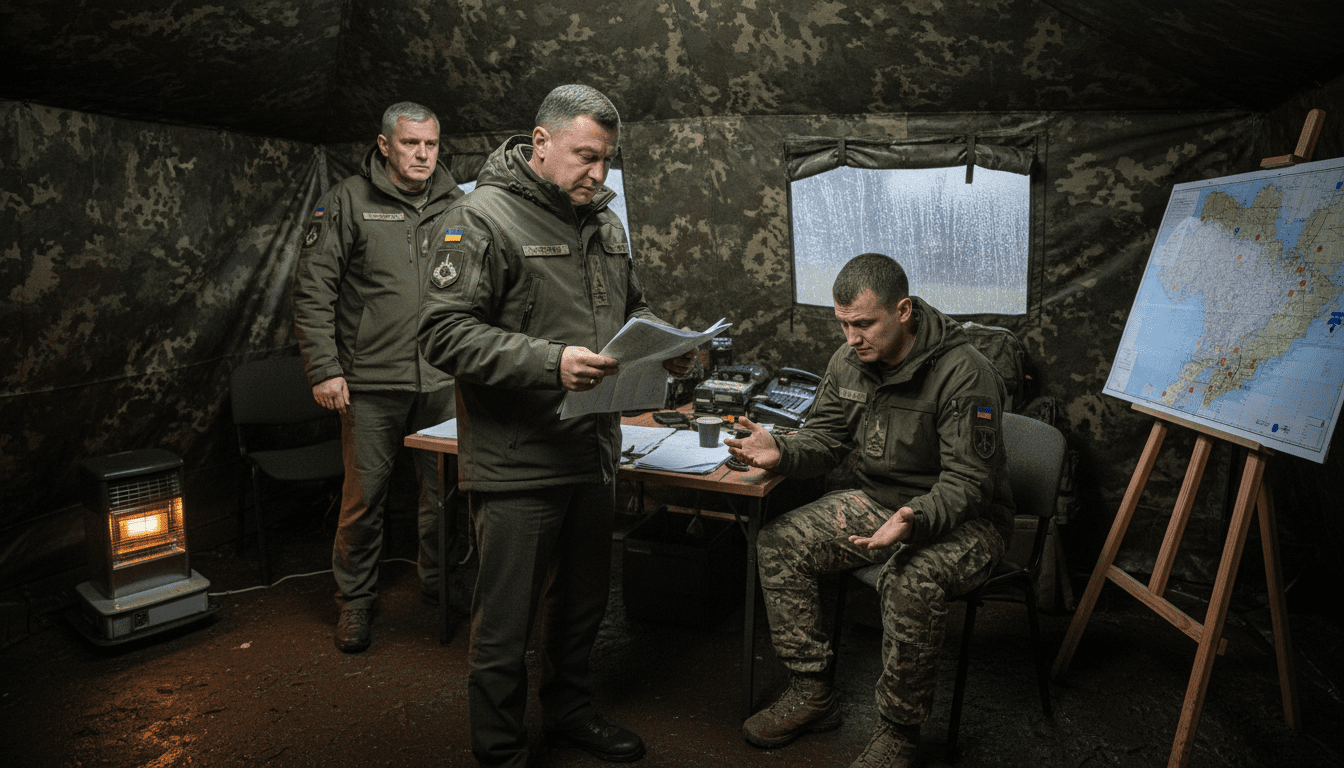
Kyiv Dismisses Commanders Over Falsified Situation Reports in Kupiansk Sector
Kyiv’s General Staff removed two commanders over falsified situation reports from the Kupiansk front, sparking probes and underscoring acute supply shortages.
The Ukrainian General Staff announced on social media that two senior officers have been relieved of duty after submitting distorted battlefield reports that hid losses and logistical failures in the Kharkiv region. The dismissals follow evidence the previous command concealed the deterioration of frontline positions east of the Oskil River and mishandled supplies to forward units.
Command Changes Announced by General Staff
The General Staff said the dismissed officers had obscured the true conditions on their sectors, leading to the loss of several defensive positions. Officials cited a pattern of inaccurate reporting that delayed corrective action and contributed to supply shortfalls for troops in the Kupiansk area.
The statement further noted that the personnel move is intended to restore accountability and improve operational transparency along the contested river line. Military spokespeople emphasized the need for accurate battlefield information to coordinate reinforcement and logistics under persistent enemy fire.
Fighting and Position Losses East of the Oskil
Ukrainian forces have been engaged for months in heavy combat around Kupiansk and the nearby settlement across the Oskil, where both sides contest limited river crossings. Commanders’ reports, according to the General Staff, failed to reflect the scale of pressure applied by opposing forces and did not account for the loss of multiple forward positions.
Military analysts say losing ground east of the Oskil carries tactical consequences, reducing depth for defense and complicating supply routes. Ukrainian defenses there have faced sustained artillery and aerial bombardment that strains manpower and matériel at the sector level.
Supply Lines Shifted to Boats and Transport Drones
To keep frontline units provisioned, Kyiv’s forces shifted resupply efforts to small boats and unmanned transport drones when river crossings came under repeated attack. The General Staff highlighted the use of these alternative methods as necessary after systematic air and rocket strikes made conventional crossings untenable.
Commanders on the ground report that improvised resupply has mitigated shortages but cannot fully replace secure ground lines, especially for heavier equipment and bulk rations. The move underscores logistical vulnerability where control of terrain and bridges is contested and where weather and enemy fire further complicate operations.
Investigation Open Into 14th Separate Brigade Leadership
Military authorities have opened official inquiries into the conduct of the former leadership of the 14th Separate Brigade, according to the General Staff’s announcement. The probe will examine whether reporting procedures were breached deliberately and whether failures in supply and command amounted to dereliction of duty.
Investigators are expected to review unit logs, supply manifests, communication records and witness statements from subordinate commanders and supply personnel. Any findings of misconduct could lead to disciplinary action or criminal charges, officials warned.
Public Images Sparked Rapid Ministry Response
The situation drew immediate public attention after images circulated on social media showing severely emaciated soldiers at the front, posted by the daughter of an active service member. Her message described fighters suffering from hunger and drinking rainwater, prompting urgent comment from Kyiv’s Defense Ministry.
The ministry said it was investigating the posts and reviewing supply arrangements while working to address the specific claims. Officials acknowledged that front-line distribution remains difficult under fire and that public disclosures played a role in accelerating oversight and relief efforts.
Claims Over Kupiansk Contradicted by On-the-Ground Footage
The contested area around Kupiansk has also been the subject of competing narratives from Moscow and Kyiv. Russian authorities have periodically asserted control of the town, but footage and appearances by Ukrainian President Volodymyr Zelensky at the town’s entrance have been presented by Kyiv as evidence to the contrary.
Observers say the dispute over control illustrates the fog of war and the informational dimension of the conflict, where both sides use appearances and selective imagery to influence public perceptions. Military commanders caution that assertions of control can change quickly at front lines where small territorial shifts have outsized symbolic value.
The removal of senior officers and the launch of formal investigations signal Kyiv’s intent to tighten command oversight and address failures that jeopardize troop welfare and operational effectiveness. Accurate reporting, secure supply routes and transparent accountability will be central to stabilizing the Kupiansk sector and sustaining defensive efforts under continued pressure.
