
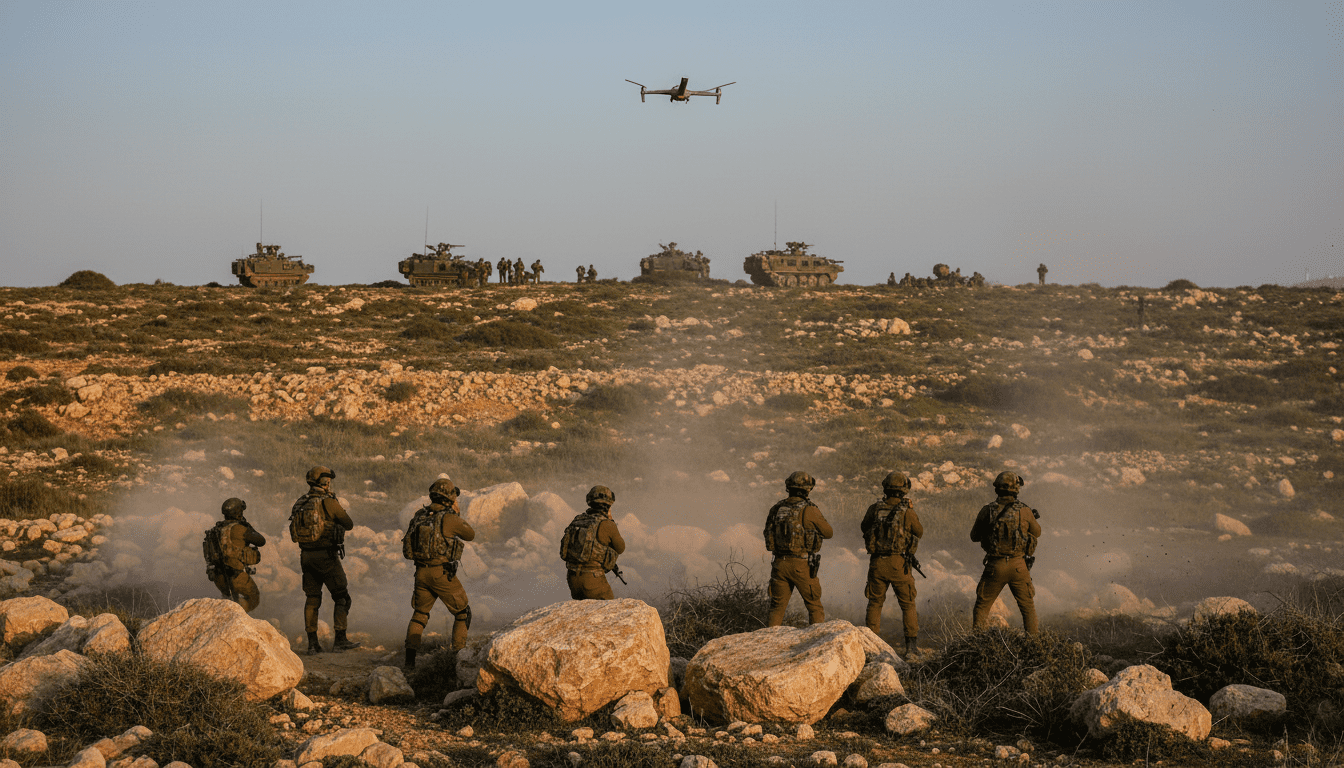
Israeli Military Says It Killed Six Hezbollah Fighters in Bint Jbeil Exchange
Israeli military says it killed six Hezbollah fighters in an exchange of fire near the Lebanon border in Bint Jbeil; claims await independent verification.
Israeli army reports clash in Bint Jbeil
The Israeli military said its forces killed six Hezbollah fighters in southern Lebanon during an exchange of fire near the border. The army identified the location as the village of Bint Jbeil, an area that saw heavy fighting before a ceasefire on April 17, and described the incident as an encounter that began after its troops identified armed suspects. The use of the term Hezbollah fighters was repeated by the Israeli statement; that characterization has not been independently corroborated.
Army describes sequence of events
According to the Israeli army, soldiers first identified six armed individuals in Bint Jbeil and then came under fire. The army said an “intense exchange of fire” followed, during which two of the reported fighters were killed in the initial firefight. Afterward, the military said it struck the structure from which the militants were operating and that four more were eliminated in that strike. Those details were provided by the military in a brief operational account.
Bint Jbeil’s recent history and the April 17 ceasefire
Bint Jbeil is a town in southern Lebanon that saw fighting earlier in the month during confrontations across the Israel-Lebanon border. The Israeli statement referenced a ceasefire that took effect on April 17, which had calmed large-scale hostilities but left local tensions and sporadic clashes unresolved. That background is relevant to understanding why Israeli forces remain active in the area and why both sides continue to monitor border villages closely.
Independent verification still lacking
The Israeli claim that six Hezbollah fighters were killed could not be independently verified at the time of the report. No Lebanese government or Hezbollah statement confirming the fatalities was cited in the army’s account provided publicly. Independent journalists and international monitors have not yet published corroborating accounts, and the absence of on-the-ground confirmation leaves key elements of the incident unverified.
Military and political implications along the border
If confirmed, the reported deaths of Hezbollah fighters would mark a serious escalation for individual encounters even after the ceasefire, underlining how fragile the situation remains. Cross-border exchanges carry the risk of rapid escalation, given Hezbollah’s entrenched position in southern Lebanon and Israel’s readiness to respond to perceived threats. Both sides have, at times, framed local skirmishes as part of broader deterrence messaging, complicating diplomatic efforts to stabilize the frontier.
Signals to domestic and international audiences
Statements by the Israeli military serve multiple functions: they inform the public, justify military action, and signal intent to both adversaries and allies. The specific attribution of the casualties to Hezbollah frames the incident within an existing conflict narrative that draws international attention. Regional and global actors typically watch such reports for indications of whether localized clashes might widen into sustained exchanges or draw in external parties.
What to watch next
Independent confirmation from Lebanese authorities, Hezbollah, or third-party observers would be important to validate the Israeli account and to clarify the identities of those killed. Monitoring for any retaliatory statements or movements along the border will be crucial in the coming days, as will tracking diplomatic communications aimed at preventing renewed escalation. International monitors and humanitarian agencies may also report on any civilian impact or displacement linked to renewed hostilities.
The reported clash in Bint Jbeil underscores the fragility of the ceasefire that began on April 17 and demonstrates how quickly violent incidents can reignite tensions along the Israel-Lebanon frontier.
