
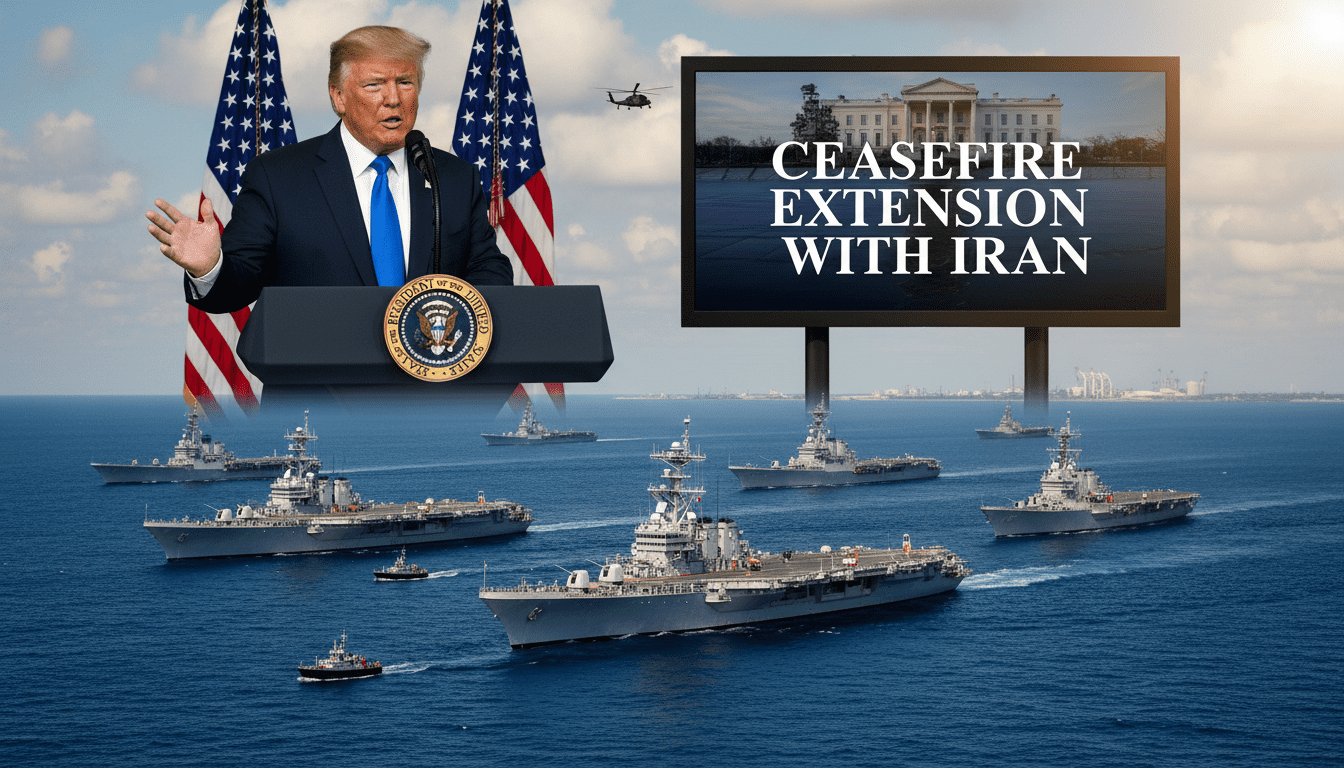
US extends ceasefire with Iran, keeps naval blockade in place
US President Donald Trump announced a unilateral extension of the ceasefire with Iran on Truth Social, saying he will avoid attacks at Pakistan’s request until Tehran presents a “united proposal,” even as the US naval blockade of Iranian ports continues.
Trump announces unilateral extension
President Trump said the ceasefire would be extended until Iran offers a unified plan to end the conflict, framing the move as a temporary restraint tied to ongoing diplomacy. He posted the declaration on Truth Social and emphasized that the maritime embargo on Iranian ports will remain in force. The announcement reversed his earlier statement the previous day that an extension was “very unlikely,” surprising regional actors and international observers.
Tehran denies requesting an extension
Iranian state-affiliated outlets reported that Tehran had not asked for a prolongation of the truce and that an official Iranian position would be released later. Senior Iranian advisers publicly dismissed Trump’s declaration as insignificant, arguing that the terms cannot be dictated by what they called “the losing side.” The differing accounts leave unresolved whether Iran will observe the extension effective early on April 23, 2026.
Hardline Iranian voices warn of retaliation
Several Iranian officials and Revolutionary Guard commanders responded with stark warnings, equating the US naval blockade to a breach of the ceasefire and threatening military measures. A senior adviser to the parliamentary speaker warned that the blockade merited a military response, and state-aligned outlets signaled that strategic chokepoints including the Strait of Hormuz would not be reopened while the embargo persists. Iranian military spokesmen said forces remained at a high level of readiness to “respond swiftly and decisively” to perceived aggressions.
Oil markets show limited relief
Global oil markets showed only muted relief after the announcement. Brent crude, which had climbed above $100 per barrel before the statement, retreated only modestly and remained elevated, underscoring continued market anxiety about supply risks. Traders and analysts said uncertainty over whether Iran and Israel—or other actors—will respect the ceasefire extension, combined with the ongoing blockade, keeps prices sensitive to any further escalation.
Diplomatic tug-of-war and Pakistan’s role
Pakistan emerged as a central interlocutor in the narrow window that produced the extension, with Islamabad saying it had asked for more time to pursue diplomatic channels. Pakistan’s prime minister publicly thanked Trump for acceding to the request and for enabling further negotiations. However, Tehran reportedly declined to send representatives back to Pakistan for fresh talks, complicating Islamabad’s mediation efforts and leaving diplomatic momentum fragile.
Allied planning for Strait of Hormuz security
Meanwhile, Western capitals moved to prepare for a possible post-conflict security mission in the strategic waters off Iran. Military planners from around 30 countries convened at Britain’s Northwood headquarters to draft options for a neutral maritime operation to escort merchant shipping and clear mines if hostilities end. France and the United Kingdom are leading the planning, and Germany has signalled interest in contributing capabilities for minesweeping and maritime reconnaissance.
The US rationale for maintaining the sea blockade centers on economic pressure aimed at curbing Iran’s revenue streams, a point underscored by senior US officials who say port restrictions are choking off key income. Iranian leaders reject that framing and have warned that seizure or interdiction of commercial traffic would constitute a “war-like” act requiring forceful countermeasures. That divergence in basic assumptions complicates confidence-building and increases the risk that local incidents could ricochet into broader confrontation.
Analysts describe the situation as a fragile stalemate in which both sides appear to prefer holding their positions rather than immediately resuming large-scale fighting. Military readiness on both sides, public threats from hardline commanders, and the persistence of economic and maritime pressure mean the ceasefire extension could hinge on rapid, tangible diplomatic progress. For now, markets, shipping companies and regional governments are watching whether Iran will formally accept the extension and whether Israel’s government will likewise comply with the pause.
International officials and mediators face a narrow window to convert the unilateral gesture into a negotiated cessation that addresses the core disputes and the practical implications of the naval blockade. Absent clear, reciprocal steps, the risk remains that the current lull will collapse into renewed hostilities with wider regional consequences.
