
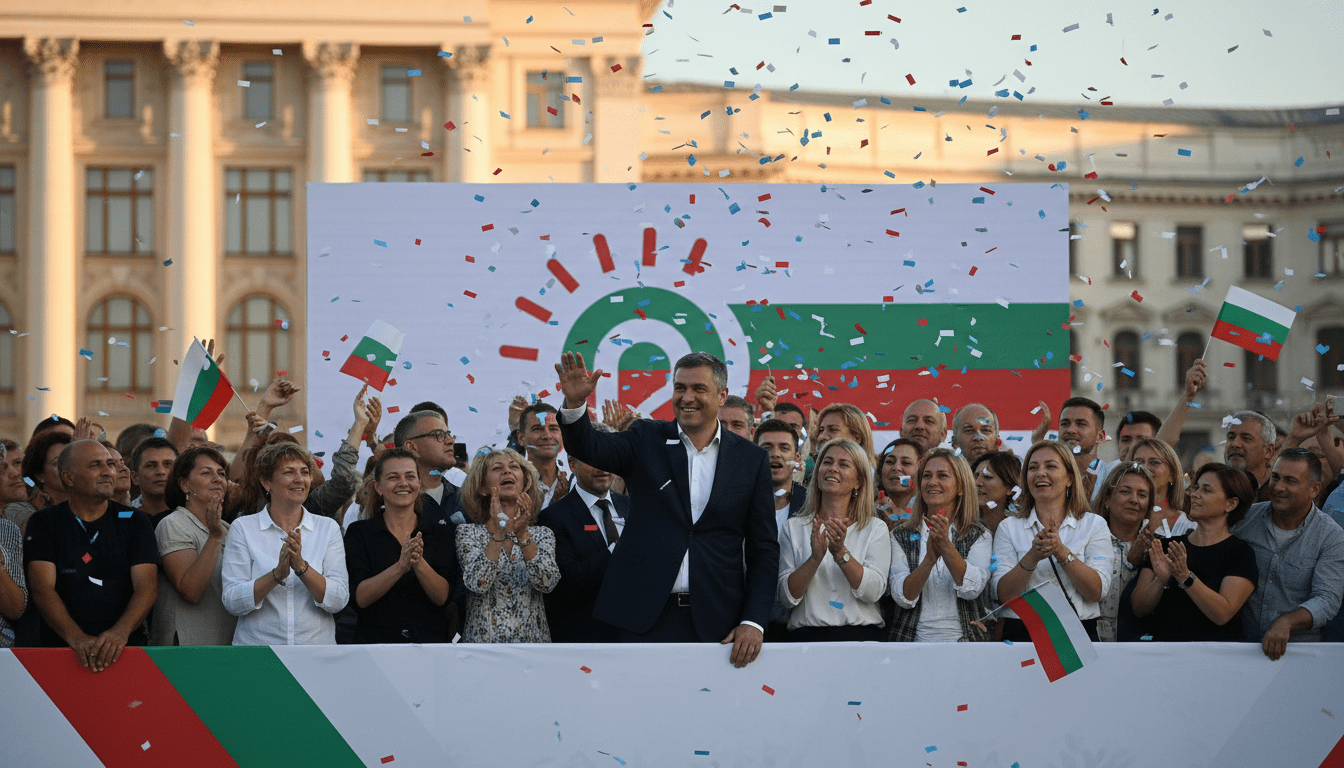
Rumen Radev’s parliamentary victory positions former air force commander to reshape Bulgaria’s politics
Rumen Radev’s parliamentary win positions the former air force general to reshape Bulgaria’s politics and EU role, prompting questions about coalition and policy.
Rumen Radev’s surprise victory in Bulgaria’s parliamentary election has vaulted the former president and air force commander into the center of a complex political moment, opening the door to a possible premiership. Radev’s military background and public persona helped mobilize voters who had previously stayed away from polls, and his success is already forcing rivals and partners to recalibrate. The result raises immediate questions about how he will build a governing coalition, how quickly a government can be formed, and what policy priorities will follow.
Electoral outcome and immediate reactions
Radev’s list emerged as the clear winner in Sunday’s vote, reversing months of political inertia and dislodging parts of the established order. Political leaders from across the spectrum publicly acknowledged the scale of his support while cautioning that translating electoral success into a functioning government will require negotiation. Observers flagged that Radev’s appeal drew in a wave of previously disengaged voters, altering turnout dynamics that have dogged Bulgarian elections in recent years.
From Dimitrovgrad to the cockpit
Born in Dimitrovgrad in 1963, Radev trained as a military pilot at a time when Bulgaria was aligned with Moscow and the Warsaw Pact. He graduated top of his class from the national fighter pilot school in 1987 and began his service at a fighter regiment near Burgas on the Black Sea. Those early years established both his technical credentials and a public image tied to discipline, national service and visible skill in the cockpit.
A NATO-era military career
As Bulgaria shifted geopolitically, so did Radev’s military trajectory. After Bulgaria joined NATO in 2004, Radev completed training programs in the United States and rose through the ranks, receiving promotion to brigadier general in 2007 and later serving as commander of the Bulgarian air force. He continued flying publicly, including performances in a MiG‑29 at a 2014 airshow, and has been noted for experience piloting Russian, American and French fighters during his career. That blend of Soviet-era beginnings and NATO-era service gives him a rare profile among contemporary European leaders.
Political emergence and presidential tenure
Radev entered national politics at the invitation of the Bulgarian Socialist Party, which backed his successful 2016 presidential bid with a party‑aligned, nonpartisan candidacy. Once in office he moved quickly to assert independence from his initial backers, cultivating a public role that did not always track party lines. He won re‑election in 2021 with a commanding share of votes in the runoff, though that victory was accompanied by historically low participation in the decisive round, a fact critics note when assessing the depth of his mandate.
Implications for EU relations and defense policy
If Radev becomes prime minister, he will carry into EU summits a military résumé unusual among heads of government, and his command experience may shape Sofia’s posture on security and defense questions. His ability to speak from the perspective of a former air force chief could influence debates over NATO interoperability, procurement and regional deterrence. At the same time, Brussels and other capitals will watch closely for signs of continuity or change in Bulgaria’s stances on sanctions, defense spending and cooperation with allies.
Coalition arithmetic and governing challenges
Despite the electoral triumph, Radev faces the practical reality of building a coalition in a fragmented parliament. Forming a stable governing majority will require negotiations with parties whose priorities and programs do not always align with his own stated positions. Analysts say the transition from presidential office to party‑led government entails institutional and political adjustments that will test both Radev’s negotiating skills and the coherence of his electoral coalition.
Rumen Radev’s rise from fighter pilot to potential prime minister marks a striking turn in Bulgaria’s political life, combining a technocratic military pedigree with populist momentum. The next phase will be defined by coalition bargaining, policy signals on defense and European affairs, and how effectively his camp turns electoral energy into governing capacity. The broader consequences for Bulgarian politics and its role in the EU will become clearer as parties move from election rhetoric to concrete decisions in the weeks ahead.
