
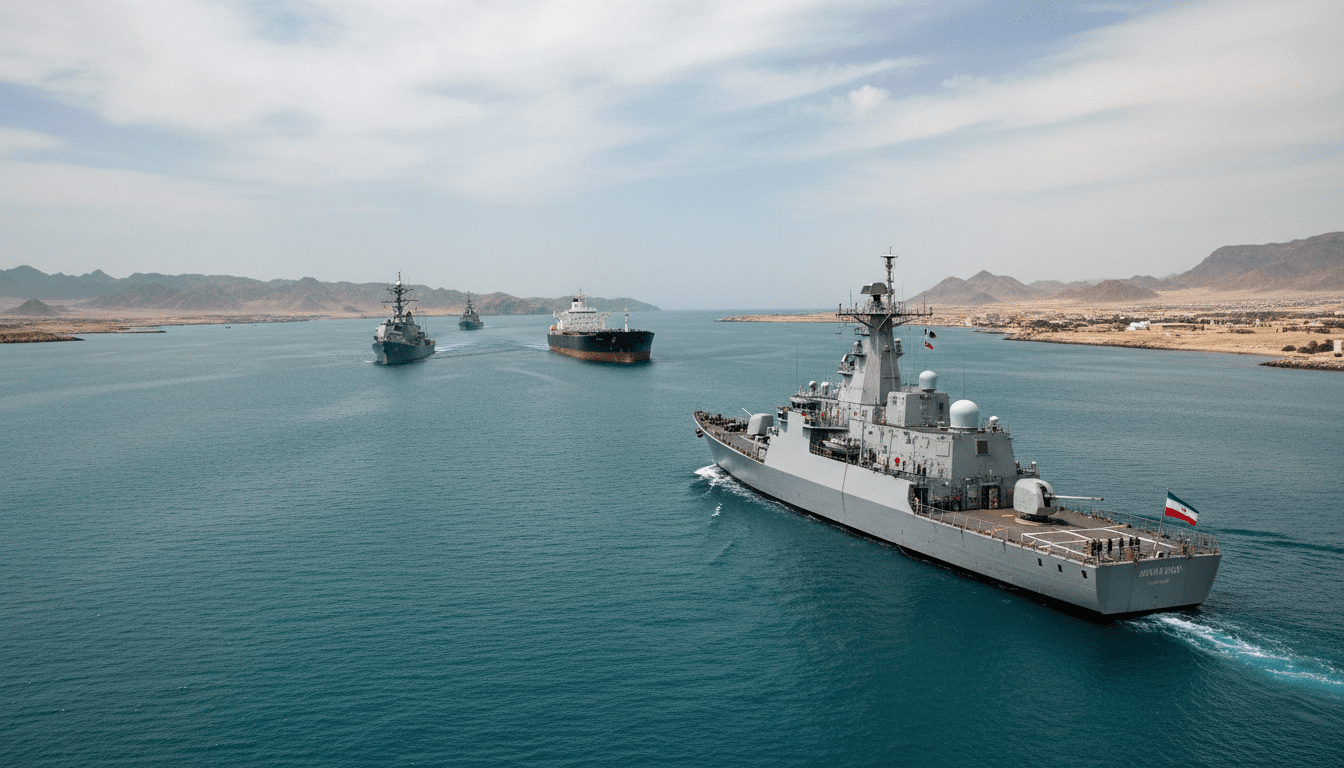
Iran Threatens to Close Strait of Hormuz if U.S. Blockade of Ports Continues
Iran warns it may shut the Strait of Hormuz if the United States maintains a blockade of Iranian ports, raising risks for global oil shipments.
Iran issues warning over navigation through Strait of Hormuz
Iran’s parliamentary speaker, Mohammad Bagher Ghalibaf, warned overnight that the Strait of Hormuz “will not remain open” should a U.S. blockade of Iranian ports continue. Ghalibaf posted the statement on X and said that passage through the strategically vital waterway would occur only on routes “determined by Iran” and with Iranian approval. The declaration follows weeks of restricted movement after a blockade tied to recent hostilities, during which Tehran had indicated tankers could transit the strait under a standing ceasefire.
Iranian foreign ministry calls U.S. blockade a breach of the ceasefire
A spokesperson for Iran’s foreign ministry, Ismail Baghai, described the U.S. naval restrictions as a violation of the ceasefire and warned of an “appropriate response” if the measures persist. Baghai’s comments were reported by Tasnim news agency and reflect growing official frustration in Tehran over parallel assertions of control at sea. Iranian officials argue the authority to regulate passage through the strait must be decided on the water, rather than through social media statements or unilateral measures.
U.S. public statements and the continued blockade
President Donald Trump has defended the U.S. naval posture, saying the blockade applies only to vessels with Iranian ports of origin or destination and will remain until Washington’s agreements with Tehran are fully implemented. The president posted his position on Truth Social, reiterating that the blockade will not be lifted “until the complete conclusion” of U.S. demands. U.S. officials say the restrictions are intended to constrain Iranian maritime activity while preserving freedom of navigation for third-country shipping, but Iran views the measures as incompatible with the terms of the current ceasefire.
Claims over routing and maritime authority
Iran’s assertions that passage must follow an Iran-designated route and require its permission mark a direct challenge to international norms governing transit through straits used for international navigation. The Strait of Hormuz is one of the world’s busiest chokepoints for oil and liquefied natural gas shipments, and control over its lanes has long been a focus of regional and diplomatic friction. Iranian leaders emphasize on-site enforcement and local jurisdiction, while the United States and allied navies typically cite customary international law and freedom of navigation principles.
Potential regional and global consequences
Analysts warn that any attempt to close or strictly control traffic through the Strait of Hormuz would have immediate implications for global energy markets and shipping security. Even temporary disruptions in the waterway can drive up insurance and freight costs and prompt diversion of tankers to longer routes, with knock-on effects for supply chains and fuel prices. Beyond economics, a confrontation at sea risks rapid escalation between naval forces operating in a confined and heavily trafficked corridor, complicating diplomatic efforts tied to the ceasefire and broader negotiations.
Diplomatic stakes and next steps
Tehran’s messaging underscores a bargaining posture aimed at leveraging maritime geography to press its demands during ongoing talks, while Washington’s public stance signals a desire to maintain pressure without triggering open hostilities. Both sides have framed their positions for domestic audiences, and officials in Tehran and Washington will face international scrutiny over any further operational steps in the strait. Regional states and commercial shipping interests are likely to seek clarification and assurances from both capitals to avoid unintended clashes on the water.
The coming days will be critical in determining whether diplomatic channels can prevent a maritime standoff that would affect global energy routes and regional stability.
