
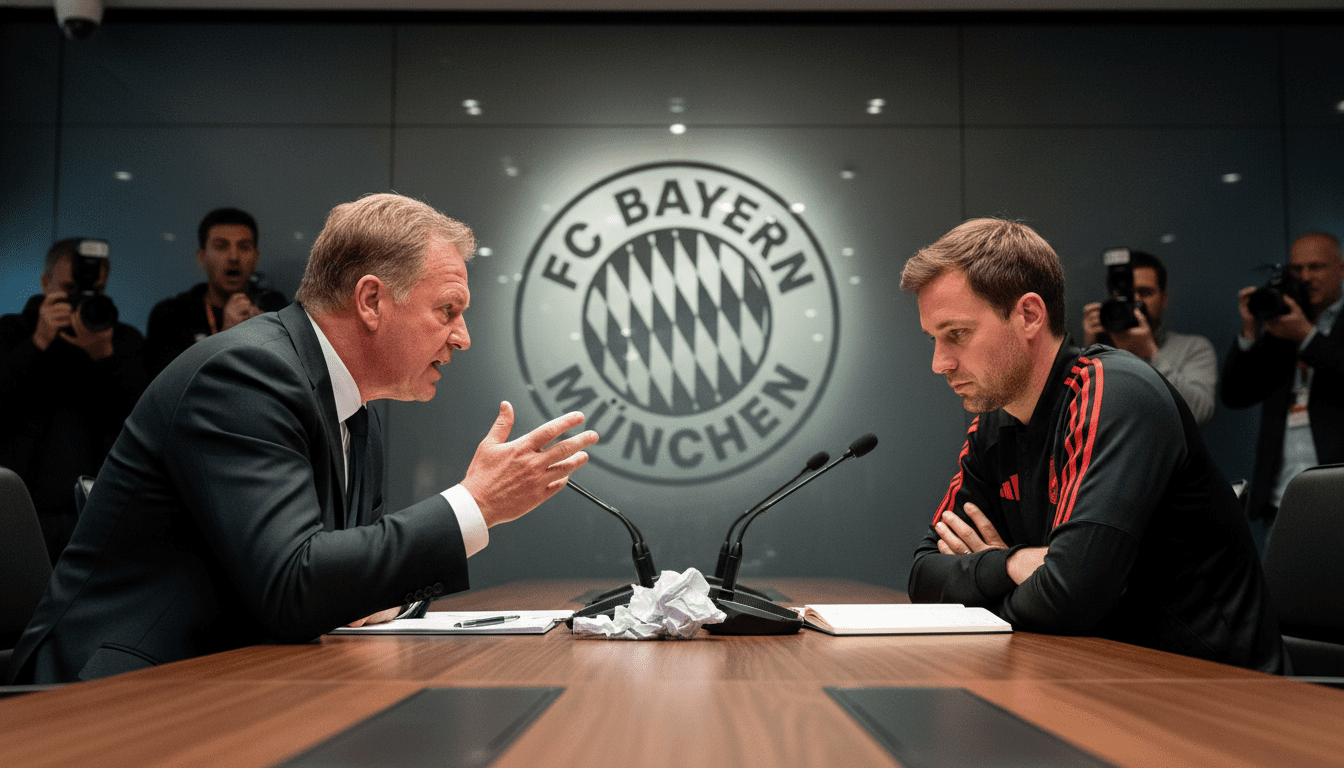
Hoeneß criticises Nagelsmann over Neuer handling, media strategy and squad continuity
Uli Hoeneß criticises Nagelsmann’s handling of Manuel Neuer, media management and squad continuity, urging Neuer to mentor Jonas Urbig at Bayern.
Uli Hoeneß delivered a blunt appraisal of Julian Nagelsmann’s stewardship of the German national team during a recent podcast appearance, saying Nagelsmann’s public approach to personnel and media issues has been counterproductive. Hoeneß singled out the handling of veteran goalkeeper Manuel Neuer as emblematic of a wider problem and argued that persistent public discussion of selection decisions undermines team cohesion. The Bayern patron’s remarks have thrust the debate over selection policy and media strategy back into the spotlight ahead of major international fixtures.
Hoeneß says Neuer situation was mishandled
Hoeneß argued that Neuer’s case could have been resolved with clearer, more private management and fewer headlines, suggesting a different rotation plan would have avoided controversy. He said an alternate route would have been to confirm interim keepers such as Baumann or Nübel and await developments, rather than allowing a prolonged public debate. The criticism implies that selection timing and communication around Neuer’s fitness and place in the squad were mishandled, with reputational and tactical consequences for the team.
Media remarks and the Deniz Undav episode
Hoeneß criticised Nagelsmann for what he described as a tendency to air internal debates publicly, citing the coach’s treatment of Stuttgart forward Deniz Undav as an example of damaging public criticism. He urged national team management to resolve disputes behind closed doors and limit the amount of material supplied to journalists. According to Hoeneß, constant media engagement over selection and form feeds speculation rather than serving the team’s interests, and it can erode player confidence and unity.
Concerns about continuity and player integration
A recurring theme in Hoeneß’s comments was the lack of an established, consistent starting eleven for Germany, which he believes hampers collective understanding on the pitch. He warned that frequent experimentation—particularly introducing young players in part to satisfy public interest—risks preventing the side from becoming a cohesive unit. Hoeneß emphasised that a successful national team need not boast the world’s best individual talents, but it does require players who are familiar with each other’s roles and willing to work for a collective game plan.
Recommendation to extend Neuer and mentor Jonas Urbig
Looking ahead to Bayern’s internal plans, Hoeneß proposed keeping Neuer for another season and assigning him a mentoring role for 22-year-old Jonas Urbig. He suggested a formalised “patronage” in which Neuer would accept reduced playing time to accelerate Urbig’s development into a reliable successor. Hoeneß acknowledged his own initial doubts about Urbig but said the club now sees the young keeper as a credible long-term option, and that a transitional arrangement could benefit both Bayern and the national team pipeline.
Comparison with Kompany and criticism of Tuchel’s conduct
Hoeneß contrasted Nagelsmann’s publicness with the coaching style of Bayern’s current manager Vincent Kompany, praising Kompany for not speaking ill of players in public. He also reiterated longstanding complaints about former Bayern coach Thomas Tuchel, accusing him of publicly criticising players and failing to accept responsibility when results were poor. Hoeneß recounted an anecdote about Tuchel asking a homegrown player whether he spoke German, using it to underscore differences in managerial tone and internal treatment of squad members.
The interventions by a senior Bayern figure have reignited conversation about the boundaries between club influence and national team autonomy, and about how high-profile coaches should engage with media and manage sensitive selection issues. Hoeneß’s remarks are likely to be discussed by federation officials, club executives and coaching staffs as they consider how to balance transparency with the need for internal problem-solving.
Hoeneß’s critique of Nagelsmann adds a prominent voice to an ongoing debate about leadership, communication and succession planning at both club and national level, and raises fresh questions about how Germany’s managers should handle veteran players and emerging talent.
