
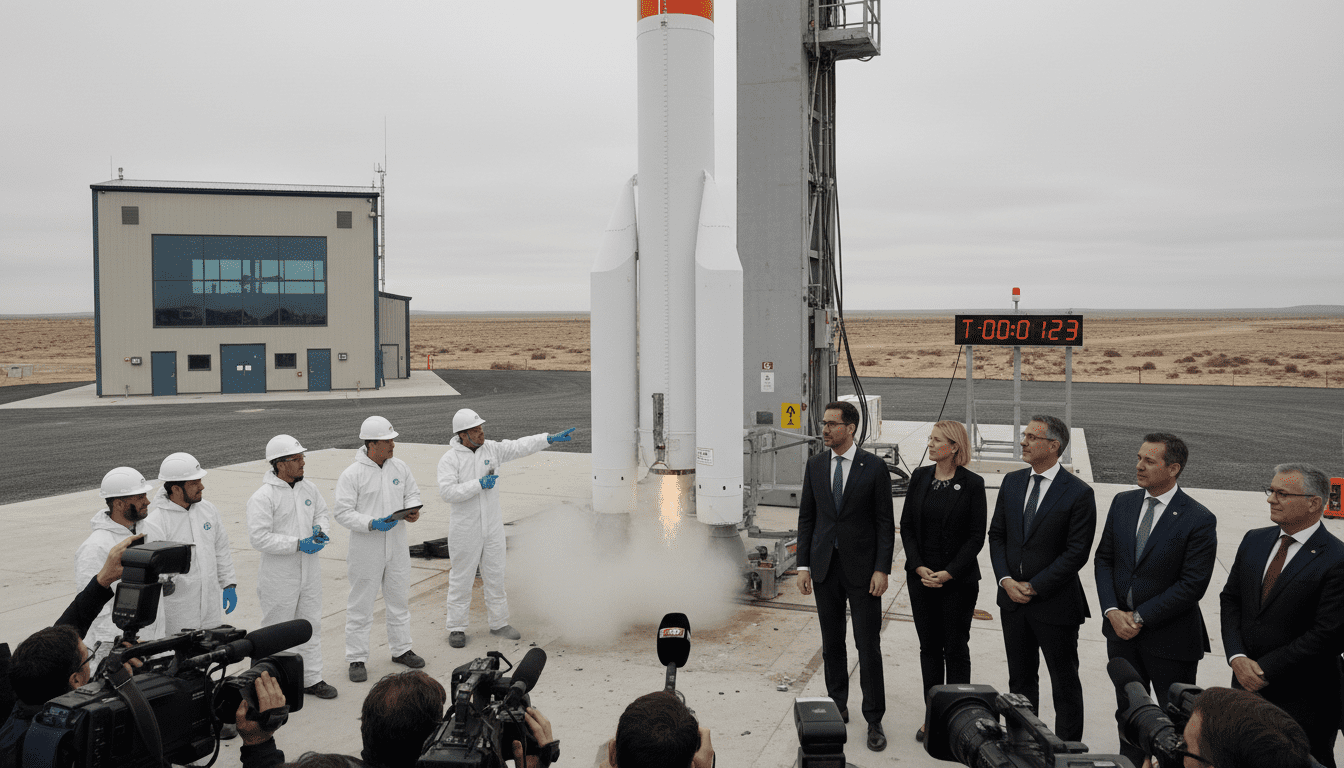
Isar Aerospace launch aborted after pressure-vessel leak; investigation under way
Isar Aerospace aborted a recent rocket launch after detecting a pressure‑vessel leak, the company said; engineers have begun a technical investigation and customers were notified.
Isar Aerospace confirmed the launch was aborted after ground teams detected a leak in a pressure vessel on the rocket, forcing the company to halt the countdown and secure the vehicle. The German small‑sat launcher said the anomaly prevented a safe ascent and that engineers have initiated an immediate investigation. CEO Daniel Metzler pledged that the company remains committed to providing reliable access to orbit while seeking to determine the root cause.
Launch aborted following pressure‑vessel anomaly
Ground controllers detected a breach in a pressure vessel during pre‑launch operations, prompting an automatic hold and subsequent abort of the mission. Safety protocols were executed to preserve the vehicle and range assets, and no personnel injuries were reported. The decision to abort occurred before ignition, according to company statements, and recovery teams moved to assess the condition of the rocket on the pad.
Company statement and leadership reaction
Isar Aerospace released a brief statement confirming the abort and attributing the immediate cause to a leak in a pressure containment component. CEO Daniel Metzler said the setback would not change the firm’s long‑term goal of delivering routine orbital access for small satellites. The leadership emphasized a methodical review, indicating that both internal engineers and external specialists will be involved in the fault analysis.
Technical investigation and failure analysis
Engineers have begun a systematic technical investigation focused on the pressure‑vessel assembly and associated plumbing and monitoring systems. The probe will examine materials, manufacturing records, assembly procedures, quality control logs and telemetry captured during the pre‑launch sequence. Analysts will also review supplier documentation and test data to determine whether the leak originated from a component defect, assembly error, or an unexpected interaction during fueling.
Implications for payloads and customers
Several payloads were scheduled to fly on the mission; Isar Aerospace said it has notified affected customers and is coordinating next steps for satellite integration and rescheduling. Insurance and contractual obligations will play a role in how payloads are rebooked, with firms likely to discuss timelines and launch windows in coming days. Customers will seek clarity on the root cause and on improvements to prevent repeat disruptions.
Regulatory and range coordination response
Launch range officials and safety regulators were briefed immediately after the abort and will take part in any formal inquiry that follows. Range operations include their own data collection and post‑event safety assessments that can influence when a pad is returned to service. Any corrective actions that affect launch infrastructure, fueling procedures or handling protocols will require coordinated approval before flights resume.
Market context and impact on Europe’s small‑sat sector
Isar Aerospace operates in a competitive European small‑sat launch market that has seen multiple new entrants and growing demand for dedicated rides to low Earth orbit. Technical setbacks at early stages of a launcher’s operational campaign are not uncommon, but they can influence investor confidence and customer scheduling. How quickly Isar Aerospace identifies and remedies the leak will determine its near‑term commercial momentum and position among rival small‑launch providers.
The company plans a structured timeline for fault isolation, component replacement if necessary, and a verified test program before setting a new launch date. Isar Aerospace has indicated that it will publish findings and an updated schedule once investigators complete their assessment and safety officials clear the pad. Stakeholders will be watching for concrete evidence that design, manufacturing or procedural changes have been implemented.
In the short term, customers and partners will seek transparent communication about corrective measures and a credible roadmap to restore confidence. The firm’s stated commitment to achieving reliable access to orbit will be tested by the speed and thoroughness of the response, and by demonstrable improvements in quality assurance and pre‑launch monitoring.
Isar Aerospace has reaffirmed its objective to reach orbit and provide dependable launch services while promising a full technical review; the coming weeks will determine the pace at which operations resume and the company’s ability to reassure customers and regulators.
