
50Hertz awards billion-euro contract for two-gigawatt converter platforms to Siemens Energy consortium
50Hertz has awarded a billion-euro contract for two-gigawatt converter platforms to a Siemens Energy-led consortium, signaling a boost for German manufacturing and regional jobs by 2034.
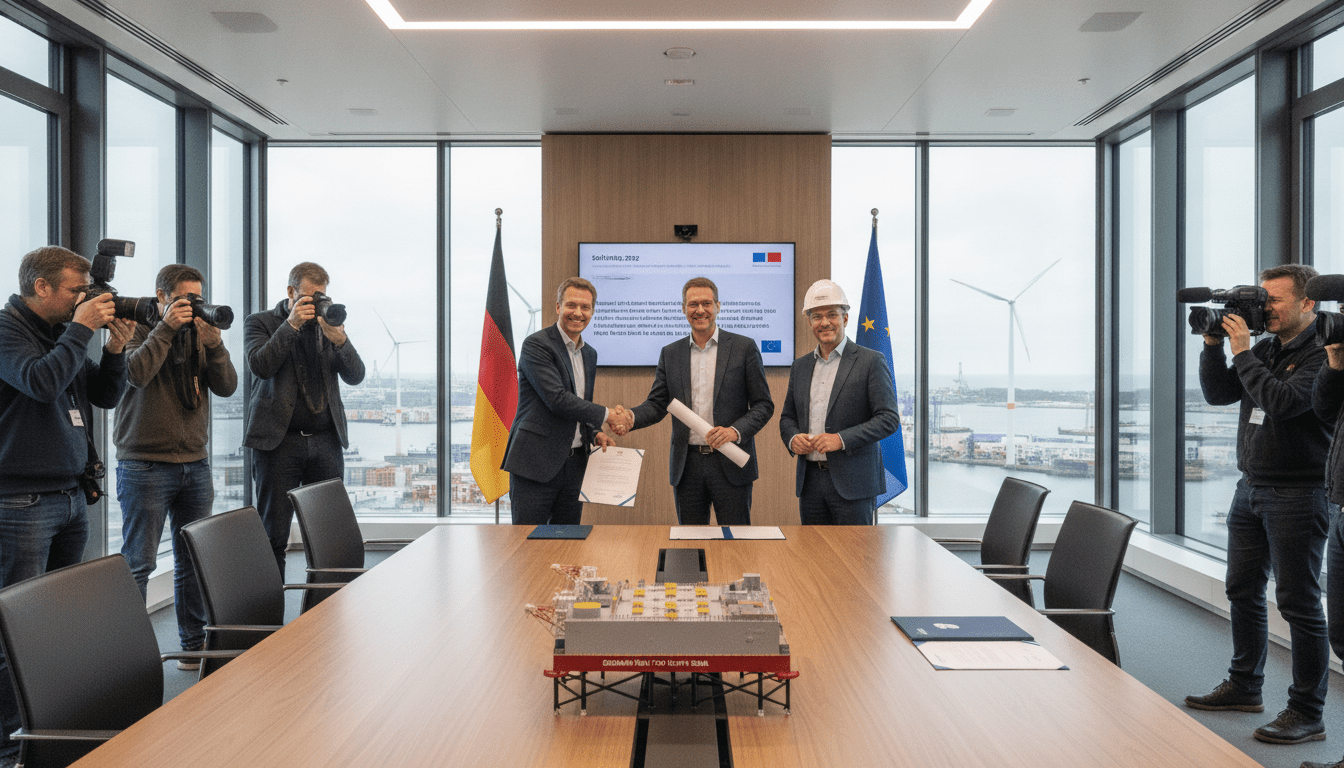
Germany’s transmission system operator 50Hertz has awarded a multibillion-euro contract for the connection of North Sea wind farms that will use the new two-gigawatt converter platform standard and be built predominantly in Germany. The contract went to a consortium led by Siemens Energy together with the shipyard group Neptun Smulders Offshore Renewables, marking the first large-scale project under the 2 GW framework. Government officials described the decision as an encouraging sign for domestic industrial capabilities and the wider offshore wind supply chain.
Contract award and consortium
50Hertz confirmed in Berlin that the contract is one of the largest in its program to link offshore parks to the onshore grid, and that the winning bid was placed by Siemens Energy in partnership with Neptun Smulders Offshore Renewables. The award covers design, fabrication and delivery of converter platform systems following the new two-gigawatt standard, a step change in platform capacity that the operator expects will lower per-megawatt costs. Company and industry sources said the selection reflects both technical readiness and commitments to local production.
Manufacturing footprint in Germany
Key components and substantial assembly work are slated for German yards and factories, with major production activities concentrated in Rostock-Warnemünde. The decision to produce the bulk of the converter platforms domestically was highlighted as a deliberate move to strengthen local supply chains and retain more value-added work onshore. Officials said the manufacturing plan includes electrical equipment, structural fabrication and systems integration at German sites, supported by the consortium’s existing industrial capacity.
Offshore and onshore site plans
The offshore converter platform is planned for installation roughly 200 kilometres west of the island of Sylt, where it will collect alternating-current output from clustered wind farms and convert it to high-voltage direct current for efficient long-distance transmission. Onshore, a complementary converter station will be built at a substation near Mühlenbeck, close to Schwerin, to reconvert the power and feed it into the mainland grid. The paired offshore-onshore arrangement is designed to minimise transmission losses and integrate large volumes of wind generation into Germany’s transmission network.
Regional employment and economic effects
50Hertz estimates that Mecklenburg-Vorpommern could see more than 500 new jobs if a second identical project, currently under negotiation, is also awarded to the consortium. Local officials and industry representatives said the contracts could sustain skilled positions in fabrication, electrical engineering and installation for years, while stimulating suppliers further down the chain. Observers note that long-term work on maintenance and potential follow-on projects would be crucial to converting short-term construction employment into enduring industrial capability.
Technical significance of the two-gigawatt standard
Adoption of the two-gigawatt converter platform standard represents a technical shift aimed at increasing capacity per platform and improving economies of scale for large offshore arrays. By converting AC to DC at sea, these platforms reduce transmission losses across long export cables and allow fewer, higher-capacity links to connect farshore wind clusters to the onshore grid. Industry analysts say scaling to 2 GW per platform can lower overall system costs but increases engineering complexity and the size of major components to be handled during fabrication and installation.
Timeline, approvals and outstanding negotiations
50Hertz has targeted commissioning of the project by the end of 2034, a schedule that reflects extended lead times for offshore fabrication, marine logistics and grid integration works. The operator emphasised that final timelines remain subject to regulatory approvals, permit processes and the outcome of ongoing commercial negotiations for a second, matching installation. Industry participants warn that achieving the planned in-service date will depend on timely procurement, vessel availability for installation and coordination across multiple contractors.
The award signals a notable shift toward larger, domestically produced infrastructure for Germany’s offshore wind rollout and could set a template for future projects if the second platform is confirmed. 50Hertz said further implementation details and firm commercial terms will be disclosed as the consortium and the operator complete outstanding steps in the procurement and permitting process.
