
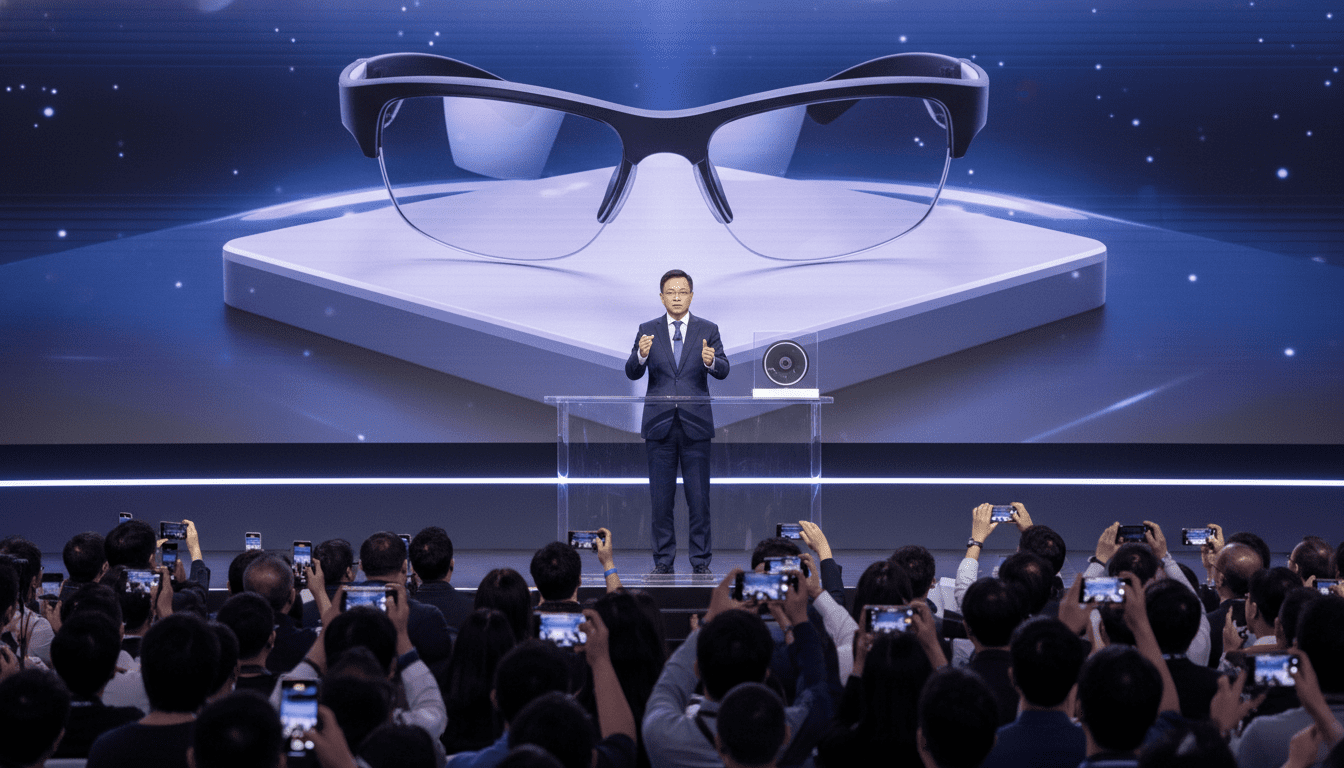
Xreal Aura smart glasses aim to revive the wearable vision of hands‑free computing
Xreal unveiled its Aura smart glasses at Google I/O, presenting tethered OLED eyewear with hand‑tracking apps, Google integrations, and a developer preview ahead of a planned 2026 commercial launch.
Xreal introduced the Aura smart glasses at Google I/O, pitching the device as a practical step toward mainstream wearable computing. The company positioned the product around the idea that smart glasses can replace long stints of phone use with a lightweight, face‑worn display that projects high‑resolution content. Xreal’s founder framed the launch as the next inflection point for an industry that has struggled to turn tech fantasies into profitable products.
Product reveal and developer preview
Xreal showed Project Aura to attendees as a developer‑focused kit, emphasizing software capabilities alongside hardware advances. The prototype integrates OLED microdisplays inside conventional frames, promising a personal, high‑resolution viewing surface for video, productivity tools and augmented content.
The company made clear the current release is aimed at early adopters and developers to build apps and test interactions ahead of a consumer rollout. Xreal said it expects to move from this preview stage to a commercial offering later in 2026, while collecting developer feedback to refine the experience.
Hardware tradeoffs: the puck, portability and battery
The Aura system is notable for its external power and compute module — a pocketable “puck” that connects to the glasses and handles processing. Xreal presents the puck as a deliberate compromise: it keeps the frames light and wearable while delivering enough compute to run immersive apps and drive OLED displays.
That design sidesteps major engineering constraints in all‑in‑one glasses, where embedding a full computer, battery and cooling into the frame often produces bulky, uncomfortable devices. By offloading heavy tasks to the puck, Xreal aims for a more comfortable form factor at the cost of a tether that users must carry.
Software experiences and interaction model
Software sits at the center of Xreal’s pitch, with hand tracking and gesture controls enabling interaction without a handheld device. Demonstrations included a floating Google Maps interface, immersive YouTube viewing in a virtual screen, and a “painting” app that lets users create private holographic images via hand gestures. Gaming and basic web browsing were also showcased as immediate use cases.
Xreal argues these experiences — from following a floating recipe to establishing a private workspace on a flight — illustrate practical, everyday utility rather than novelty. The company stressed that a cohesive operating system and thoughtfully designed user interface are essential to move beyond early adopter demos to sustained consumer use.
Industry backdrop and competitive pressure
The smart glasses sector has long been characterized by heavy investment and uncertain returns, a reality Xreal’s leadership acknowledged candidly. Large tech firms and fashion partnerships have produced notable consumer devices, but sustained profitability has remained elusive for many players.
Xreal pointed to the influence of established projects that have moved units at scale, while also noting that divisions focused on augmented and virtual reality continue to operate at significant losses. That context has both raised expectations for a breakthrough device and underscored the financial risks of pursuing lightweight, always‑worn computing.
Commercial plans, IPO intentions and developer strategy
Xreal said the current Aura units will remain in developer hands while the company continues to build an app ecosystem and refine hardware. The firm plans a broader consumer launch later in 2026 and is preparing for a possible initial public offering before the end of the year.
Executives declined to provide specific IPO timelines or pricing guidance, stressing that further product milestones and software momentum will inform capital markets timing. In the short term, the developer program is intended to seed applications that demonstrate the glasses’ value across entertainment and productivity scenarios.
Xreal is actively pursuing a path to profitability, reporting improvements in gross margin and reductions in marketing and sales expenses. Management projects that continued cost discipline and sales growth could position the company to break even in 2027. The financial plan focuses on narrowing losses while building a base of repeat users and enterprise customers who might adopt smart glasses for focused, task‑oriented work.
The Aura launch crystallizes long‑running industry tensions: hardware innovation must meet usable software, and compelling experiences must justify carrying another device. Xreal’s approach — pairing lightweight frames with a pocketable compute unit and a developer‑first rollout — is a pragmatic attempt to solve those problems. If the product can attract meaningful app development, nail comfort and show repeatable use in both leisure and professional settings, the Aura could mark a meaningful step toward making smart glasses a practical, revenue‑generating category.
