
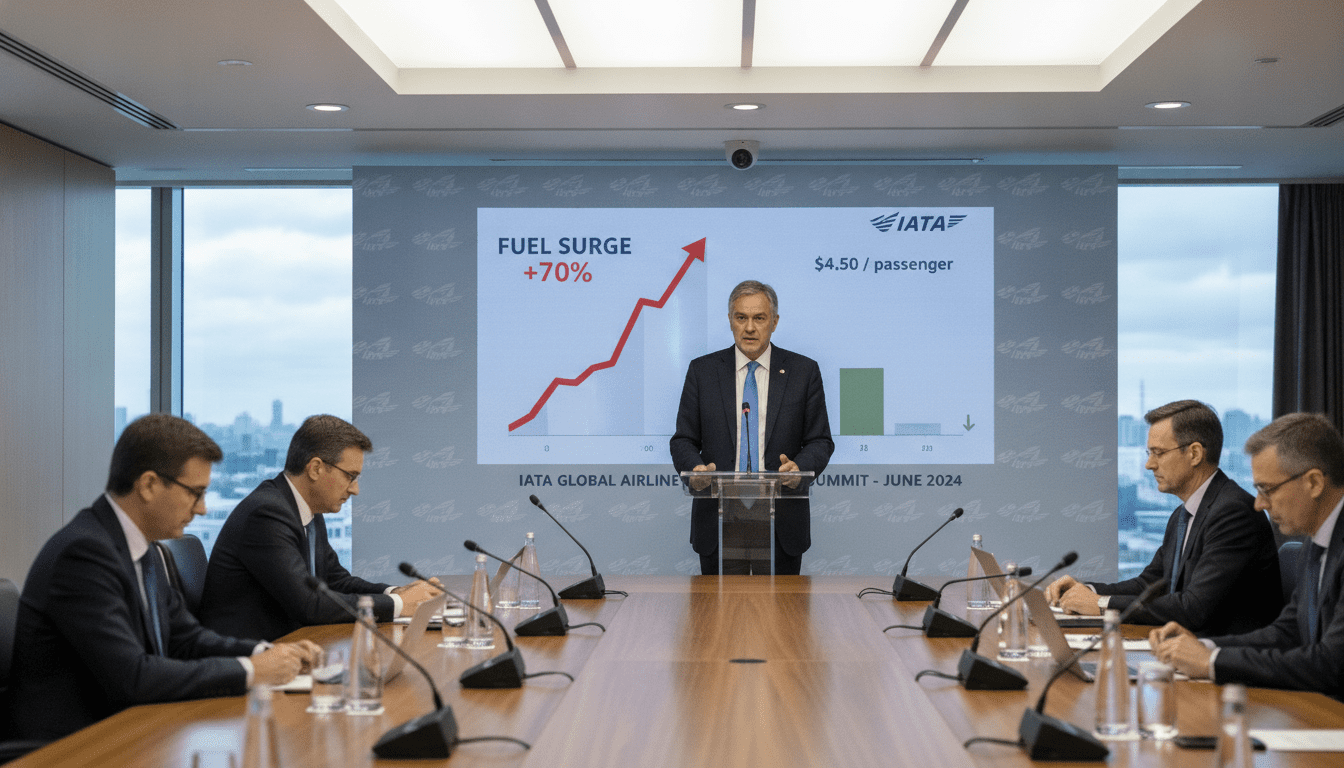
IATA: Airline Profit per Passenger Seen Dropping to $4.50 as Jet Fuel Surges
Global airlines face a squeeze as IATA warns average airline profit per passenger could fall to $4.50 this year amid soaring jet fuel costs and geopolitical turmoil.
IATA halves industry profit forecast in Rio
The International Air Transport Association (IATA) announced at its annual meeting in Rio de Janeiro that the industry’s profit outlook has been cut sharply. Forecasts now point to a combined global profit of $23 billion, down from $45 billion projected previously. IATA President Willie Walsh cited unexpected fuel price pressures tied to the conflict involving Iran as a central factor behind the revision.
Fuel costs climb and wipe out anticipated gains
Jet fuel prices have risen about 70 percent year over year, forcing carriers that did not fully hedge to pay substantially more at the pump. IATA estimates the airline industry’s fuel bill will reach $350 billion this year, up from $252 billion in 2025. That jump in operating expense is the primary reason passenger-level profits are collapsing toward the $4.50 mark.
Revenue growth offsets some pressure but not enough
Passenger revenue is rising, with IATA projecting a 9.2 percent increase in ticket income and average fares up roughly 7 percent. Overall industry revenues are expected to rise by about 9.4 percent to nearly $1.2 trillion. Despite that growth, the additional revenue and planned efficiency measures are insufficient to restore prior profitability levels once the higher fuel costs are applied.
Load factors climb to record levels
Demand remains robust, and airlines are filling more seats than ever, with forecast load factors reaching about 84 percent. Higher load factors help spread fixed costs across more passengers and have supported margins in the face of rising expenses. Nonetheless, even near-record capacity utilization cannot fully counteract the sharp fuel-driven rise in costs.
Europe shows comparatively stronger margins
European carriers are expected to fare better on a per-passenger basis, with projected profits of approximately $7.50 per passenger—well above the global average. That advantage reflects stronger fuel-hedging practices in Europe and shifting travel patterns that have bolstered direct routes to Asia. Europe’s broader use of hedging contracts has so far blunted the worst of the fuel-price shock for many airlines there.
Hedging cushions now, but risks remain
IATA reported that European carriers have hedged about 70 percent of their fuel needs for the year, while airlines in other regions have covered closer to one-third. Those hedges have provided temporary relief, but the association warned higher costs are likely to surface as protective contracts expire. IATA emphasized there is “little room” left for further unanticipated cost rises or new taxes without eroding profitability further.
Outlook and industry resilience
Despite the downgrades, IATA framed the industry’s ability to stay in the black as evidence of resilience. Airlines have absorbed a large share of the fuel shock through fare increases, operational efficiencies, and network adjustments. Still, the association cautioned that margins are thin and the industry remains vulnerable to additional shocks, from renewed geopolitical escalation to unexpected regulatory or tax changes.
Global carriers are navigating a complex trade-off between passing fuel costs to passengers and maintaining demand, with mixed results across regions. The coming months will test whether hedging strategies and revenue measures provide enough of a buffer to preserve financial stability across the sector.
