
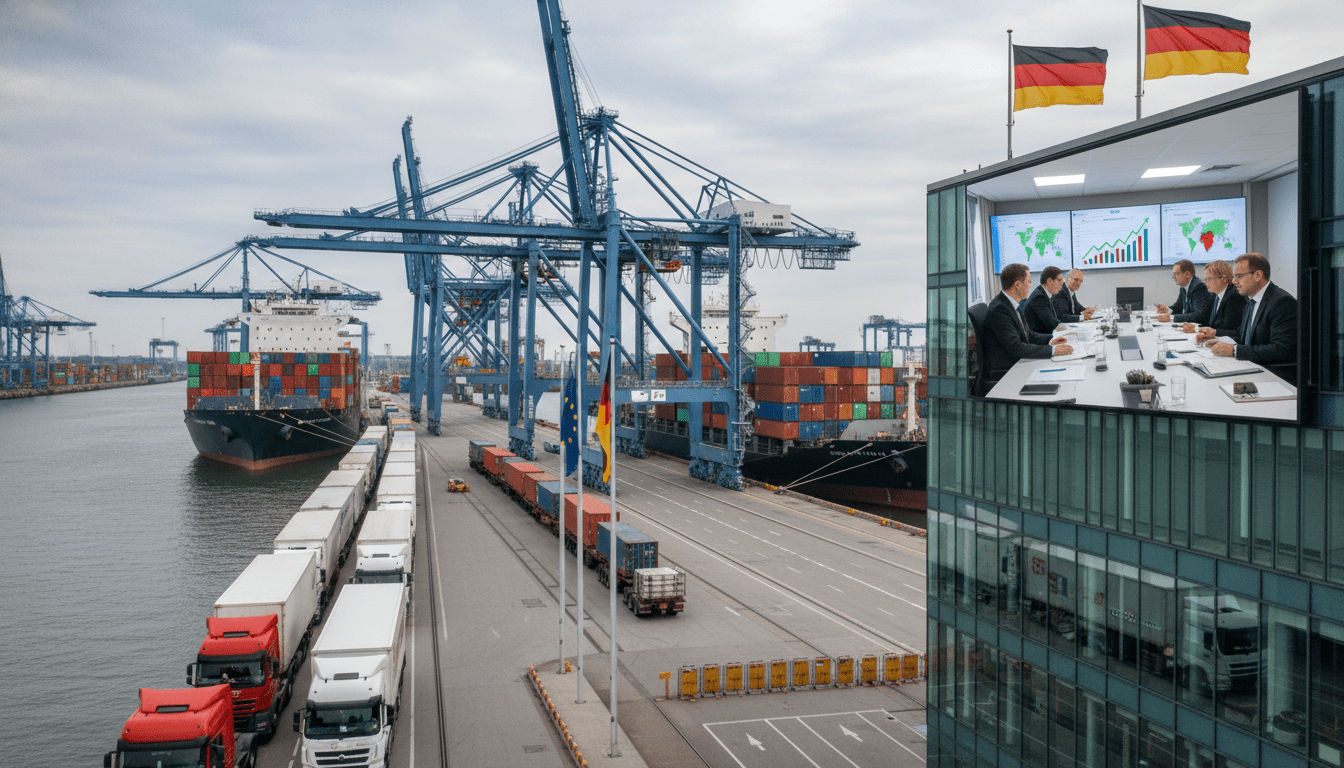
German exports rise for a third straight month as April shipments climb
German exports rose 0.9% in April 2026 to €136.6bn, with EU and US demand supporting gains despite geopolitical and industrial headwinds.
April 2026 exports rise for third consecutive month
Germany’s exports increased for the third month in a row in April 2026, growing 0.9% from March to €136.6 billion, the Federal Statistical Office reported. Imports also climbed, up 1.2% to €122.1 billion, narrowing the gap but keeping trade flows elevated.
The month-on-month rise in German exports follows modest gains earlier in the year and comes amid renewed volatility tied to geopolitical tensions in the Middle East. Analysts say the headline figures mask uneven regional dynamics and mounting risks for the coming quarter.
EU and US demand drove the April increase
Most of the export growth in April was driven by shipments to the European Union and the United States, with deliveries to EU member states up 1.0% to €79.1 billion. Exports to the United States rose 1.8% to €11.4 billion, reflecting continued demand for capital goods and industrial components.
Export managers cited steady orders from European partners and a pick-up in specific US sectors as key contributors to the monthly rise. However, observers caution that these positive effects may be temporary if global demand softens or energy costs spike further.
Exports to China and the UK retreated in April
Not all regions shared in the recovery: exports to China declined by 3.5% in April, while shipments to the United Kingdom fell sharply by 9.5%. These decreases offset part of the gains from Western markets and reflect persistent structural challenges in those trade relationships.
The drop to China underscores slower industrial demand in that market and reflects ongoing recalibrations by Chinese buyers. The larger fall to the UK aligns with weaker orders in sectors that had previously benefited from post-Brexit trade adjustments.
Economics Ministry warns of a muted second-quarter outlook
The Federal Ministry for Economic Affairs and Climate Action signalled caution for the second quarter, pointing to the ongoing conflict in the Middle East and elevated energy prices as key downside risks. The ministry said a combination of weaker new orders and strained supply chains had left the industrial cycle subdued entering Q2.
Officials warned that the April improvement should not be read as a clear reversal of trend, noting that geopolitical shocks can quickly erode confidence and ordering patterns. The ministry highlighted that energy cost volatility remains a particular concern for energy-intensive industries.
Business surveys show waning export optimism
Business sentiment data reinforces the cautious official tone. The ifo institute’s barometer for export expectations fell in May to its weakest level since April 2025, according to institute commentary, signalling that firms expect less favourable trading conditions ahead. ifo’s chief economist emphasized that, despite the early-year recovery, uncertainty remains elevated.
A separate survey by the Association of German Chambers of Commerce and Industry (DIHK), canvassing 23,000 companies, found that 29% of industrial firms expect their exports to decline. The DIHK said initial signs of recovery at the start of the year were largely undone by the recent Middle East developments.
Implications for industry, supply chains and the trade balance
Manufacturers face a mixed picture: steady demand from core Western markets is cushioning output, but falling shipments to major trade partners and weaker forward orders create headwinds for production planning. Automotive suppliers, machinery producers and chemical firms are particularly sensitive to the regional shifts and energy cost developments.
Supply-chain strains were highlighted by companies reporting delays and increased logistical costs, factors that can blunt export momentum even when overseas demand exists. The narrower margin between exports and imports in April points to sustained domestic demand for imported intermediate goods and energy, which could weigh on the goods surplus if the trend persists.
Germany’s export trajectory in the near term will hinge on three main variables: the course of geopolitical tensions in the Middle East, the stability of energy prices, and whether global demand—especially in China and the UK—recovers. Policymakers and businesses say they will monitor incoming data closely while preparing contingency measures for supply-chain disruptions and cost shocks.
