
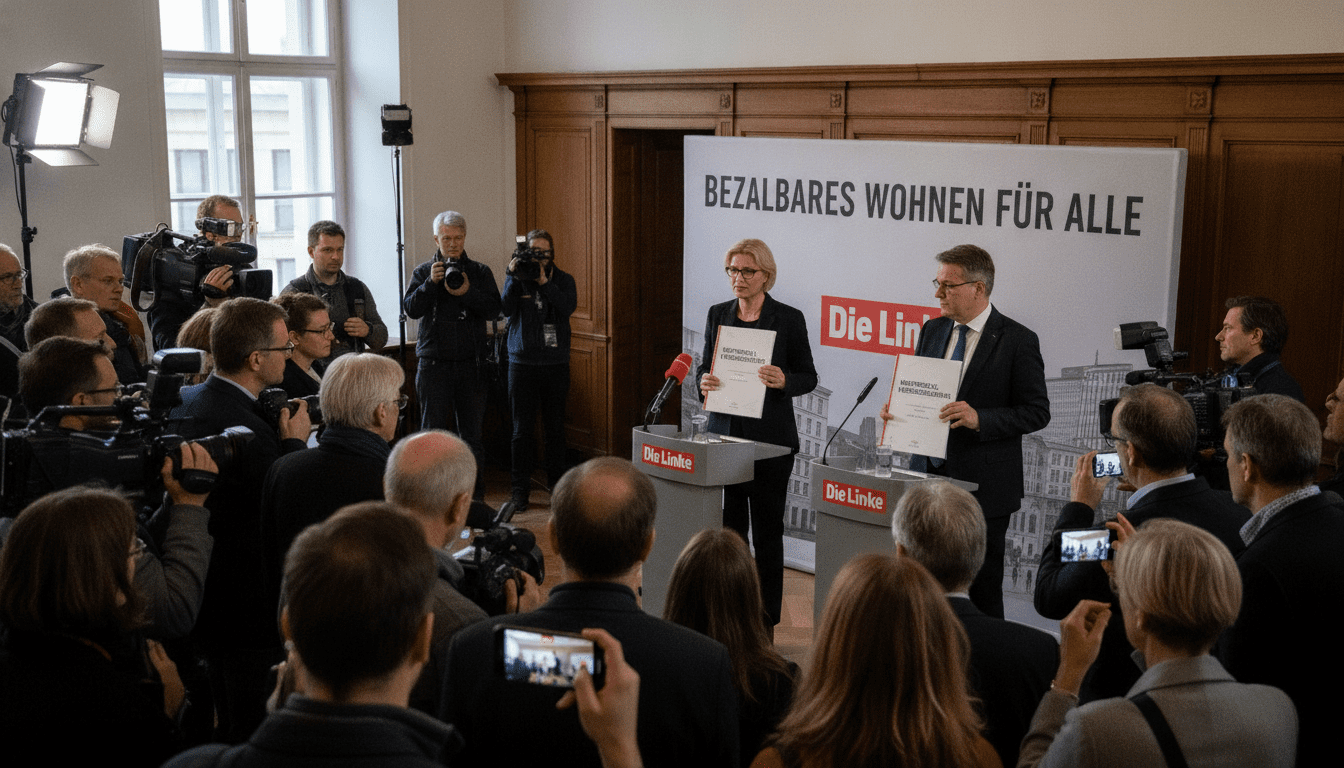
Berlin housing expropriation debated as Left Party proposes rent cap and social quotas
Left Party politicians and activists in Berlin debated housing expropriation, rent caps and social quotas at a conference as tenant pressure mounts in late May.
Berlin’s Left Party and housing activists gathered at a Rosa-Luxemburg-Stiftung conference at the end of May to press for a suite of measures aimed at the city’s housing crisis, with Berlin housing expropriation placed squarely on the agenda. More than a hundred participants attended sessions that proposed a rent cap, a mandated social-rental quota, a new oversight authority and, controversially, the public takeover of large private housing corporations. The meeting featured visible tenant-organizing energy, including tote bags reading “Keine Profite mit der Miete” and calls from party figures for stronger regulatory action.
Left Party leaders frame expropriation as a necessary tool
Speakers framed Berlin housing expropriation as one among several tools to curb rising rents and limit private profit in the housing sector. Elif Eralp, the Left’s candidate for mayor in Berlin, told the audience that her conversations with tenants left her convinced of widespread demand for more stringent regulation. Conference panels argued that targeted public ownership or transfer of large corporate portfolios could stabilize rents in the most pressured neighborhoods.
Concrete policy proposals presented at the meeting
Attendees discussed specific proposals including a binding social-rental quota for new developments, a city-level rent cap and the creation of an independent housing oversight authority charged with enforcing rules. Planners and activists outlined mechanisms for expanding municipally controlled housing stock, such as compulsory purchase orders, negotiated acquisitions and cooperative ownership schemes. Proponents said those measures should be complemented by stronger tenant protections and expanded subsidies for social housing.
Voices from the event reflected tenant frustration
Organizers emphasized direct testimony from renters as evidence of growing impatience with current market dynamics, with several speakers recounting long waits for affordable units and repeated rent hikes. The visible turnout and slogans at the entrance underlined a public sentiment that profits were being prioritized over housing security. Panelists said that pressure from tenant groups had pushed the Left Party to elevate expropriation from a fringe proposal to serious policy discussion.
Legal and financial obstacles to expropriation debated
Speakers acknowledged significant legal and fiscal hurdles to any large-scale transfer of private housing assets into public hands, including constitutional protections for property and the need for compensation. Experts at the conference sketched possible pathways—court challenges, municipal referendum mechanisms and negotiated buyouts—but warned each would entail complex proceedings and heavy public spending. Opponents in wider political debate are likely to argue that expropriation risks deterring investment and would require clear funding sources to maintain the housing stock.
Political calculus and reactions beyond the conference
The proposals put forward at the Rosa-Luxemburg-Stiftung meeting are likely to sharpen debate ahead of city elections and may force other parties to clarify positions on rent regulation and housing oversight. While support among Left Party delegates and activist networks appeared strong, observers at the event noted that translating that energy into binding legislation would require coalition-building with other political groups. Market stakeholders and moderate parties are expected to press for alternative measures focused on incentives for construction and faster permitting.
Potential economic effects and implementation timelines were discussed by participants as contingent on a range of variables, from federal legal rulings to municipal budgets and public referendums. Planners and economists at the conference urged that any program to expand public housing ownership must include long-term maintenance funding and professional management to avoid deterioration of assets.
Public concern over housing affordability has moved policy options that were once marginal into mainstream debate in Berlin, and the Rosa-Luxemburg-Stiftung meeting underscored the Left Party’s intent to make housing reform a central campaign issue. The coming months will show whether the party can build a legislative or electoral majority for measures such as rent caps, social quotas and selective expropriation, and how courts and voters respond to proposals that challenge the role of large private landlords in the city’s housing market.
