
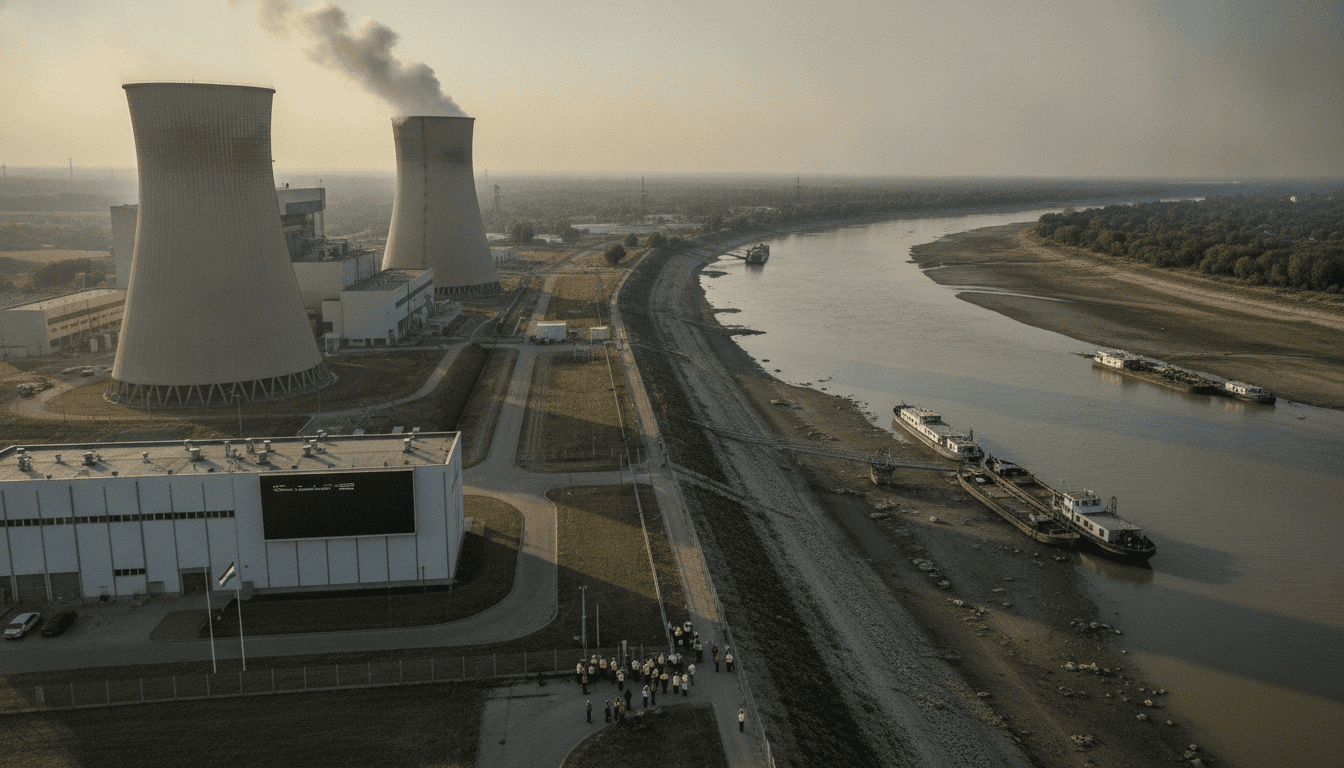
Hungary orders full shutdown of Paks nuclear plant amid record-low Danube levels
Hungary orders full shutdown of the Paks nuclear plant as Danube’s record-low water threatens cooling; grid operators plan imports and ask consumers to conserve.
The state-owned operator has announced that the Paks nuclear plant will be taken completely offline within 24 to 72 hours because water intakes for its cooling pumps sit above the river’s current level, making continued power production impossible if the Danube falls further. The facility, which provides roughly half of Hungary’s domestic electricity, said it can maintain safe shutdown conditions and will restart units stepwise once river levels allow. (atomeromu.mvm.hu)
Operator signals unavoidable full stop
A public statement from MVM Paks on July 30 said the plant is in the third of four low-water contingency stages and that forecasts leave a realistic chance the fourth stage—total cessation of electricity production—will be triggered within days. The operator stressed that while the Danube still contains sufficient water volume to cool reactor condensers, the suction necks of the pumps are positioned above the present riverbed and therefore cannot draw water if levels fall further. (atomeromu.mvm.hu)
Technical reason: pump intakes and historic planning margins
Engineers at Paks explained the immediate problem is not an absolute lack of water but an infrastructural mismatch between 1980s design elevations and today’s riverbed. The plant’s emergency protocols classify low-water conditions into four levels; reaching level four requires all blocks to be shut down and kept cooled with much smaller flow rates. MVM said work is already underway to lower intake structures for future resilience, but those upgrades will take years. (atomeromu.mvm.hu)
Danube record lows and regional navigation impacts
The shutdown follows an unprecedented stretch of drought that has pushed Danube levels to new lows across Central Europe, exposing shoals, grounding vessels and forcing river cruises to suspend or shorten routes. Authorities and international news agencies reported record measurements and multiple disruptions to freight and passenger traffic, underscoring the drought’s ripple effects beyond electricity generation. (apnews.com)
Grid operators prepare imports and demand reductions
Hungary’s transmission system and market operators are coordinating contingency plans to keep the grid balanced while Paks is offline. Historical data show Hungary routinely relies on imports to manage peaks and shortfalls, and officials said they have measures to secure additional cross-border supplies and to curtail large industrial loads if necessary. The plant and system operator have also appealed to the public for responsible electricity use to ease pressure on the network. (paks2.hu)
Short-term risks and assurances about safety
Officials emphasized that the decision to halt production is a safety measure rather than a sign of technical failure in the reactors themselves, and that systems are in place to keep inactive blocks in a cooled, stable condition for extended periods. MVM said contingency pump units and protocols developed for low-water scenarios will be used to maintain necessary cooling while units are shut, and that restart will occur in strict, water-level-dependent stages. Regulators will oversee all steps. (atomeromu.mvm.hu)
Longer-term implications for Paks expansion and energy planning
The crisis adds urgency to plans to modernize cooling systems and to the broader Paks II program, which foresees two new reactors to replace older units in the coming decade and a half. Planners have long cited the plant’s central role in national energy security and modelled future capacity on continuing nuclear output, but the current episode highlights climate-driven vulnerabilities and the need to factor river management and infrastructure adaptation into energy investments. (paks2.hu)
Market observers warned that simultaneous strains—reduced hydropower output, constrained river-borne fuel shipments and heightened summer demand—could push wholesale prices higher and complicate cross-border trading while the outage persists. Authorities said they are monitoring regional market capacity to supply Hungary and will deploy reserves if import volumes fall short.
The operator said it will post official updates on its website and social channels as conditions evolve, while transmission and government agencies urged calm and cooperation from industry and consumers as contingency measures are implemented. (atomeromu.mvm.hu)
